

Face masks are still an effective way to help stop the spread of the BA.5 subvariant.
Articles on ACE2
Displaying 1 - 20 of 22 articles

Emerging evidence suggests the highly infectious Omicron variant has the ability to escape the protection two vaccine doses offer.

Not only have asthma attack rates decreased during the pandemic, evidence suggests people with asthma are not at increased risk of severe outcomes from COVID.

The Delta variant: What it is, where it came from, why it’s different and whether COVID-19 vaccines can prevent it.

The virus is evolving and new strains are more transmissible. Will the vaccines work against these new variants? How can researchers stay ahead of the virus’s evolution?
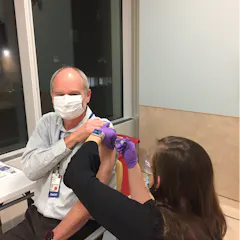
With vaccines forthcoming for most Americans, many groups, including expectant mothers, are wondering if the vaccine is safe for them and their babies. A physician-scientist explains.

A new strain of the SARS-CoV-2 virus that causes COVID-19 appears to be spreading fast in the UK. This probably isn’t a big problem, but the data isn’t in yet.
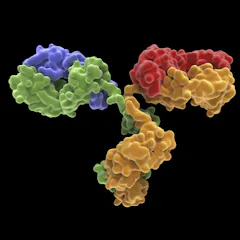
Antibodies are great for neutralizing viruses. But they are big and bulky. Antibody engineers are now creating smaller synthetic antibody-like molecules that may be better for fighting COVID-19.

Although they remain untested as a treatment, this suggests these drugs could be used as a therapeutic against the coronavirus.
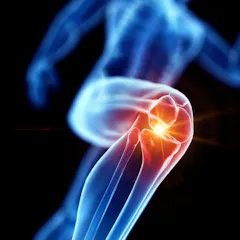
The SARS-CoV-2 virus usually infects the body via the ACE2 protein. But there is another entry point that allows the virus to infect the nervous system and block pain perception.
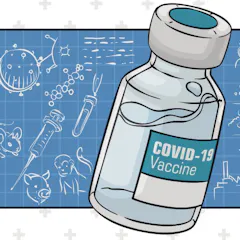
As grim as things are with the pandemic raging in the US and the mounting death toll, there are many reasons to be optimistic there will be a vaccine by early next year.

During the last six months, news reports have mentioned dozens of drugs that may be effective against the new coronavirus. Here we lay out the evidence and reveal which ones are proven to work. Or not.

The good news is: you’ll probably get it back.
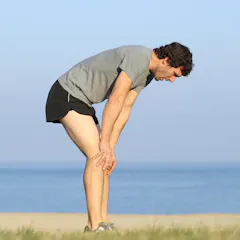
Severe COVID-19 may leave lasting scars in the lungs, but some recovery could happen over time.
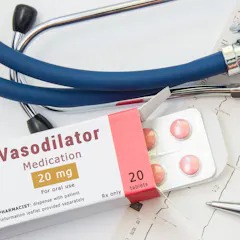
The use of antihypertension medication during the coronavirus pandemic has been a subject of hot debate but people should be cautious about simple conclusions.

Here’s what we know about immunity to COVID-19, and what that means for getting life back to normal.
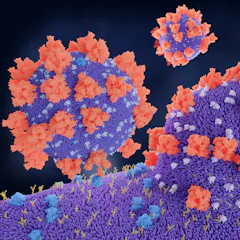
The ACE2 receptor allows the virus that causes COVID-19 to infect and destroy our cells. What is the normal role of ACE2 in the body, and could it be the key to blocking infection?
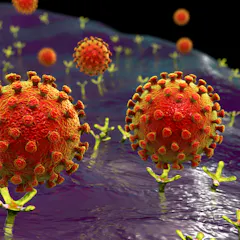
A molecule responsible for lowering our blood pressure also helps coronavirus get into our cells and replicate. And it occurs more in men than in women.

Who is most likely to survive an infection of the new coronavirus? Two immunologists explain that it is those who mount exactly the right immune response – not too weak, not too strong.

People with heart conditions at higher risk of severe COVID-19. But coronavirus appears to affect the heart directly, too.
Top contributors
-

Professor of Medicine, University of Virginia
-
Senior Lecturer in Chemical Pathology, University of Westminster
-
Assistant Professor/Canada Research Chair in emerging viruses, University of Manitoba
-
Professor of Cardiac Medicine, University of East Anglia
-
Professor of Medicine, University of Pittsburgh
-
Assistant Professor of Biology, Penn State
-
Professor and Department Chair of Infectious Diseases and Microbiology, University of Pittsburgh
-
Professor of Pathology, Microbiology and Immunology, University of South Carolina
-
Clinical Fellow, Swansea University
-
Postdoctoral Fellow, University of California, San Diego
-
Head Melbourne School Health Sciences, The University of Melbourne
-
Associate Professor in Viral Immunology, University of Birmingham
-
Professor of Pharmacology and Medicine, University of California, San Diego
-
PhD en Sciences Pharmaceutiques, Université de Montréal
-
Consultant Rhinologist and ENT surgeon, City St George's, University of London