
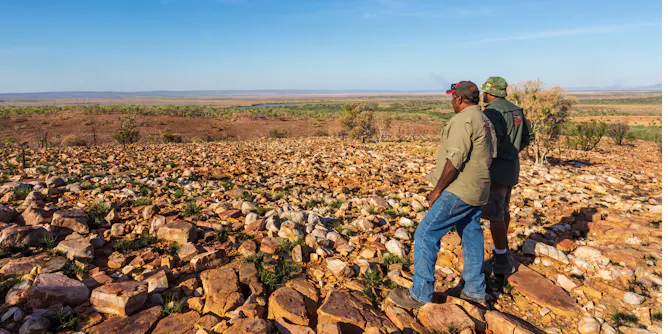
To close the gap, we need First Nations people involved in the evaluation of what worked and what didn’t about Indigenous-focused wellbeing programs.
Articles on Aboriginal rights
Displaying all articles
The Yoorrook Justice Commission reports are powerful and historic. But the question remains: will they change anything?

Closing The Gap reports have successively highlighted the need for the public service to listen to First Nations people. How do we change the status quo?

A national anthem is supposed to reinforce a nation’s identity. Are we fine with singing Advance Australia Fair for another 50 years?
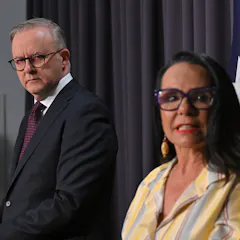
The latest Closing the Gap report reveals just four of the 19 targets are on track to be achieved. It comes after years of failing to give First Nations people a say over their own lives.

Last week, the High Court ruled the community of Santa Teresa could be compensated for the “distress and disappointment” caused by their poor housing. So how can such housing be better managed?

The tiny remote community of Santa Teresa spent seven years fighting for compensation for poor public housing. Now that the High Court has ruled in their favour, what does it mean for other renters?

For over 100 years, the Victorian school curriculum has failed to give generations of students the chance to learn about Indigenous political movements.

While sports bodies are notable advocates of a Voice to parliament, they might want to consider how much of a voice Indigenous athletes have in their own organisation.
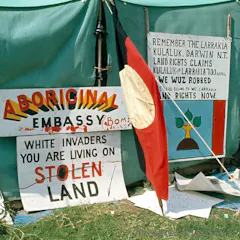
These histories remind us how long First Nations people have waited for political recognition in this country – and that, compared to other former colonial sites, Australia is the exception, not the rule.

What does ‘justice reinvestment’ mean in practice? Who makes funding decisions? To find out more, we consulted Aboriginal communities in Bourke, Moree and Mount Druitt.
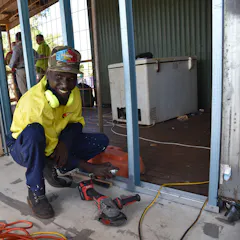
One crucial element of the regional jobs discussion is the need for a redefinition of ‘work’, to include community responsibilities, care and caring for land and Country.

Our analysis revealed the relative attention our news and opinion pieces gave to First Nations peoples began to grow steadily from around 2005, with a huge peak in 2007.
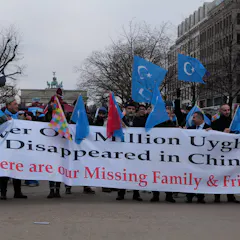
Is history really a triumphant march of progress? It depends on your point of view.
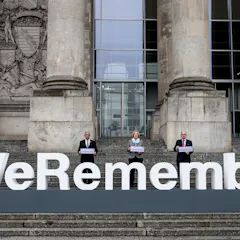
While Australians’ general knowledge of the Holocaust is high, few people knew who William Cooper was or that Australia refused to accept more Jewish refugees in 1938.
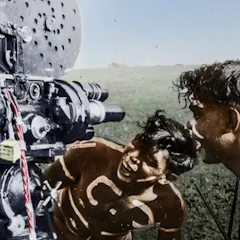
Bill Onus was a civil rights activist, artist, performer and entrepreneur. A new documentary from his grandson shares his remarkable story.
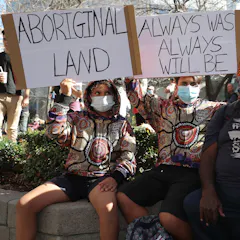
For far too long, mining companies have let their social and cultural heritage commitments slide. The inquiry report should be a wake-up call for the industry.
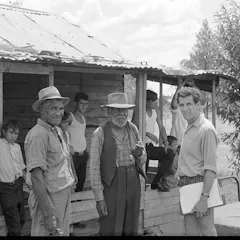
Like other Aboriginal leaders of the 1960s, Perkins viewed basic rights – housing, education and employment – as the building blocks of self-reliant communities.
Top contributors
-

Research Manager, Centre for Social Responsibility in Mining, The University of Queensland
-
Professor of Public Policy, ADFA Canberra, UNSW
-
Associate Professor of Cultural Heritage and Museum Studies, Deakin University
-
Associate Dean of Business (Indigenous Leadership & Engagement); Director, UTS Centre for Indigenous People and Work, University of Technology Sydney
-
Professorial Research Fellow, The University of Queensland
-
PhD Candidate, UNSW
-
Research Fellow (Indigenous Diplomacy), Australian National University
-
Research Fellow, Deakin University
-
Community Manager Mt Druitt JustReinvest NSW, Indigenous Knowledge
-
Professor, Department of Economics & SoDa Laboratories, Monash Business School, Monash University
-
Professor, Australian and Aboriginal History, Faculty of Arts, Design and Architecture, Convenor: Indigenous Land & Justice Research Group, UNSW
-
Manager of community-led change, Just Reinvest NSW, Indigenous Knowledge
-
Associate Professor, Jumbunna Institute of Indigenous Education and Research, University of Technology Sydney
-
Postdoctoral Research Fellow
-
Professor, Department of Human Centred Computing, Monash University