
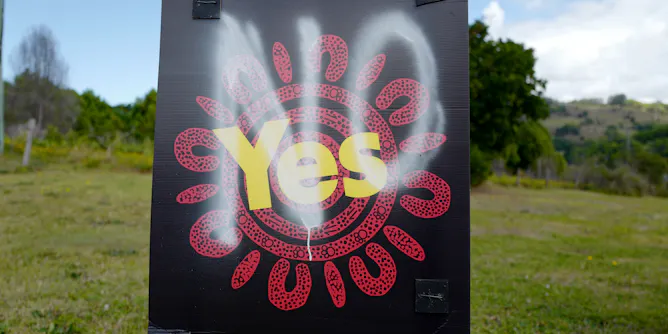
Rather than a period of reflection and listening post-Voice, we have seen a rapid return to the obstructive habits that produced failure in the first place.
Articles on Aboriginal and Torres Strait Islander Voice
Displaying all articles
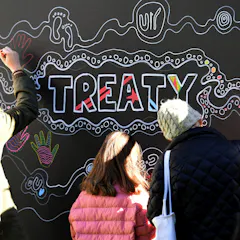
The referendum result left states and territories to pick up the mantle of agreement-making with First Nations people. While there’s been some progress, many efforts have stalled or gone backwards.
No campaigners said the Voice wasn’t the right solution, that they had better alternatives. In the 12 months since the referendum failed, no one’s offered any real solutions.
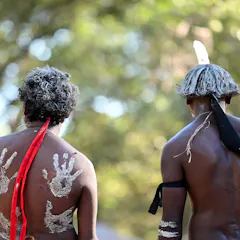
Anthony Albanese has distanced himself from a truth telling commission in favour of economic empowerment for Indigenous people. You can’t have one without the other.
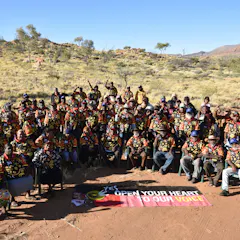
The Northern Territory’s Indigenous population predominantly voted ‘Yes’ to a Voice to Parliament. Despite the referendum’s ‘No’ outcome, the Northern Territory is making moves to self determination.
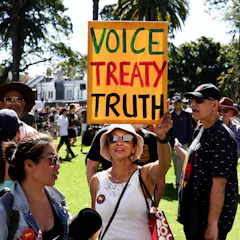
Plus a view on the Voice referendum from Canada. Listen to The Conversation Weekly podcast.
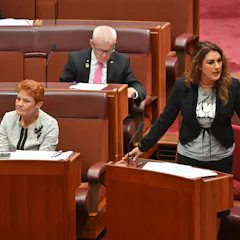
Conservatives and sections of the left are both advocating against the Voice, but for different reasons.

Since the Indigenous Voice to Parliament was announced, there has been an increase of hate speech and personal attacks. Hate speech and misinformation can cause physical and mental harm.

History is on the “no” side. Only eight of 44 referendum questions have been carried since federation

Prime Minister Anthony Albanese announced the long-anticipated date to an enthusiastic audience of about 400 in Adelaide.

The “yes” and “no” cases have outlined their arguments to be sent out to Australian voters. Here, legal experts examine the claims by both sides to see if they stack up.
Top contributors
-

Professorial Fellow, University of Canberra
-
Professor of Medicine, Monash University
-
Associate Professor, Faculty of Law & Justice, UNSW
-
Distingioshed Professor & Canada Researc Chair, Political Studies, University of Manitoba
-
Managing Director, Her Story Consulting & Postdoctoral fellow, Australian National University
-
Associate Professor in Law, UNSW
-
Co-coordinator of the Tangentyere Youth Safety Group, and Northern Territory Aboriginal Domestic, Family, and Sexual Violence Advisory Group, Indigenous Knowledge
-
Paul James is a Friend of The Conversation.
Professor of Globalization and Cultural Diversity, Western Sydney University
-
Professor, Critical Indigenous Studies and Director of The Centre for Global Indigenous Futures, Macquarie University
-
Principal Research Fellow, James Cook University
-
Co-coordinator of Tangentyere Women’s Family Safety Group, Indigenous Knowledge
-
Lisa Jackson Pulver is a Friend of The Conversation.
Deputy Vice-Chancellor, Professor of Public Health and Epidemiology, University of Sydney
-
Professor of Law, UNSW Law School, UNSW
-
Department of Pro Vice Chancellor (Society), UNSW ; Indigenous Knowledge
-
Professor, Australian and Aboriginal History, Faculty of Arts, Design and Architecture, Convenor: Indigenous Land & Justice Research Group, UNSW