

The modern representative democracy was the best form of government mid-18th-century technology could invent. The 21st century is a different place scientifically, technically and socially.
Articles on 21st century government
Displaying all articles

The digital economy is also an economy of people first, something governments of the future will need to adjust to.

If Australia’s new prime minister wishes to lead a successful 21st-century government, he must tackle the rise in chronic disease and use data to constantly improve the system.
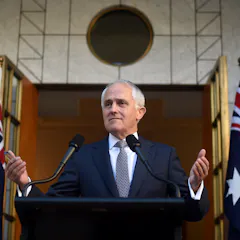
There are some simple steps government, company leaders and venture capitalists can make to help pivot Australia’s economy.
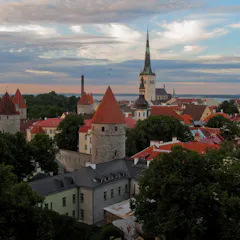
Since independence from the Soviet Union in 1991, Estonia has leapt ahead in the adoption of digital technology. Australia could learn a lot from Estonia in terms of e-government.
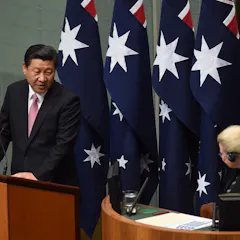
The past two decades were years of sclerosis and decline in Australia’s once creative and agile foreign policy. A new course must be set to meet the challenges of exciting but risky times.

Only the brave or foolhardy would claim knowledge about the shape of jobs for the next decade, let alone the rest of the 21st century. So what kind of tertiary education can prepare students?

A 21st century government would put the environment on at least an equal footing with the economy. That means no more extinctions, and no more putting ourselves before wildlife or future generations.

Broadband is coming to be seen as crucial infrastructure for the 21st century, as were roads and electricity for the 20th. But what does a genuinely 21st century broadband network look like?
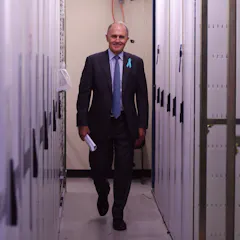
A coherent innovation policy requires a focus on fostering networks, and learning from economies similar to ours.
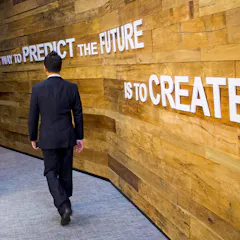
Australians shouldn’t assume we can’t have the strongest and fastest-moving digital economy in the world.
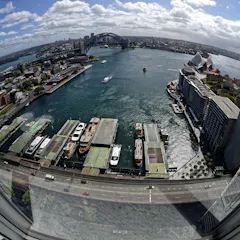
For the first time, both major parties have a cities portfolio in their front bench team. With a few more changes, the government could create a structure that will really get to grips with urban issues.

Turnbull’s 21st century vision for government provides an opportunity to fundamentally rethink arts and cultural policy from the ground up and move beyond its 20th century legacy.
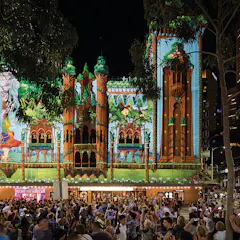
What if Malcolm Turbull’s conception of “21st-century government” imagines a healthy civil society and a responsive economy that values debate, imagination, difference and surprise - all provided by the arts.
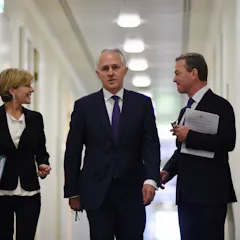
The challenge for a 21st century Australian government is to capitalise on research and create new jobs, industries and opportunities for the coming century.
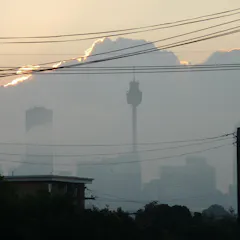
The key drivers for energy in the 21st century are managing climate change, shifting community concerns, and radical technology change.
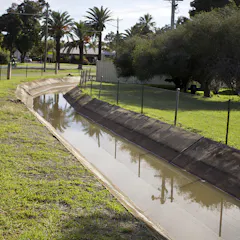
A government for the 21st century needs to work out how we can grow our food, manufacture goods and dispose of waste without making such a huge mess.

Turnbull has said his government is committed to being one “of the 21st century”. So what could that mean for education?

Australia’s new prime minister, Malcolm Turnbull, has announced what he calls a “21st-century government”. The Conversation continues its series focusing on what such a government should look like, looking…
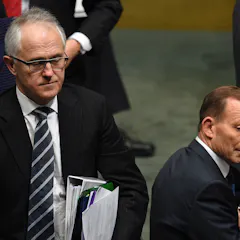
The Abbott government resisted the disruptive changes of the 21st century. To succeed, the Turnbull government will need to shed this reactionary mindset and embrace inevitable change.
Top contributors
-

Chair of ARC Centre of Excellence for Quantum Biotechnology, The University of Queensland
-
Honorary Enterprise Professor, School of Population and Global Health, and Department of General Practice and Primary Care, The University of Melbourne
-
Lecturer, Public Policy and Political Communications, The University of Melbourne
-
Professor of Conservation and Sustainable Livelihoods, Charles Darwin University
-
Professor, Ted Rogers School of Management, Toronto Metropolitan University
-
Senior Industry Fellow, Environment and Planning, RMIT University
-
Adjunct Professor, La Trobe University
-
Professor and Founding Director of QUT Centre for the Digital Economy, Queensland University of Technology
-
Professor of Economics, RMIT University
-
Artist, Curator, Producer, RMIT University
-
Innovator in Residence, University of Oxford and Emeritus Professor, School of Business, The University of Queensland
-
Deputy Vice-Chancellor and Vice-President (Education and Students), University of Technology Sydney
-
Honorary Consul; Adjunct Professor; Digital Investigations Consultant and Senior Lecturer., Adelaide University
-
Emeritus Professor, School of Environment and Science, Griffith University
-
Professor of Conservation Biology, Charles Darwin University