
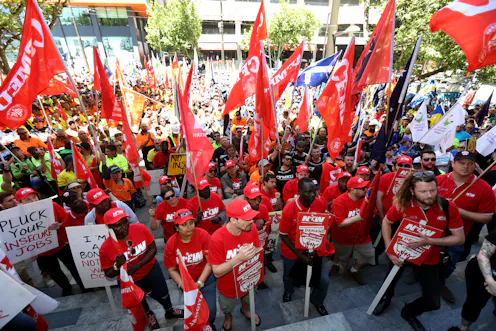
As unions have shrunk, conditions for workers have got worse.
- Research Fellow, The University of Melbourne

Young people are the most vulnerable as industry and the labour market undergo radical change, but meeting this challenge could just be a matter of plugging existing gaps.

The government claims university degrees are failing businesses, but analysis of the latest graduate outcome and employer satisfaction surveys tells us the problem is with underemployment.

The Fair Work Commission’s latest decision to cut certain Sunday and public holiday penalty rates continues a tradition of undervaluing young workers.

Young Australian jobseekers are facing a difficult future due to the loss of many traditional entry-level positions to automation. A solution may lie in bold policy ideas.

The focus on reducing welfare dependency among young carers, parents and students may deter them from seeking any help.

Contrary to popular stereotypes, research shows young people in the workforce want much the same things from work as other generations.

Australia’s cash economy is hard to document, but can be followed through the fortunes of young workers.

Australian voters can choose between a youth unemployment policy from the Coalition, seen as a hand out, and the Labor policy which is a hand up.

The risks posed by deregulating the vocational education and training sector have serious impacts for large sections of the labour market.
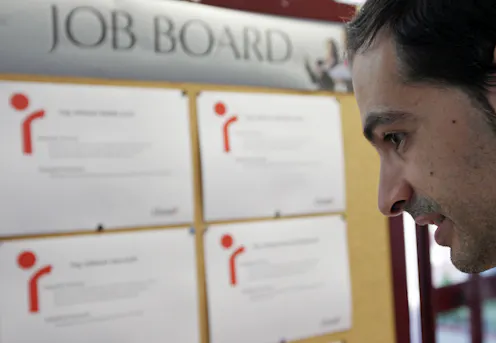
Young people’s transition to work is prolonged and highly precarious. An entry-level job becomes a career, savings become subsistence, weekend shifts become lifelines. It doesn’t have to be this way.
Contact Shirley for
- General
- Media request
- Speaking request
- Consulting / Advising
- Research collaboration
- Location: Melbourne, Australia
- Website
- X (formerly Twitter): @https://bsky.app/profile/asintemple.bsky.social
- Article Feed
- ORCID
- Joined
