

Native bees pollinate many of Australia’s unique plants and help entire ecosystems thrive.
- Research Fellow, School of Biological Sciences, Monash University
Humanos e abelhas têm habilidades matemáticas, o que abre caminho para testar a matemática como “linguagem universal”

Humans and bees can both work with mathematics. Could aliens do the same?
Listen to biologist Scarlett Howard speak in defence of ecologically irrelevant experiments on The Conversation Weekly podcast.
Por que os pesquisadores se preocupam se uma abelha pode aprender a reconhecer um rosto humano? Quando levamos animais para fora de seu território familiar, podemos aprender muito sobre inteligência.
¿Por qué les importa a los investigadores si una abeja puede aprender a reconocer un rostro humano? Cuando sacamos a los animales de su entorno habitual, podemos aprender mucho sobre la inteligencia.
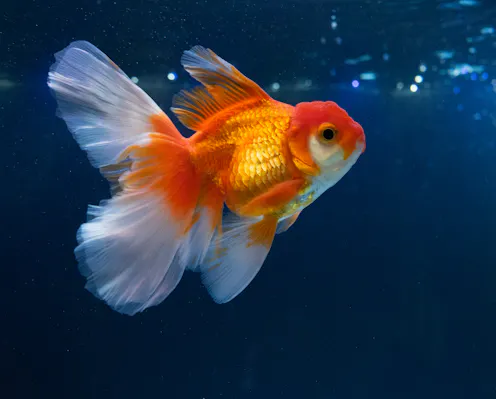
Why do researchers care if a bee can learn to recognise a human face? When we push animals outside familiar territory, we can learn a lot about intelligence.
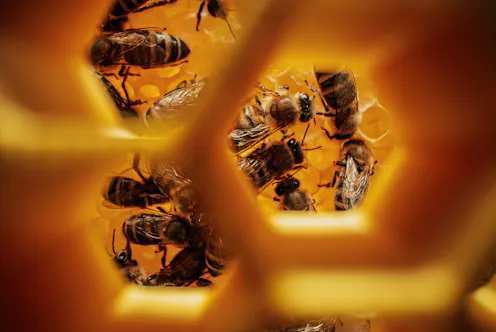
Did you know you have a ‘mental number line’, from smallest to largest? Turns out, so do bees.
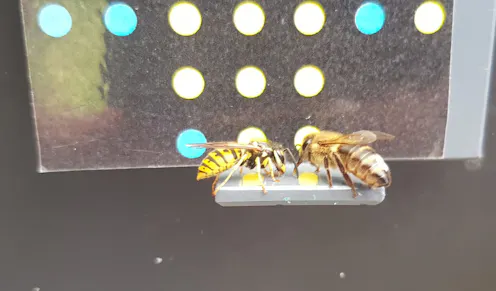
Being susceptible to visual illusions is part and parcel of life not just for humans, but many other species – including bees.
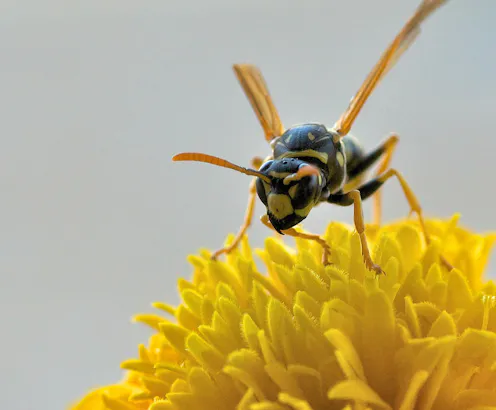
Have we overlooked the intelligence and value of wasps?
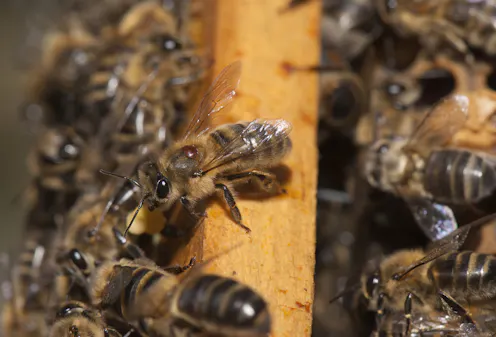
Australia is the last continent to be invaded by the dangerous honey bee parasite, and has an opportunity to be the first to eradicate it.
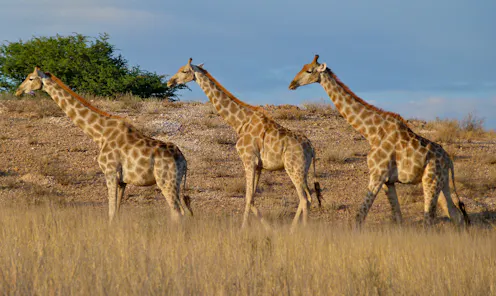
Giraffes are the latest animals to show they can solve tasks using statistical reasoning – and the only one to do this with a small brain relative to body size.
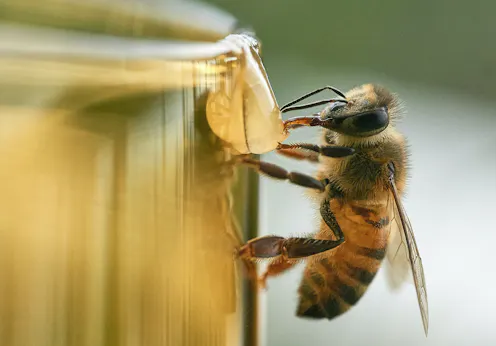
From New York to Tokyo, Melbourne to Venice – honeybee hives have revealed the unique genetic signatures of cities, even providing insights into human health.
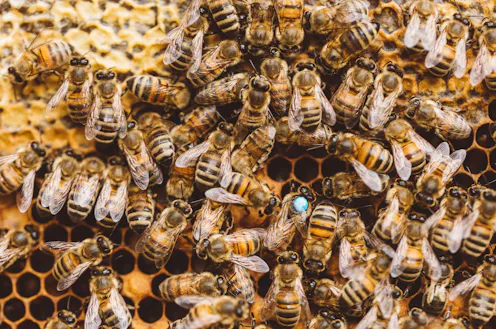
The waggle dance is performed by forager bees to convey important information about food sources.
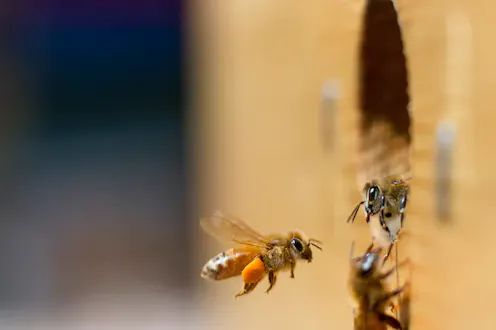
Otak lebah madu yang kecil mampu memahami konsep ganjil dan genap, meskipun hanya memiliki 960.000 neuron (dibandingkan dengan 86 miliar pada manusia).
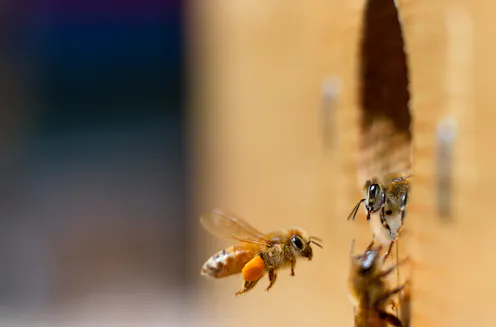
Avec leur cerveau miniature de 960 000 neurones (contre 86 milliards chez l’homme), les abeilles ont réussi à comprendre les concepts d’impairs et de pairs.

Horizontal number lines are often the default option – but our brains may process numbers more quickly in a vertical arrangement.
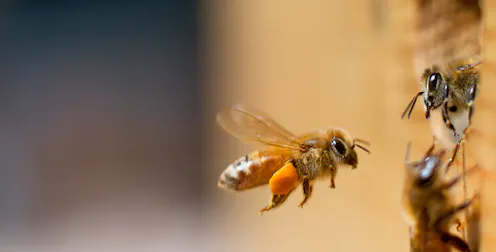
The miniature brains of honeybees were able to understand the concepts of odd and even, despite only having 960,000 neurons (compared to 86 billion in humans).
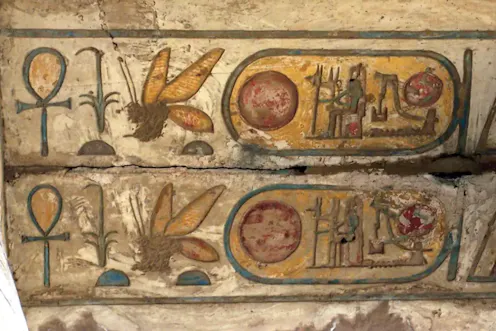
Bees have been represented in a range of art forms for millennia, from rock carvings to video games.
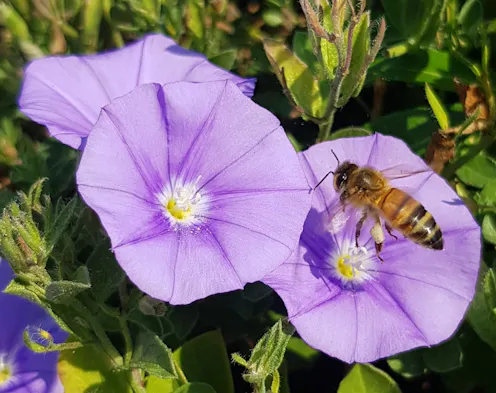
When a bee leaves the hive for the first time to go foraging, how does she know what a flower even looks like?
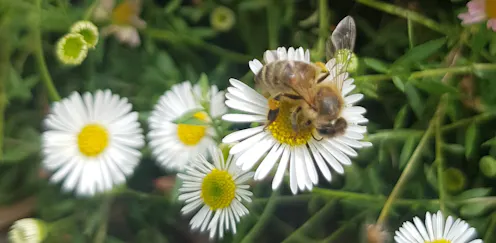
Past research has shown honeybees can add, subtract and even understand ‘zero’. But according to new findings, they can’t tell four flowers from five in natural settings.
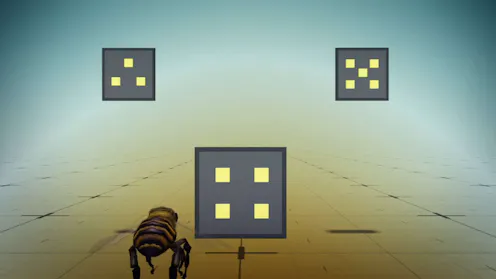
Bees may provide surprising insights into the kinds of environments that are best for learning.
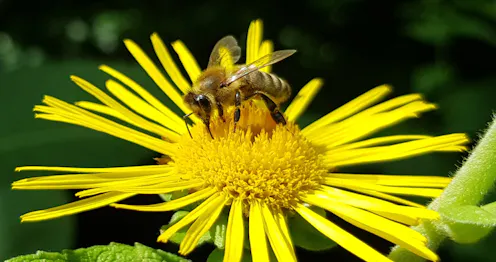
Honeybees are good at maths, but it was thought they could only count to four. That is, unless you present them with a task in which they are punished with a bitter-tasting drink for getting it wrong.
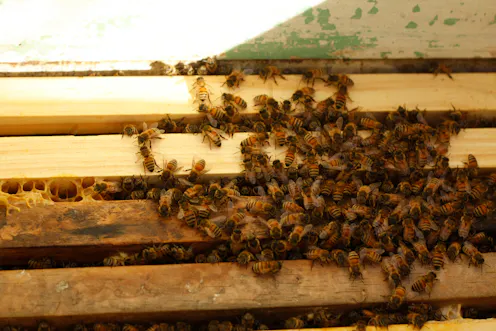
We’re left wondering whether we as humans are so very special after all – that perhaps the ability to learn mathematics could be universal.
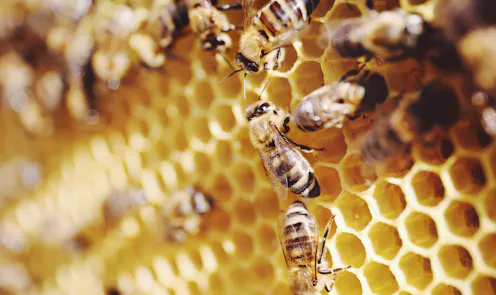
Otak lebah madu berisi kurang dari satu juta neuron. Meski begitu, mereka dapat menggunakan simbol untuk belajar matematika dasar termasuk penjumlahan dan pengurangan.
Contact Scarlett for
- General
- Media request
- Speaking request
- Consulting / Advising
- Research collaboration
- Research supervision
- Location: Melbourne, Australia
- Website
- X (formerly Twitter): @TheBeesearcher
- Article Feed
- ORCID
- Joined
