

Past upgrades to the state’s medical record system have cost tremendous amounts of money, and on at least one occasion, forced clinicians to revert to paper-based methods.
- Lecturer in Software Engineering, Monash University

Two security scares in the past 24 hours should prompt you to make sure your software is up-to-date. But what are the risks?

Taking effective action against online sharing of graphic content isn’t straightforward. But, yet again, the government’s inclination seems to be to legislate first and discuss later.

Both the Coalition and Labor agreed to new laws that will give law enforcement agencies the power to access encrypted systems.

The government has rejected a call to extend the My Health Record opt-out period while amendments are made to ensure the privacy and security of the system.

Permanently and completely deleting information from IT systems is complex. The government should consider pausing the roll-out of My Health Record for longer to properly address this issue.

A damning report lists a number of questionable design decisions that appear to greatly increase the risks of a crash.

Medical practices have special requirements under the Privacy Act, but the security and privacy systems some providers currently have in place may be inadequate.

There are a few reasons why smartphones, tablets and PCs start to seem less snappy over time.
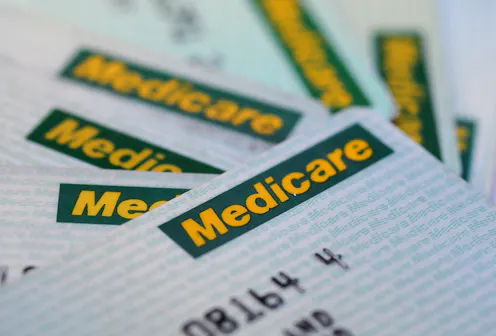
The sheer number of fallible people and systems with access to Medicare numbers makes it difficult to keep this data secure.

The Australian government wants to access encrypted messages, but don’t call it a “backdoor”.
“It is time for a digital Geneva Convention to protect the internet.”
The ATO system crash was unusual, but it was handled as well as could be expected.

Rich rewards are on offer to people who can help private companies develop software to exploit vulnerabilities in technology such as smartphones. It might be legal but is it ethical?
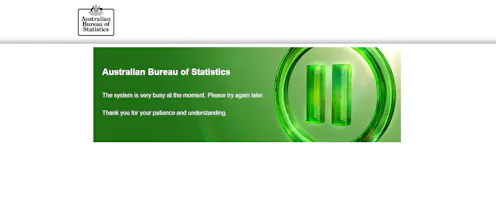
Despite assuring Australians its systems were load tested and secure, the Census site went offline at a crucial time. Could the ABS have avoided such an embarrasing failure?
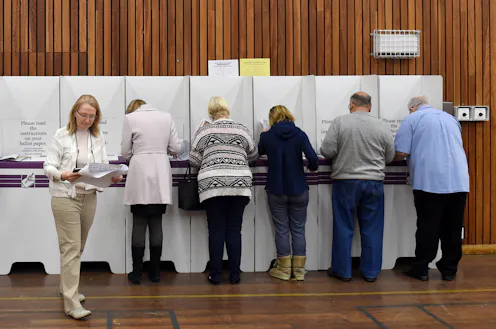
There’s something about seeing the ballot process take place – the vote, the count – that inspires confidence. That wouldn’t be the same with any electronic voting system.

The Australian Government’s Cyber Security Strategy appears to be a mixed bag when it comes to protecting your personal information.
Microsoft warned back in 2014 that anyone continuing to use Windows XP, once it ended support, would be vulnerable to attack. So why are some organisations still using the old operating system?

The movie got some predictions right on what Doc and Marty would find when the arrive in the “future” today. But what could they find if they took another 30 year leap into the future?

Many professionals risk the wrath of their governing body if they act against any code of ethics. But not so the IT industry. Is it time for that to change?

It’s likely that many people knew Volkswagen was cheating on emissions tests, including the engineers who built the ‘defeat device’. But why did no-one at the car maker blow the whistle?

Malcolm Turnbull has drawn on his experience in the IT industry to create a new vision of ‘agile’ government.

Jailbreaking your iOS device can free you from Apple’s ‘walled garden’, but it’s a Wild West beyond the walls.

If the Ashley Madison hack was an inside job, then it shows that even strong protection against outside attacks isn’t necessarily enough to prevent a leak of private data.
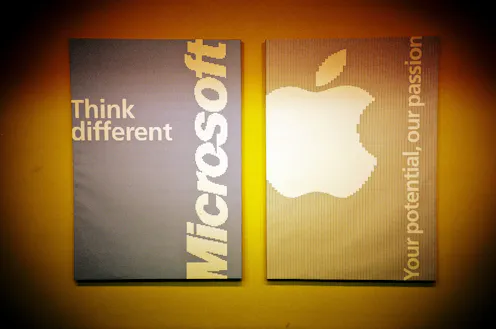
The argument has been raging for years: which operating system is the safest when it comes to security. Has the latest software upgrades from the tech giants changed anything?
Contact Robert for
- General
- Media request
- Speaking request
- Consulting / Advising
- Research collaboration
- Research supervision
