

The 20th anniversary of the annual report tracks how sea ice, snow cover and many other vital signs of the Arctic have changed, and the impact that’s having on people and wildlife.
- Alaska Climate Specialist, University of Alaska Fairbanks
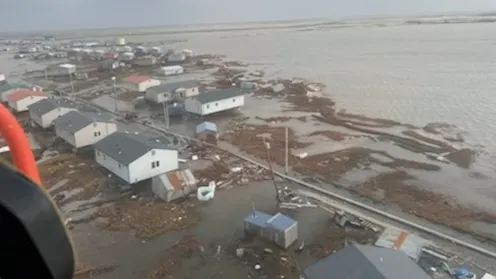
L’ex-typhon Halong a frappé de plein fouet l’ouest de l’Alaska, inondant des villages isolés et révélant la vulnérabilité de cette région face au réchauffement climatique.
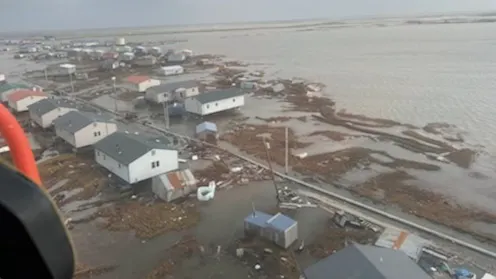
‘As the storm approached Alaska, everything went sideways,’ leaving people no time to evacuate and little time to prepare. An Alaska meteorologist explains what happened and the challenges ahead.

Rapid changes underway in the Arctic affect the region’s people and wildlife, and the entire planet.
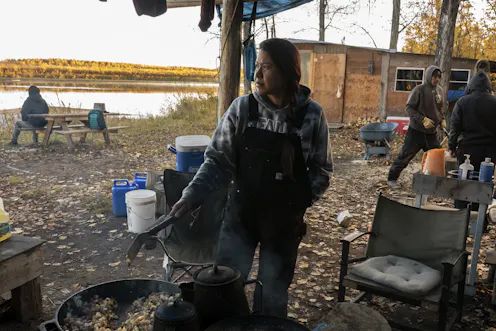
The early heat melted snow and warmed rivers, heating up the land and downstream ocean areas. The effects harmed salmon fisheries, melted sea ice and fueled widespread fires.
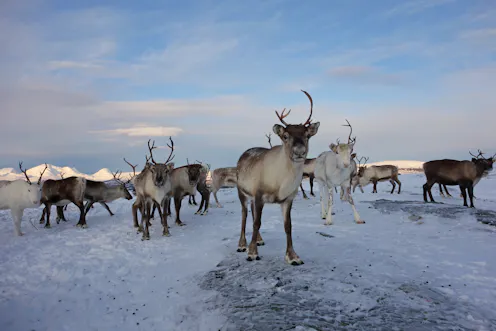
The annual report is also a reminder that what happens in the Arctic affects the rest of the world.
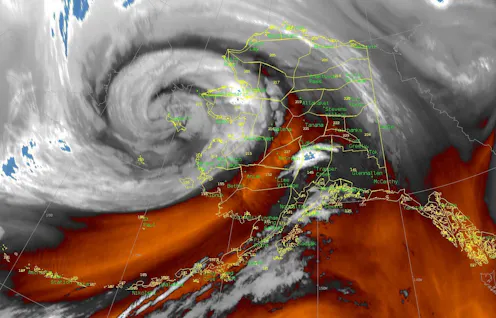
Most of the flooded communities are Indigenous and rely on subsistence hunting that residents would normally be doing right now. Recovering from the damage will make that harder.
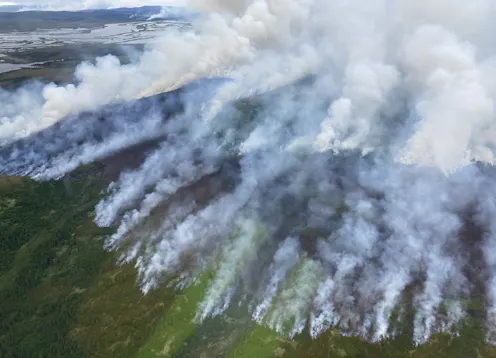
Fires today are hotter and more destructive, thanks in part to a warming climate.
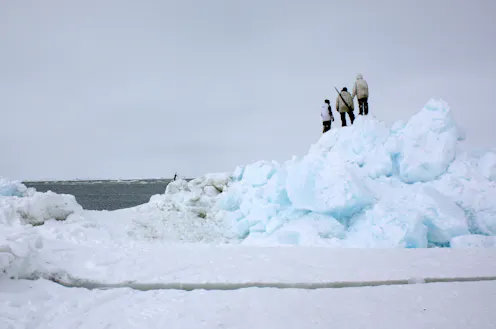
Sea ice is thinning at an alarming rate. Snow is shifting to rain. And humans worldwide are increasingly feeling the impact of what happens in the seemingly distant Arctic.
Contact Rick for
- General
- Media request
- Speaking request
- Consulting / Advising
- Research collaboration
- Research supervision
- Location: Fairbanks, Alaska, U.S.
- Website
- BlueSky: @alaskawx.bsky.social
- LinkedIn: Rick Thoman
- Article Feed
- Joined
