

A new report argues the tertiary education sector must allow students to move more freely between VET and higher education and gain the skills they need at different times in their working lives.
- Mitchell Professorial Fellow, Victoria University

The so-called ‘crisis’ has united both sides of politics, employers and trade unions, but wrongly conflates apprenticeships and traineeships to skew the picture.

An independent authority should control the tertiary funding system in Australia in order to best implement policy objectives.

Under the proposed plan for reform, there is still a risk that private providers will continue to shop between the Commonwealth and the states for the best price and conditions.

After almost a decade of failed processes to reform the current funding system, the government must produce a revised system that improves the quality of outcomes for students in all courses.

Loan caps are only a partial solution to a much bigger problem – declining public investment in VET and a dysfunctional VET financing system, which neither side of politics has been willing to address.

Academic experts respond to the latest report by the Parliamentary Budget Office on the impact of student loans on the budget.

A leaked paper suggests that the federal government should take over funding VET courses. But it’s a path we should tread with great caution.
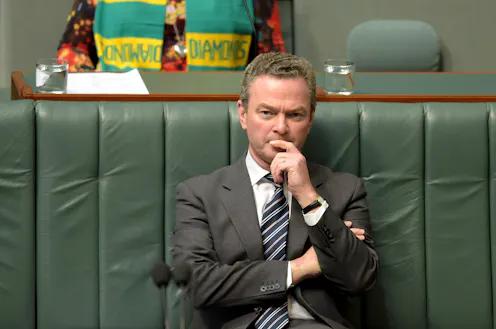
The Federal Minister for Education and Training Christopher Pyne has recently added his support to the proposal for the federal government to take over full responsibility for funding Vocational Education and Training.
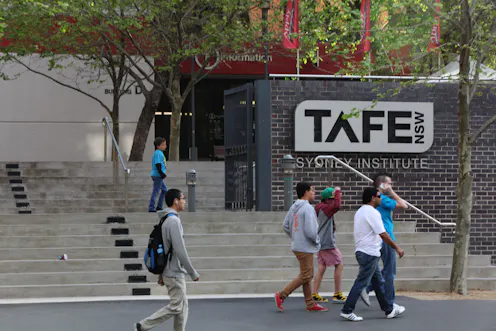
The South Australian government has decided to largely limit funding for government-subsidised vocational courses to TAFE South Australia, the sole public training provider.

Under our proposal, governments would guarantee public support for eligible people between the ages of 18-24 years – not just to go to university, but also for vocational education and training.
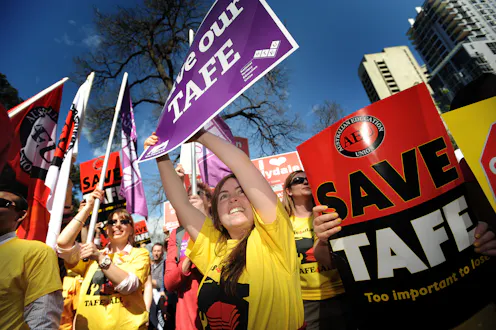
In the 40 years since its inception, rarely has TAFE featured as a central platform on which political parties win or lose votes. As such it seldom rates mentions in political campaigns as a distinct sector…

The reform of Australia’s federation is under review. In this special series, we ask leading Australian academics to begin a debate on renewing federalism, from tax reform to the broader issues of democracy…
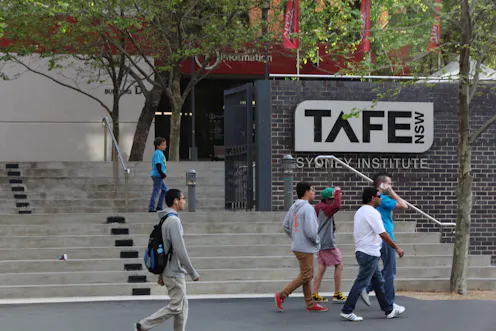
Since their inception in 1974, Technical and Further Education (TAFE) institutions have been the major providers of Vocational Education and Training (VET) in Australia. This may not be the case in the…
Contact Peter for
- General
- Media request
- Speaking request
- Consulting / Advising
- Research collaboration
- Research supervision
- Location: Melbourne, Australia
- Article Feed
- Joined
