

Teachers have never been more appreciated than during COVID-19. But neither expressions of support, nor cheaper degrees will overcome the four big structural challenges facing the profession.
- School Education Program Director, Grattan Institute

A Grattan Institute report shows the achievement gap between disadvantaged and advantaged students widens at triple the rate in remote schooling compared to regular class.

Our model on an expert career path for top teachers would transform school education, further professionalise learning and lead to students gaining about 18 months of extra learning by age 15.

Australia spends virtually the same on schools as the Estonian government, once wage differences are taken into account.

Years 5-7 typically include the transition from primary to secondary but the reading slowdown can’t just be blamed on this, because numeracy progress has improved. So what’s going on with reading?

Our top-scoring students aren’t choosing to become teachers, and that has flow-on effects for the students who come after them.

Now that the Coalition has won the federal election, how will it meet its campaign promises on taxes, the environment, education, health and infrastructure?

Whoever the federal education minister after the May 18 election, he or she needs to put school funding, evidence for what works and initial teacher training front and centre.

The government has delivered a pretty disappointing budget for education, with no secure funding for early childhood education and a recycled commitment of $300 for schools.

Schools funding doesn’t pass the playground test of fairness: state schools get less government funding than governments themselves say the schools need.
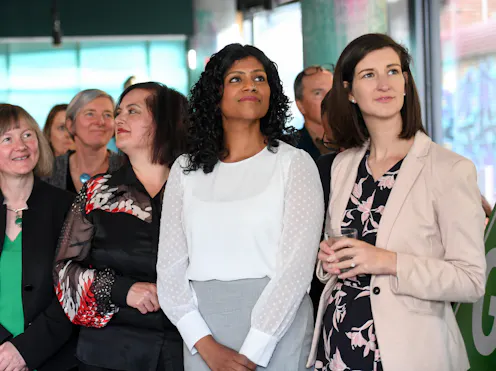
Were the Victorian Greens correct about pubic school funding? We asked the experts to check the numbers.
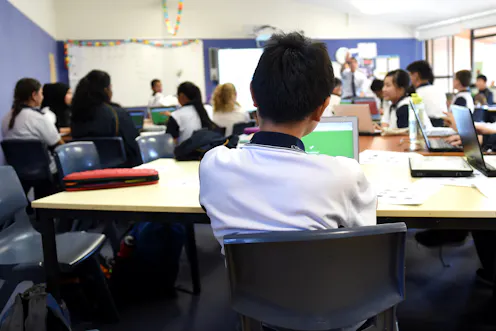
School education in Australia is generally good, but it should be better.

New analysis shows wealthy parents at advantaged Catholic primary schools could actually afford the increase to school fees under the needs-based model.

Estimating parents’ capacity to contribute to their children’s schooling is both vital and politically sensitive. Schools with well-off parents get much less funding from government.
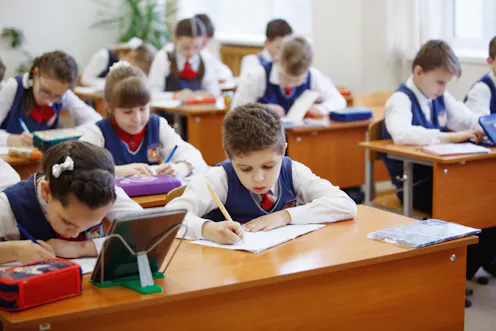
While we may need to rethink how we use NAPLAN, it is an important and useful tool for researchers and policy makers.

Catholic schools say they’re losing money under Gonski 2.0, but this is only true for schools serving students in affluent areas – those in poorer areas will either be unaffected, or get more.
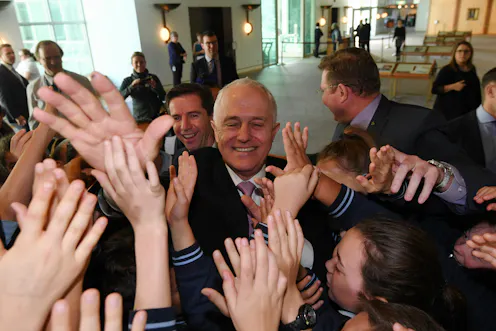
The shift in the education debate from “how much” to “how best” is a welcome change, but for students to feel the full benefit the federal government must resist intervening.
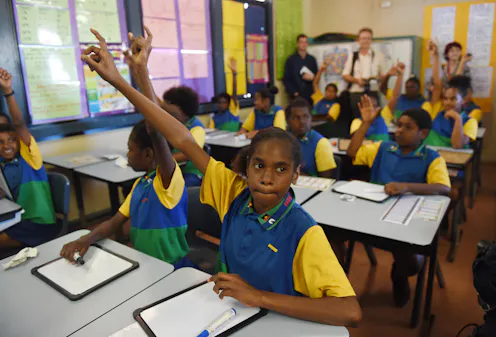
Using equivalent year levels provides us with a clearer picture of the gap for Indigenous students, who can be up to an equivalent of 7.7 years behind their non-Indigenous counterparts in writing.
The passage of the new schools funding program is a big win for Australian children.
Here’s why Labor’s figure for school funding is too high.

For the first time, Education Minister Simon Birmingham has proposed a credible plan to deliver needs-based funding.

Tanya Plibersek, shadow minister for education, told reporters recently that Australia is slightly below average when it comes to international funding for our schools. Is that right?
A new proposed deal on school funding delivers the Gonski funding within budget.
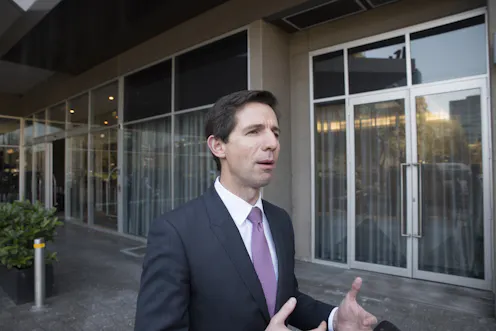
A new school funding model being proposed aims to free up funds to help education ministers resolve their differences in state funding, and deliver needs-based funding in full.
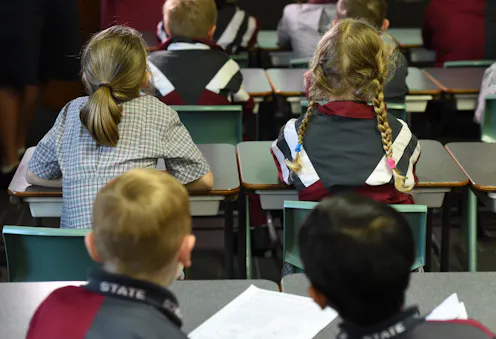
The Productivity Commission has said that education spending has substantially increased over the last decade but student achievement has shown little or no improvement. Is that true?
Contact Peter for
- General
- Media request
- Speaking request
- Location: Melbourne, Australia
- Website
- X (formerly Twitter): @peter_goss
- Article Feed
- Joined
