
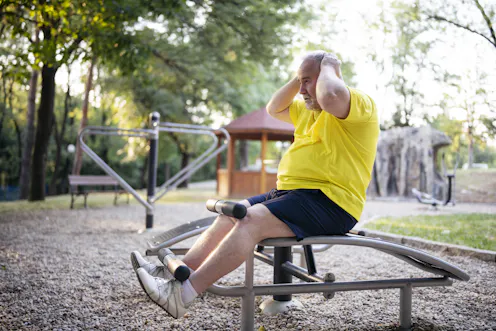
Many people report exercise makes them incredibly hungry. Here’s what might be going on.
- Clinical Trials Director, Department of Endocrinology, RPA Hospital, University of Sydney

If you follow child nutrition content on social media, you’re bound to be confused when it comes to giving your kids milk. Here’s what the evidence actually says.

It can be tempting to feed young children early, then sit down to a separate meal once they’re in bed. But having family dinners pays off in the long term.

Les enfants peuvent-ils manger trop de fruits ? Voici ce que disent les études.

If you promise dessert after a few more bites of broccoli or carrot, kids can start to see sweets as the ‘prize’ and veggies as the ‘chore’.

Children’s supplements claim to support immunity, growth, or overall wellbeing. But what does the science say?

Parents sometimes avoid nuts due to claims they cause unwanted weight gain or trigger life-threatening allergies.

Can kids eat too much fruit? Here’s what the evidence says.

These foods make up one-third of kids’ daily energy intake.

Has TikTok got you worried you’re not eating enough protein to keep you healthy? Here’s how much you really need, and what that looks like throughout a day.

Some kids live a ‘double life’ when it comes to eating habits. But there are six ways to bring childcare eating habits home.

‘Weight creep’ doesn’t have to be inevitable. Here’s what’s behind this sneaky annual occurrence and some practical steps to prevent it.

It’s important to help our kids maintain a healthy weight. But sometimes well-intentioned interventions can cause more harm than good.

Does your toddler only want to eat beige or white foods? You’re not alone. Half of children go through a stage of picky eating, peaking at age three. Here’s how to tackle some common food aversions.

If you’re a parent, you’ll be well-acquainted with the hotly debated parenting topic of screen time. But how exactly does screen time impact a child’s physical health?
Algunas personas se suben a la báscula a diario, mientras que otras han renunciado por completo a pesarse. ¿Qué es mejor? ¿Qué dice la evidencia científica?

Algumas pessoas se pesam diariamente, enquanto outras abandonaram completamente a balança. Então, o que dizem as evidências?

When we’re trying to lose weight and the number on the scales drops rapidly, it seems like we’re on the right track. But losing weight too quickly can cause the loss of muscle, as well as fat.

Some people weigh themselves daily, while others have ditched scales altogether. So what does the evidence say?

Weight loss can seem like an impossible, unachievable task. But you don’t need to lose a lot of weight to start noticing the health benefits.

Many of us gain weight over Christmas and spend more than we’d like entertaining. Here’s how to keep both in check.

When we change our diet, we disrupt our appetite hormones. Here’s how it works – and how small changes to our diet can help us feel fuller for longer.

Les publicités pour la perte de gras ciblée, en particulier pour la graisse abdominale, sont omniprésentes sur les médias sociaux. Mais existe-t-il des preuves à l’appui de cette « perte de graisse localisée » ?

Ads for targeted fat loss, especially
for belly fat, are everywhere on social media. But is there any evidence to support this type of ‘spot reduction’?
Like most weight-loss programs, the OMAD diet makes bold promises – and comes with risks.
Contact Nick for
- General
- Media request
- Speaking request
- Consulting / Advising
- Research collaboration
- Research supervision
- Location: Australia
- Website
- X (formerly Twitter): @drnickfuller
- Article Feed
- Joined
