

The ‘right to repair’ empowers consumers to fix and modify the products they purchase. When it comes to medical devices, the right to repair can help save lives.
- Associate Professor, Criminology, Department of Social Science, York University, Canada
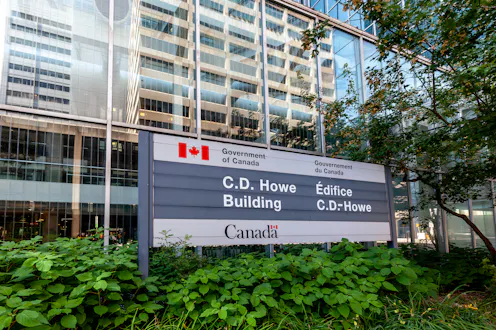
The Canadian government’s attempts at public consultations have fallen short when developing regulatory frameworks for AI. More needs to be done to ensure that policies serve the public.

The Canadian government is planning to implement ‘right to repair’ for electronic devices. This has the potential to give consumers more options, and challenges corporations’ hold over knowledge.

The economic impact of the coronavirus pandemic has caused Sidewalk Labs, a Google affiliate, to withdraw from the Toronto waterfront development partnership.

Regulating Sidewalk Labs proposed developments poses new challenges for assigning responsibility and oversight.

A report based on public consultations conducted by Sidewalk Labs has still not answered many pressing concerns about privacy and consent in Toronto’s Quayside development.

Britain’s Online Harms white paper was developed through public consultations and open, democratic processes. It suggests developing regulations that would be implemented by an arms-length entity.

Expecting internet platforms to regulate hate speech is a “worst of both worlds” approach to social media regulation.

National regulation of free speech should be by governments, and not corporations, in order to be democratic.

Regulation of the internet is inevitable and governments, rather than businesses, should seek to regulate it.

The Canadian government is right to hold public consultations on digital and data transformation given how profoundly it affects society at large. But the scope is far too narrow.

Toronto’s Quayside smart city project needs a new, truly consultative process. An innovative method used by Brazil to develop its landmark Internet Bill of Rights may be the answer.

In a fight for the global flow of information, social media firms must be regulated. Their billions of dollars in revenue put their financial interests in conflict with truth and democracy.

After violence in Charlottesville, internet firms are erasing bigoted content. But should private companies serve as unaccountable regulators and be responsible for policing complex social issues?
Contact Natasha for
- Media request
- Speaking request
- Research collaboration
- Location: Toronto, Canada
- X (formerly Twitter): @NTusikov
- Article Feed
- Joined
