Monika Korzun

(she/her)
A farmer drives a seeding rig as he plants a wheat crop on his farm near Cremona, Alta., in May 2025. Canadian investment in agricultural innovation could boost productivity, reduce emissions, enhance global competitiveness and build resilience against tariff shocks. THE CANADIAN PRESS/Jeff McIntosh

Resilient, sustainable food systems are Canada’s best defence against American tariffs

As trade shocks escalate, Canada must prioritize long-term food security over short-term retaliation.
Une baisse des prix des denrées alimentaires pourrait immédiatement remédier au manque d'accès économique à la nourriture, mais ne s'attaquera pas aux causes profondes de l'insécurité alimentaire. (Shutterstock)

Insécurité alimentaire : au‑delà du prix des aliments, il faut s’attaquer aux obstacles systémiques

Une baisse des prix des produits alimentaires pourrait immédiatement remédier au manque d’accès économique à la nourriture, mais ne s’attaquera pas aux causes profondes de l’insécurité alimentaire.
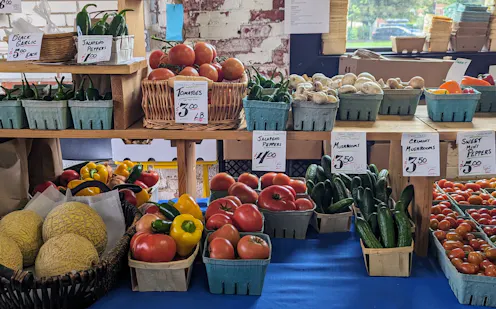
By only focusing on how to keep food costs low, we risk ignoring the underlying causes of why people cannot afford food in the first place. (Ashley Jean MacDonald)

The true cost of food: High grocery prices are not the root issue

Many people are experiencing the sticker shock of higher prices at grocery stores. But the amount we pay for food often does not reflect the real social, environmental and human costs of production.

A change in food prices might immediately address the lack of economic access to food but will not address the root causes of food insecurity. (Shutterstock)

Food prices are not the only obstacle to achieving food security: Root causes include systemic barriers

A drop in food prices might immediately address the lack of economic access to food but will not address the root causes of food insecurity.

Contact Monika for

  • General
  • Media request
  • Speaking request
  • Consulting / Advising
  • Research collaboration
  • Research supervision