
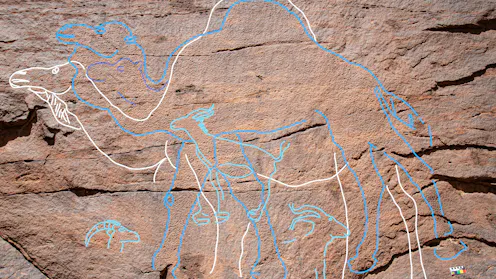
The large, naturalistic engravings are a striking symbol for survival in the desert.
- Director, Australian Research Centre for Human Evolution, Griffith University
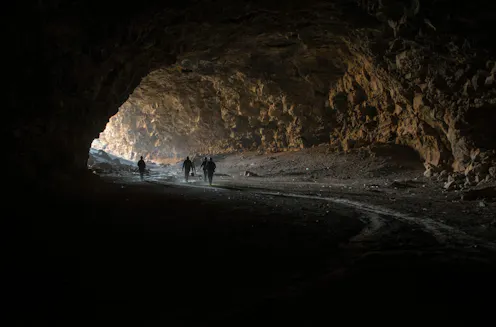
New research reveals signs of ancient human habitation in a vast cave beneath the Arabian desert. It may have been used as a waystation by Stone Age herders travelling from one oasis to another.

The findings reveal a close association between climatic conditions and early human migrations out of Africa.
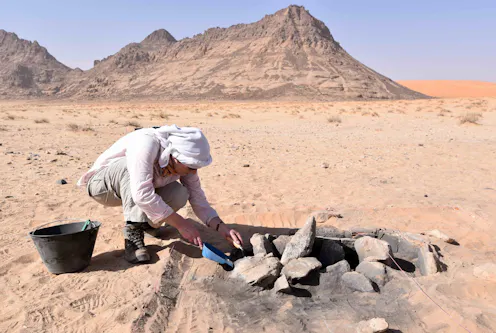
A close look at 7,000-year-old grinding stones left in ancient firepits shows wandering herders in northern Saudi Arabia carried heavy tools for working on bones, plants and rocks.
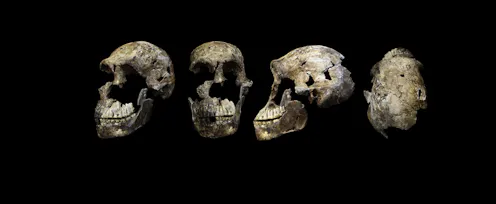
Homo naledi had a brain less than half the size of our own. Yet the new research claims it had cognitive abilities far beyond what we might expect.

Researchers looked at the skeletal remains of 40 people, and found evidence of dairy consumption across a wide swathe of early Tibetan society.
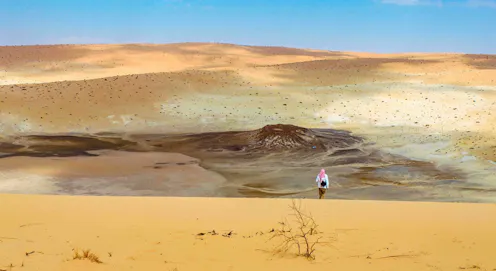
The new work presents the oldest dated evidence for hominins in Arabia, in the form of an ancient handaxe tool uncovered from the Nefud Desert.

Kami telah menemukan bukti baru bahwa manusia di India selamat dari letusan Toba dan terus berkembang setelahnya.

An archaeological site in India sheds new light on how ancient humans dispersed from Africa across the world.
Contact Michael for
- General
- Media request
- Speaking request
- Consulting / Advising
- Research collaboration
- Research supervision
- Location: Brisbane, Australia
- Website
- BlueSky: @mdpetraglia.bsky.social
- LinkedIn: https://au.linkedin.com/in/michael-petraglia
- X (formerly Twitter): @MDPetraglia
- Article Feed
- ORCID
- Joined
