

With AI slop and misinformation on the rise, research suggests New Zealanders may be turning back to mainstream news for reliability and accountability.
- Associate Professor, Co-Director of the Research Centre for Journalism, Media and Democracy, Auckland University of Technology

Research suggests falling trust in news is not directly related to falling trust in other public institutions. We need to address the news problem on its own terms.
Previously plummeting levels of trust in the news seem to be stabilising. But this year’s Trust in News report also shows more people are avoiding the media in general.

The government has revived the Fair Digital News Bargaining Bill, but the way AI may be skewing news results and visibility is off the table for now. My new research suggests it should be a priority.

Social media platforms are abandoning news – which is bad news for traditional media organisations that have come to rely on them for consumers.

The pandemic hit media hard, but a new report shows New Zealand now has more independent news outlets than at any time in the past decade.

Hundreds of jobs are at risk and the quality of news is under threat as New Zealand’s broadcasting media face closures, sales and restructuring in the biggest overhaul in a decade.

New Zealand’s largest general newspaper has launched a paywall this week, with likely repercussions for other media organisations and readers.

Jiika perusahaan berita mengabaikan Facebook, mereka hampir tidak akan kehilangan uang.

New research suggests media organisations that rely on Facebook to build audience are trapped in an attention economy that delivers traffic but no money.
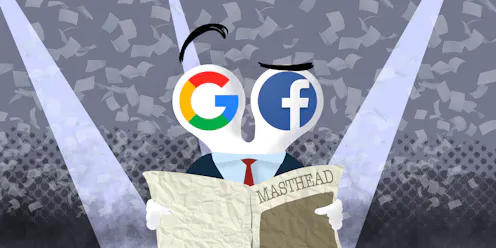
It’s surprising that news publishers seem to hand more power to Google because now more than ever there’s an urgency to have clear barriers between news companies, social media platforms and search engines.

While digital revenue streams may be delivering, there’s still a strong reliance on print for revenue and research shows readers engage more with print.
Media companies say their results are an indicator of a transformation taking place from traditional business to newer profitable digital platforms, but it seems the proof is still missing.
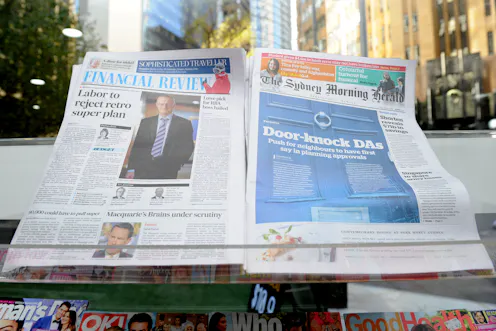
The AFR has one of the hardest paywalls in the business, but the evidence shows this strategy could prove difficult to maintain.

If a New Zealand-focused deal between Fairfax and APN gets approval readers can expect less access to local news content.
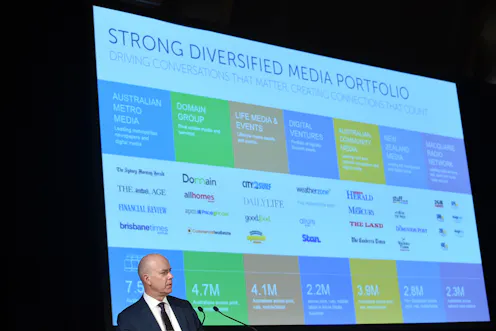
The transition from print to digital will not be painless at Fairfax, or its global peers.
They employ thousands and are highly commercial, and increasingly their staff are turning to unions.
With digital subscriptions barely registering on the revenue front, media companies are staking their hopes on alternative revenue sources.
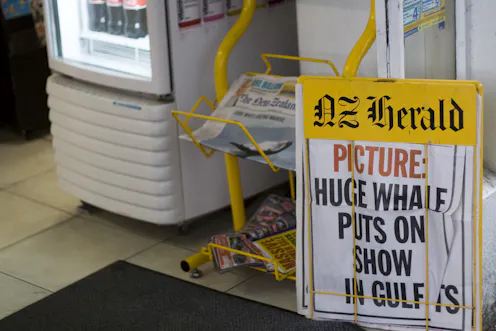
APN News & Media is mulling a float of its New Zealand media assets including its masthead The NZ Herald, The Radio Network (TRN) and group buying site GrabOne. The company is potentially selling 60…
Fairfax Media’s full-year results are out, and they confirm at least one thing: the company is still a digital media wannabe. Its digital first strategy is yet to deliver, with the company still heavily…

The Guardian and The Washington Post have been awarded the Pulitzer Prize for Public Service for their work in bringing to light documents leaked by former NSA contractor Edward Snowden. It is fashionable…

Blogs are thriving in New Zealand thanks to threats to media freedom, an increasingly commercialised media environment, and shifts in media ownership. The financial ownership of the major media companies…
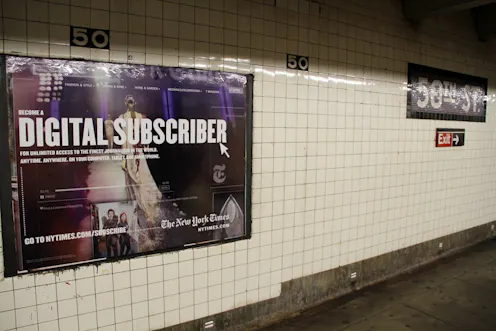
Media companies are failing to deliver transparency about their digital subscriptions, as my recent study about paywalls found. The research of paywalls in eight countries found paid online content presents…
Contact Merja for
- General
- Media request
- Speaking request
- Consulting / Advising
- Research collaboration
- Research supervision
- Location: New Zealand
- Website
- X (formerly Twitter): @MyllyMe
- Article Feed
- Joined
