
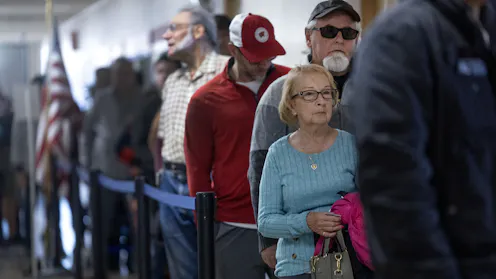
Why would a young Republican back solar but reject a carbon tax? Twenty years of survey data shows climate opinion is more complex than party labels suggest.
- Research Assistant Professor of Industrial & Systems Engineering, University of Southern California
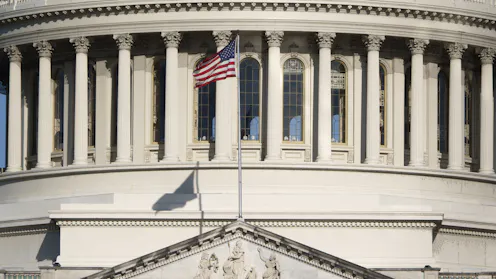
Campaign contributions among House members show how parties build influence, protect vulnerable members and respond to election pressures.

Humans and AIs have different methods of calculating words about probability like ‘maybe’ and ‘likely’ – and different interpretations about what they mean.

Just as human biases show up in machine learning systems, so, too, do people’s vagaries and vicissitudes.

Common misperceptions about AI chatbots are that they know something about the world, can make decisions, are a replacement for search engines and operate independent of humans.

Language model AIs are smooth talkers, but you shouldn’t rely on them to make important decisions. That’s because they have trouble telling the difference between a gain and a loss.

A mathematical method of analyzing networks can spot hidden features such as people who wield soft power in organizations.
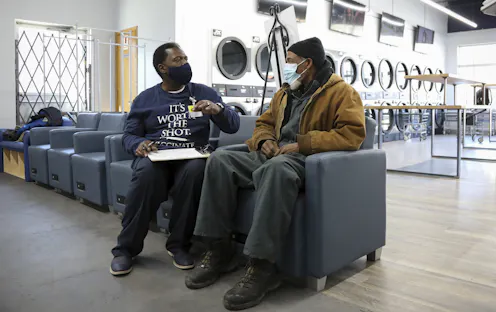
Machine learning algorithms can help public health officials identify areas of high vaccine hesitancy by ZIP code to better target messaging and outreach and counter misinformation.

Common sense is a broad and diverse set of abilities that help define what it means to be human. AI researchers are struggling to endow computers with it.

An AI analysis shows that differences in how New Yorkers and Angelenos tweet go beyond the words they use.

Humans often stumble when they encounter the unexpected, but they tend to adapt and move on. Artificial intelligence systems, not so much.
Contact Mayank for
- General
- Media request
- Speaking request
- Consulting / Advising
- Research collaboration
- Research supervision
- Location: Los Angeles, California, U.S.
- Website
- X (formerly Twitter): @kejriwal_mayank
- Article Feed
- ORCID
- Joined
