
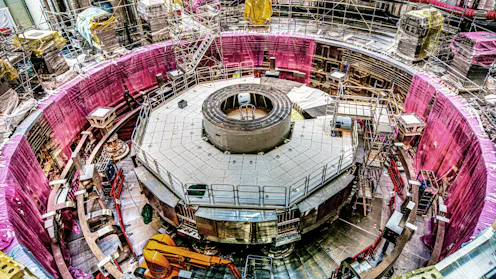
Fusion companies claim they can deliver power in a decade or less – but the reality may be more difficult.
- Professor, Mathematical Sciences Institute and School of Computing, Australian National University

Fission and fusion are both nuclear reactions. But while one involves splitting atoms, the other involves fusing atoms together.
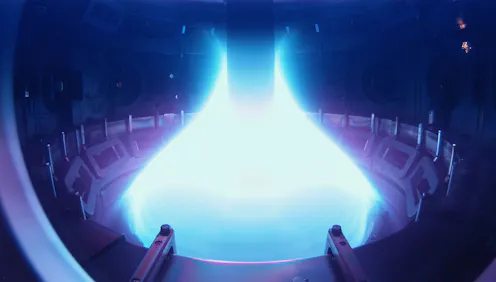
A fusion of public and private investment appears to herald a new push towards developing the ultimate clean, limitless energy source.
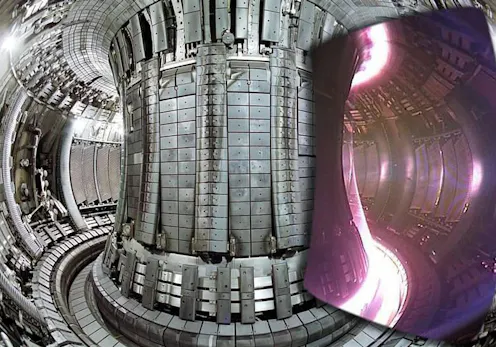
Despite recent reports, nuclear fusion-powered energy isn’t mere years from solving our clean energy needs. But physicists are making encouraging strides nonetheless.
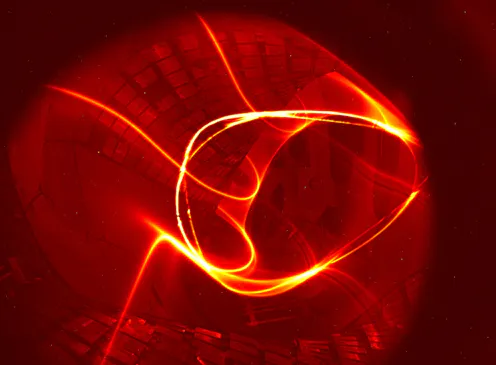
Fusion power, if it works, offers vast amounts of clean energy and almost zero carbon emissions. A new experimental fusion reactor has come online, and it uses a curious twisted stellarator design.
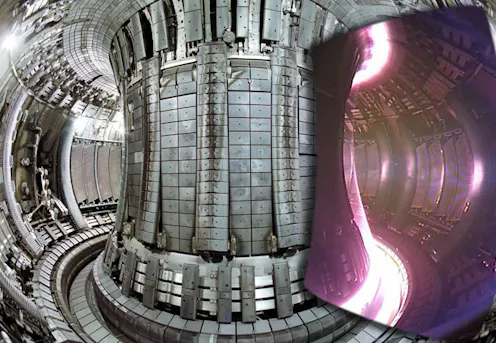
Why don’t we have nuclear fusion power yet? Because it involves taming plasmas at temperatures far hotter than the Sun’s core. But the good news is that physicists are slowly but surely figuring out how.

Aerospace giant Lockheed Martin’s announcement this week that it could make small-scale nuclear fusion power a reality in the next decade has understandably generated excitement in the media. Physicists…
Contact Matthew for
- General
- Media request
- Speaking request
- Consulting / Advising
- Research collaboration
- Research supervision
- Location: Canberra, Australia
- Website
- X (formerly Twitter): @MatthewHole11
- Article Feed
- ORCID
- Joined
