Former President Donald Trump greets supporters following a 2020 campaign rally in Arizona. Isaac Brekken/Getty Images

Who likes Donald Trump? Lots of Republicans, but especially Hispanic voters, plus very rural and very conservative people

New findings by political scientists at Northwestern University and Harvard Kennedy School provide a clearer picture of which demographic groups support Trump.
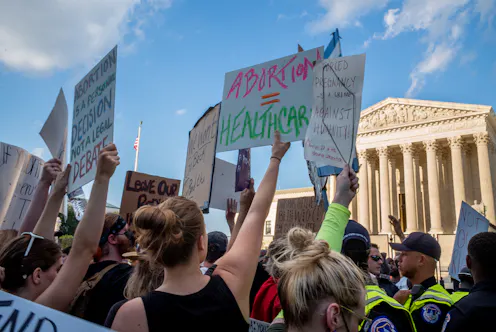
Abortion-rights demonstrators protest in front of the Supreme Court building on June 25, 2022, a day after the announcement of the Dobbs v. Jackson Women’s Health Organization ruling. Brandon Bell/Getty Images News via Getty Images

In the year since the Supreme Court overturned Roe v. Wade and ruled states should decide the legality of abortion, voters at the state level have been doing just that: 4 essential reads

In the year since the Supreme Court overturned Roe v. Wade, giving decisions about the legality of abortion back to states, voters and state legislatures have made their preferences on abortion clear.
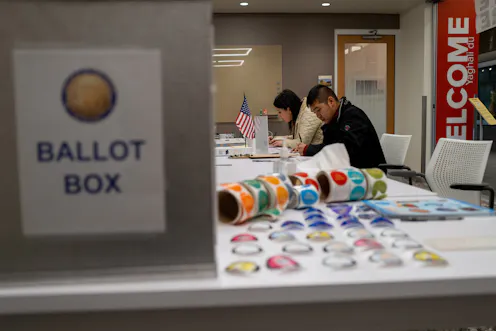
People volunteer at a Native Alaskan voting station on Nov. 2, 2022 in Anchorage. Spencer Platt/Getty Images

What’s at stake this Election Day – 7 essential reads

Voter demographics and policy priorities are two recurrent, big issues on Election Day – but shifts in election administration and voting laws are new challenges influencing the midterms.
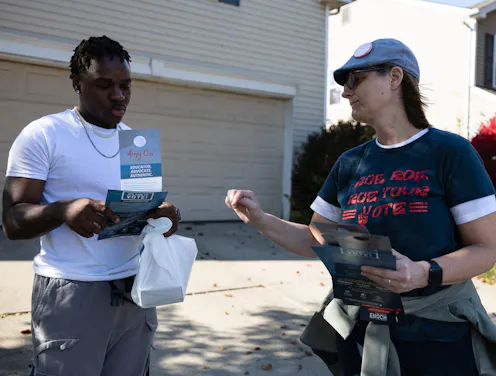
Amy Cox, a Democratic candidate running to be an Ohio state representative, speaks with a potential voter on Oct. 23, 2022. Megan Jelinger/AFP via Getty Images

Abortion is not influencing most voters as the midterms approach – economic issues are predominating in new survey

New surveys carried out by a team of social scientists find no evidence that Democrats, Republicans and independents are more likely to vote because of the Supreme Court’s abortion decision in June.
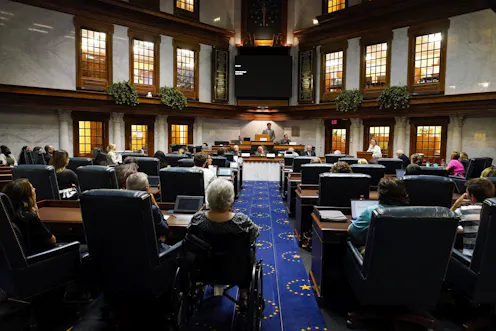
An Indiana Senate committee hearing on a GOP proposal to ban nearly all abortions in the state, at the Statehouse in Indianapolis, July 26, 2022. AP Photo/Michael Conroy

4 reasons why abortion laws often clash with the majority’s preferences in the US, from constitutional design to low voter turnout

Why do government policies sometimes fail to reflect the public will? The answer begins with the design of the US government system, forged in the 18th century.

The Savannah Medical Clinic, which provided abortions for four decades in Savannah, Ga., is closed now. AP Photo/Russ Bynum

Kansas vote for abortion rights highlights disconnect between majority opinion on abortion laws and restrictive state laws being passed after Supreme Court decision

Justice Samuel Alito said that abortion policy crafted by elected representatives in the states would be more responsive to what constituents want than federal protection of the right. He was wrong.

Contact Matthew for

  • General
  • Media request
  • Speaking request
  • Consulting / Advising
  • Research collaboration
  • Research supervision