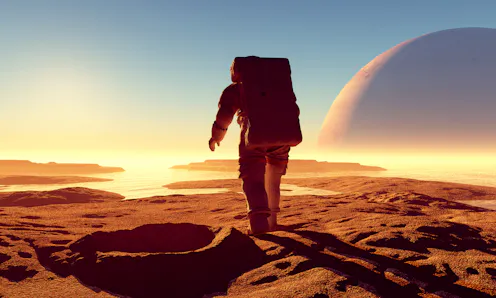
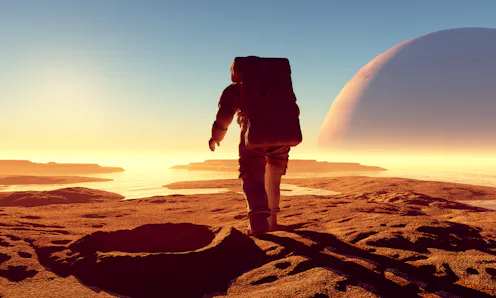
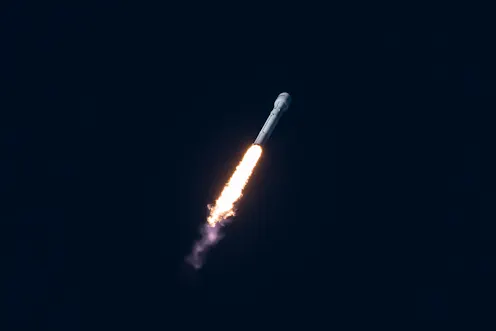
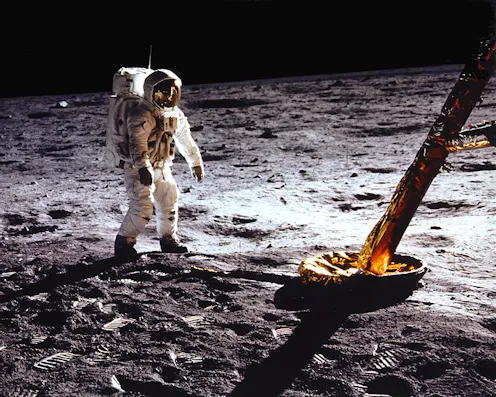
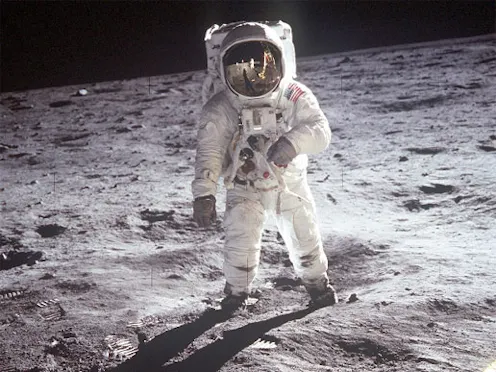
Episode five of To the moon and beyond, a podcast series marking the 50th anniversary of the moon landings.
The fifth episode of the To the moon and beyond podcast series explores where we will be travelling in 2069.
shutterstock.
Episode four of To the moon and beyond, a podcast series marking the 50th anniversary of the moon landings.
In the fourth episode of our podcast series, we look at the practical, legal and ethical questions about going to set up base on the moon – and mining its resources.
Episode three of To the moon and beyond, a podcast series marking the 50th anniversary of the moon landings.
Episode 3 of the To the moon and beyond podcast takes a look at who some of the key players are in the 21st century space race and what they are competing for.
Episode two of To the moon and beyond, a podcast series marking the 50th anniversary of the moon landings.
In episode 2 of The Conversation's new podcast series, we look at how people reacted to the moon landing – and why some still believe it was a hoax.
The first episode of a new podcast series marking the 50th anniversary of the moon landings.
blank.
The first episode of a brand new podcast series to mark the 50th anniversary of the moon landings looks back at what going to the moon taught us and why we stopped sending people there.
A new podcast series from The Conversation exploring the last 50 years of space exploration and the 50 years to come.
The Earth’s magnetosphere bangs like a drum.
E. Masongsong/UCLA, M. Archer/QMUL, H. Hietala/UTU
The Earth’s magnetic field has a beat, scientists discover.
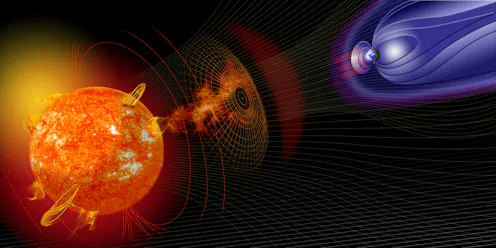
Solar winds make the Earth’s magnetic field crunch and whistle.
NASA
The Earth’s magnetic field lines whistle after solar outbursts.
Harrison Ford as Han Solo with his blaster in the old Star Wars triology.
BagoGamesFlickr
Plasma physics suggests Star Wars blaster guns would be extremely deadly.
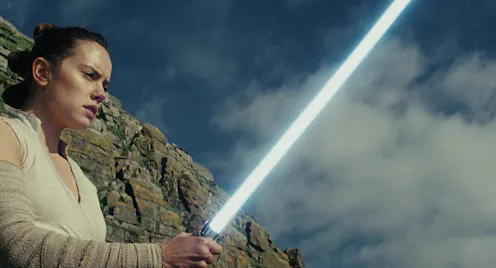
Watch out for that cloud, Rey!
Walt Disney Studios Motion Pictures / Lucasfilm Ltd. / Everett
In Star Wars, ‘force lightning’ is a lethal weapon that can only be tackled with a lightsaber. But would it work in real life?
Zakharchuk/Shutterstock.com
With the wealth of data being created nowadays, new forms of artistic collaboration with scientists are emerging.
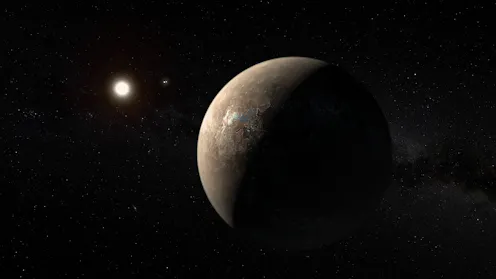
Artist’s impression of Proxima Centauri b.
ESO/M. Kornmesser
You may even be able to find other planets around the star closest to our solar system.
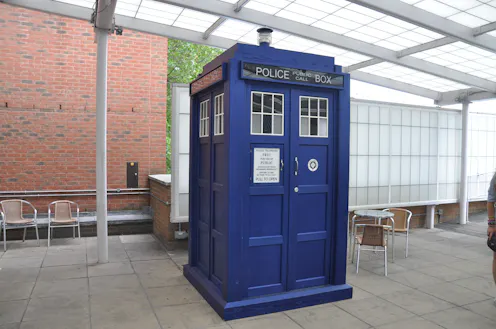
The TARDIS.
Babbel1996/wikipedia
Disappointed about Doctor Who’s TARDIS ending up at the wrong place at the wrong time? Don’t be – it’s incredibly precise.
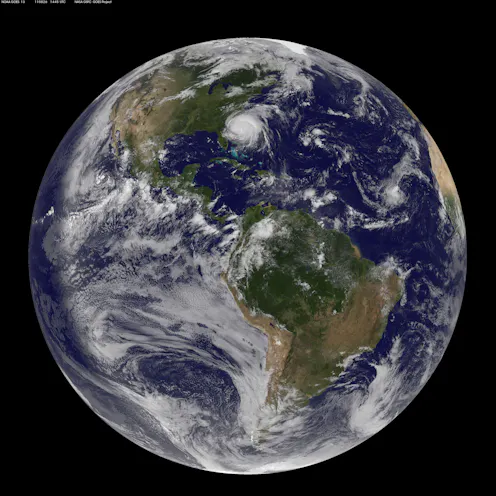
NOAA/NASA GOES Project
The Earth’s magnetic field acts like a giant instrument playing magnetic music.
That’s no moon.
KillamarshianUK/Flickr
Scientific breakthroughs in graphene production and nuclear fusion may help us build the super space stations of the future.
Hush.
NASA
Listen to some weird space sounds and help identify crunches, whistles and other odd effects. It could help save our satellites.
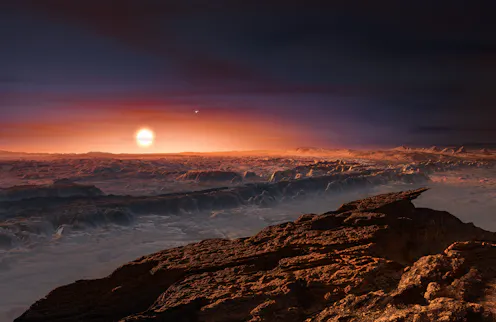
Artist’s impression of the surface of the planet Proxima b, orbiting Proxima Centauri.
ESO/M. Kornmesser
Scientists have finally found an Earth-like planet we may actually be able to visit.
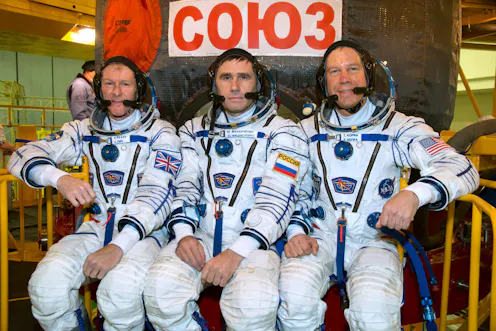
Tim Peake, Yuri Malenchenko and Tim Kopra are about to return to Earth after a six-month stay at the ISS.
NASA/Victor Zelentsov
In theory, astronauts get the equivalent of a lethal x-ray dose during a six-month stay at the ISS. Here’s why we don’t have to worry too much though.
Don’t worry, I’ve run the mathematical simulations.
Paramount Pictures
It’s 30 years since the release of Ferris Bueller’s Day Off. Here’s why he got away with it.
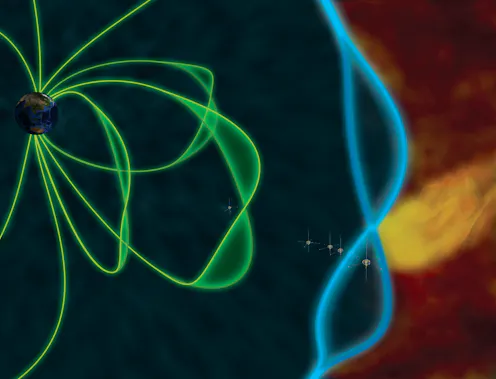
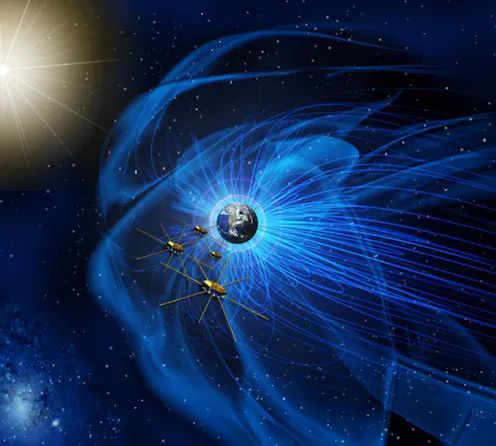
Four identical NASA spacecraft fly near the sun-facing boundary of Earth’s magnetic field (the blue wavy lines).
NASA
After half a century of trying, scientists have finally caught a glimpse of the magnetic process that fuels space weather and the northern lights.