

Energy and natural resources development projects carry risks and costs that could stretch far into the future. That’s why it’s so risky to streamline or fast-track approval processes.
- Professor, Environmental and Urban Change, York University, Canada

Climate change remains a real threat to Canadians and their communities. As they campaign to lead the country, Canada’s would-be prime ministers should be advocating for climate action.

Three years ago, Ontario’s Doug Ford won an overwhelming majority government on the basis of the ballots of less than 18 per cent of the province’s eligible voters. Are voters still disengaged?

Due to Trump’s tariffs, Canada cannot afford to have the focus of one of its key provincial leaders diverted into trying to win an unnecessary provincial election.

Canada should consider an export charge on Canadian energy bound for the U.S and applied directly by the federal government. That would impose some unity on Canada’s approach to Trump 2.0.

Amid speculation that Doug Ford may call an early election in Ontario, there are several issues that should amount to a moment of deep political vulnerability for his government.

A little more than five years ago, there was a strong federal-provincial consensus around climate action. With the election of several Conservative premiers since then, that consensus has vanished.

The Greenbelt fiasco has been an enormous distraction from the challenges facing the Greater Toronto Area — and it’s doubtful the Ford government will significantly change its approach.

The Greenbelt scandal is among the most serious of Ontario Premier Doug Ford’s years in office. So why is he pressuring developers to accelerate construction on Greenbelt lands?

Ontario’s Doug Ford government engages in a casual approach to decision-making that regards normal governance processes as nothing but delay-inducing red tape.

Doug Ford’s Ontario government is running up major long-term economic and environmental costs and liabilities, eroding the province’s capacity to deal with future challenges.

Evidence suggests that Ontario neither had a shortage of pre-authorized housing starts to accommodate its growing population, nor did it have a shortage of designated land to build such homes.

Looking back on Ford’s four years in power reveals four themes in his approach to governance — and what the next four years might have in store if he wins again.

The 2022 election looms as the most important for Ontario’s environment in the modern era, and its impact may echo for generations to come.

New relationships between energy, geopolitical security and climate change policy flowing from the invasion of Ukraine are beginning to emerge, and the implications could be enormous.

The Ontario government has, under Doug Ford, revised policies and approaches in favour of developers. Policy reform is essential to address the growing problem of unaffordable housing.

While the outcome of the 2021 federal election offered little in the way of change, it may have left Canada better positioned to make progress on reducing greenhouse gas emissions.
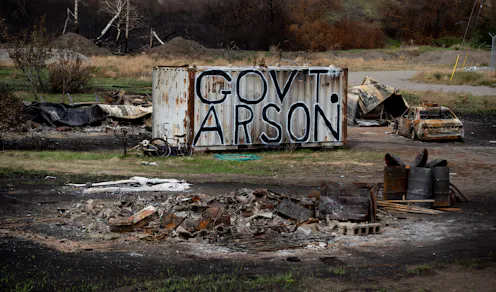
Canadians are faced with an unwanted election that’s placed climate progress at unnecessary risk.

The pandemic’s third wave has brought Ontario to the brink of catastrophe. The best options for controlling the situation are well understood, so why won’t the provincial government implement them?

Is Ontario Premier Doug Ford’s mishandling of the second wave of COVID-19 a byproduct of his pro-business sympathies?
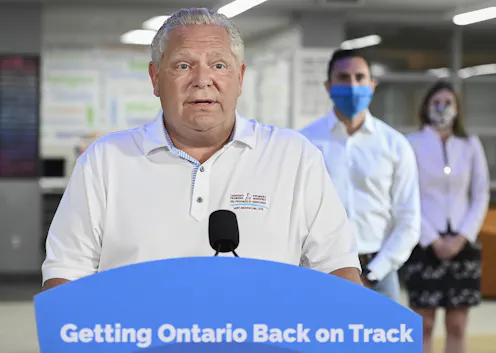
Ontario Premier Doug Ford has presented an image of deep concern and empathy for the victims of COVID-19. But he’s flailing when it comes to delivering proactive measures to fight the pandemic.

The extraordinary scope and scale of the COVID-19 disaster at Canada’s long-term care centres would seem to warrant a public inquiry. But there are no guarantees there will actually be one.

The COVID-19 crisis has raised major questions about the viability of the economic, business and employment models that corporate and industry lobbyists are arguing for a return to.
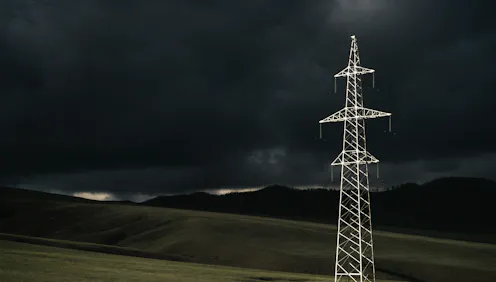
Energy-efficiency initiatives are consistently identified as the lowest impact and most cost-effective means of meeting energy needs. Why isn’t Ontario focusing on them?
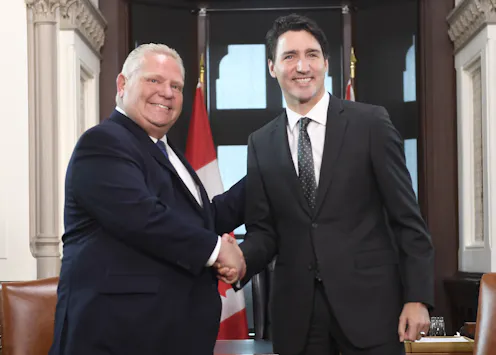
There’s been one notable exception to Doug Ford’s supposed willingness to change direction: the environment.
Contact Mark for
- General
- Media request
- Speaking request
- Consulting / Advising
- Research collaboration
- Research supervision
- Website
- Article Feed
- Joined
