
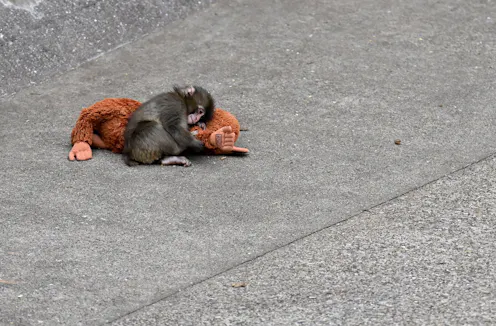
Keterikatan Punch pada bonekanya bukan sekadar video yang mengharukan. Hal ini mengingatkan pada kisah serangkaian eksperimen psikologi yang sangat terkenal dari tahun 1950-an.
- Associate Professor, School of Psychology, The University of Queensland

Pourquoi un bébé singe préfère-t-il une peluche à une source de nourriture ? L’histoire virale de Punch, le bébé macaque du zoo d’Ichikawa, au Japon, ravive un débat ancien sur la place du réconfort dans le développement.
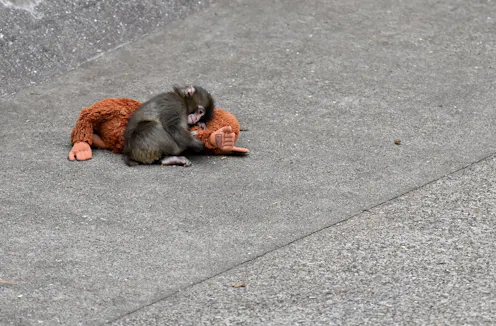
El apego de Punch por su peluche no es solo el argumento de un vídeo desgarrador. Su reacción entronca con una serie de experimentos psicológicos muy famosos de la década de 1950.

O apego de Punch ao seu bicho de pelúcia não é apenas o tema de um vídeo comovente. Ele remete à história de uma série muito famosa de experimentos psicológicos realizados na década de 1950.
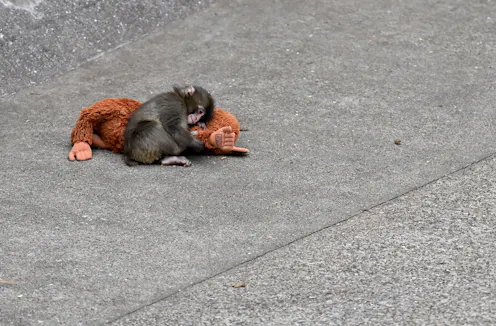
Punch’s attachment to his plushie isn’t just the subject of a heart-wrenching video. It harks back to the story of a very famous set of 1950s psychology experiments.

Most psychology research that forms the basis of parenting advice might not apply to you. So, how do you know whether to trust it?
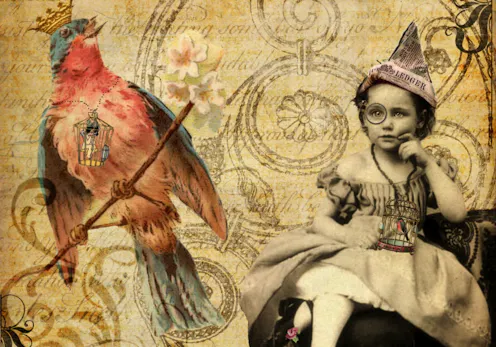
Humans are very good at innovating and it would seem reasonable to expect our children would be too. But a recent study questions these assumptions, suggesting young children’s ability to problem-solve…
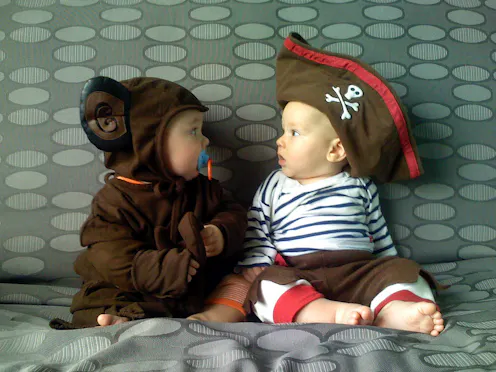
We all know the scene: a child, wrapped in his or her own imaginary world, fights off aliens while flying through space on a rocket fashioned from an empty box. But could such flights of fancy be critical…
Contact Mark for
- General
- Media request
- Speaking request
- Consulting / Advising
- Research collaboration
- Research supervision
- Location: Brisbane, Australia
- Website
- Article Feed
- Joined
