

From the Black Death to the COVID-19 pandemic, combining the genetic data of a pathogen with historical records, archaeological artifacts and epidemiological studies can uncover its origins.
- Professor of Chemistry, Connecticut College
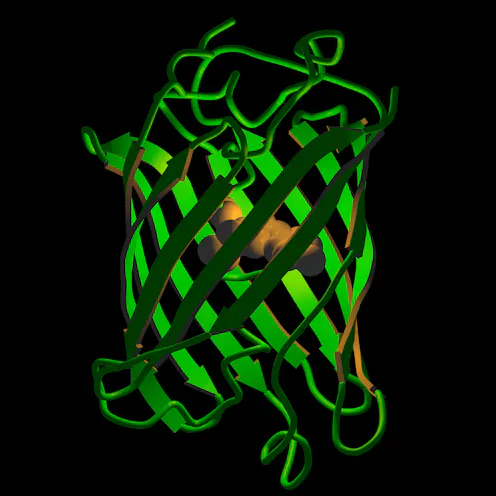
Researchers have been studying tens of thousands of proteins and even more variations without a yardstick to compare their results.

Many of the world’s best and brightest STEM researchers have long moved to the US. But now that brain gain is at risk of reversing to become a brain drain, with science funding and visas in chaos.
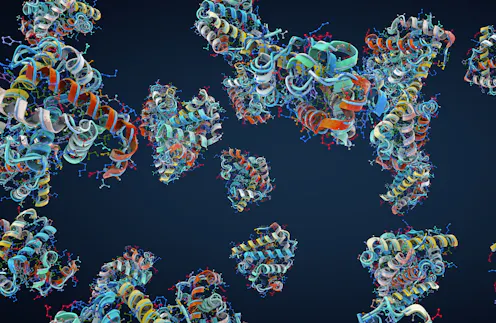
The prize honors innovation at Google DeepMind and in academia. Three researchers share the award for using machine learning to predict proteins’ 3D shapes and design the molecules from scratch.

AI has learned the ins and outs of proteins. Gene editing gives scientists control of life’s molecular machinery. Together they could lead to a revolution in biotechnology.
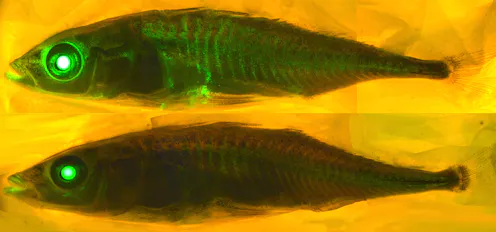
The AI AlphaFold can figure out the three-dimensional protein structure any string of amino acids will become. It has now exceeded its training by figuring out what makes some proteins glow.

Three pioneering technologies have forever altered how researchers do their work and promise to revolutionize medicine, from correcting genetic disorders to treating degenerative brain diseases.

Whenever you hear about a new bit of science news, these suggestions will help you assess whether it’s more fact or fiction.
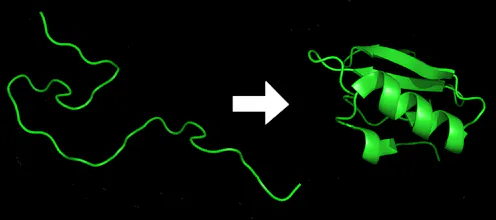
Scientists in an artificial intelligence lab have made a breakthrough in solving the problem of how proteins fold into their final three-dimensional shape. The work could speed up creation of drugs.

Most scientific discoveries these days aren’t easily ascribed to a single researcher. CRISPR is no different – and ongoing patent fights underscore how messy research can be.

With 3% of science Nobels going to women and zero going to Black people, these awards are an extreme example of how certain demographics are underrepresented in STEM fields.

A symposium celebrated a roadmap for the American scientific enterprise laid out 75 years ago. What should be included in a US research plan that would last through the rest of this century?
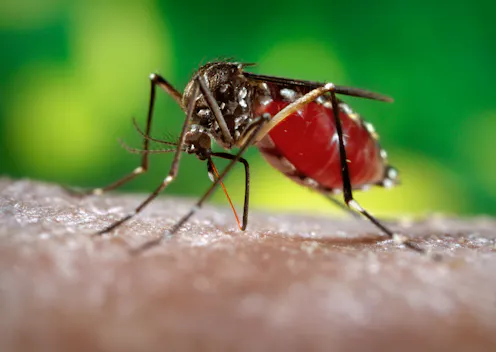
Annihilate the Aedes aegypti mosquito population and you’d stop dengue fever from infecting up to 100 million people worldwide annually. Here are some high-tech methods under development.
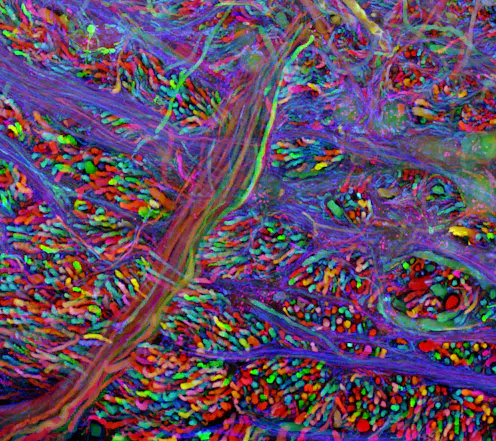
First found in jellyfish, but now inserted into all kinds of organisms, GFPs illuminate biological structures and processes that researchers otherwise couldn’t see.
Contact Marc for
- General
- Media request
- Speaking request
- Consulting / Advising
- Research collaboration
- Research supervision
- Location: New London, Connecticut, U.S.
- X (formerly Twitter): @LightUpScience
- Article Feed
- Joined
