
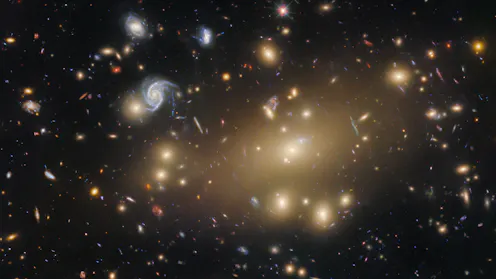
Deux des meilleures méthodes pour mesurer le taux d’expansion de l’univers donnent des résultats qui ne concordent pas. Ce problème est connu sous le nom de « tension de Hubble ».
- Professor of Physics, Simon Fraser University
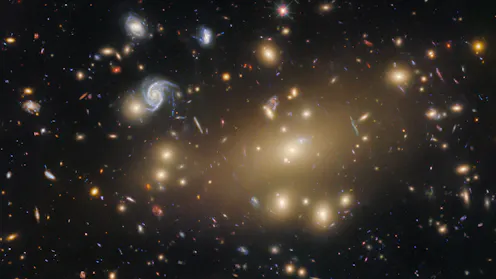
Two ways of measuring how fast the universe is expanding disagree, a puzzle known as the Hubble tension. Tiny magnetic fields from the Big Bang may offer a solution.
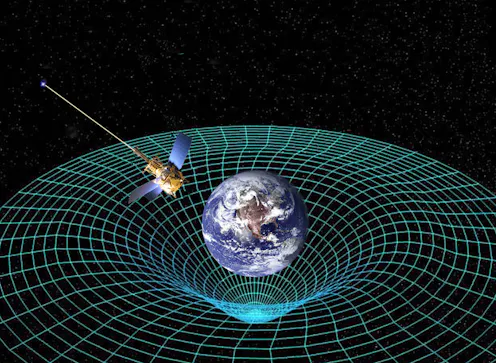
The gravitational field can affect space and time: the stronger gravity is, the slower time moves. This prediction of General Relativity can be used to reveal hidden forces acting on dark matter.
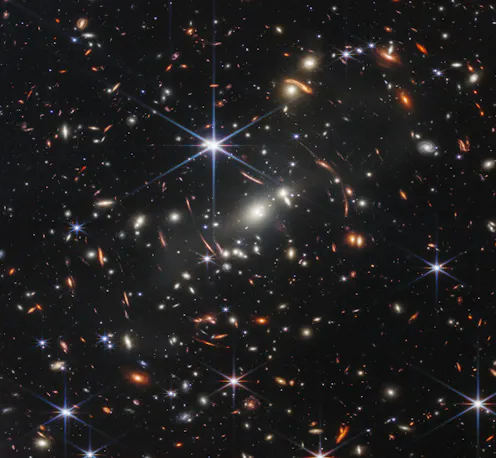
The theory of gravity may need to be altered.
Contact Levon for
- Media request
- Speaking request
- Consulting / Advising
- Location: Burnaby, BC, Canada
- Website
- Article Feed
- ORCID
- Joined
