

Harrison Young has held senior banking jobs around the world, from the US and UK to China and Australia. In Prudence and Ambition, he shares what he’s learned.
- Emeritus Professor of Finance, The University of Melbourne

As an investment bank, commodities trader and operator of toll roads, Australia’s Macquarie Group has inserted itself into most of our lives. A new book outlines some of the questionable tactics that took it to the top.

Beware any advice to go either fixed or variable. You are unlikely to outsmart the bank.

The Reserve Bank’s Term Funding Facility was meant to support lending during COVID. Instead the funds might be ending up in the accounts of bank shareholders.

Australian retirees can keep stashing away more superannuation, unused, for another year, even though the crisis prompting the concession has passed. The big winners? Rich retirees and their kids.

By raising funds the way they do, companies deplete the wealth of shareholders who didn’t take part.

From some statistics 2020 looks like economic good times. Have relief measures averted economic pain or simply deferred it?

Economic circumstances do not justify the federal government’s rejection of the banking royal commission’s recommendations.

It was one of only two recommendations the government rejected.

If anything, the standards are becoming easier, rather than harder, to apply.

We protect the savings of non-resident people in Australia but we leave them without any benefits if they lose their job here.

Westpac and the ANZ have suspended dividends payments. The National Australia Bank has slashed them. The peculiarities of our tax system explain why retirees hate this more than they should.

It is normally a bad idea to let super funds borrow, but these aren’t normal times. There’s a (limited) case for allowing them to borrow from the Reserve Bank.

Rather than offering early access to super, the government could allow people to borrow against it, at a zero interest rate.

Banks and other financial institutions will be left with plenty of ways to treat customers badly under new, overdue, rules.

All that would be needed is to adjust retiree tax scales and tax their super fund earnings at their marginal rate.

Evidence for the prime minister’s contention that the banks are “profiteering” is thin on the ground.
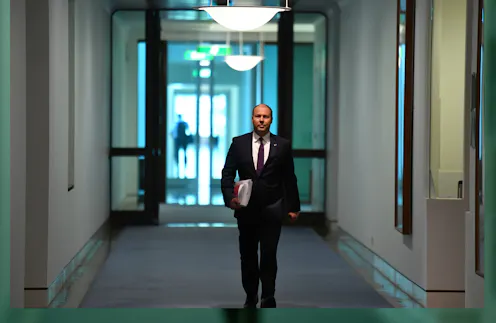
People expect financial institutions to serve them better in the wake of the royal commission. There’s reason to believe they won’t, for long.

There’s concern that paying upfront for the services of mortgage brokers would frighten customers away. But it needn’t, if they provide good service and explain what are charging for.

Broadening the royal commission beyond banking may dilute the focus on the banks themselves.
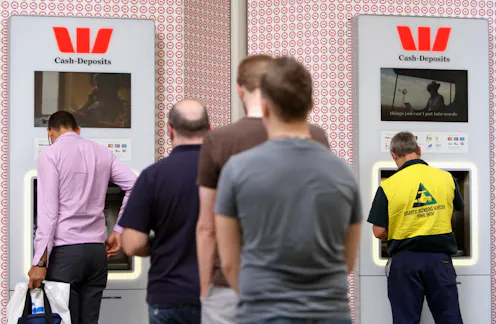
Applying the GST to banking has much sounder economic underpinnings than the current levy, would have raised much more revenue, and would have applied to all banks rather than just the big banks.

The new levy on banks from the budget is a small hit to their profit but it could have unintended consequences.

The government has yet to address a major incentive to put assets into super and hold them until the retirement phase.
Australian Council of Social Service chief Cassandra Goldie told Q&A that Australia is among the lowest-taxing countries in the OECD. Is that accurate?

Royal Commissions work best when one specific issue can be addressed, rather than a wide range of problems.
Contact Kevin for
- General
- Media request
- Speaking request
- Consulting / Advising
- Research collaboration
- Research supervision
- Location: Melbourne, Australia
- Website
- X (formerly Twitter): @unimelb
- Article Feed
- Joined
