

Water services are too important to fail. If a utility becomes financially unstable, consequences are passed on to customers, regulators and governments.
- Executive Co-Director, UNU Hub on Empowering Communities to Adapt to Environmental Change, United Nations University
- Associate Professor and Canada Research Chair, (Re)Engineering Sustainable Communities, Schulich School of Engineering, University of Calgary

In its current form, safe drinking water legislation would weaken key legal provisions, particularly those related to rights and governance for First Nations.

Calgarians have been asked to reduce their water use. These simple steps can help us all to reduce our water footprint and save money at the same time.

In the lead-up to the 2024 federal budget, there was hope for investments in water management and water-related infrastructure. Those hopes were misplaced.
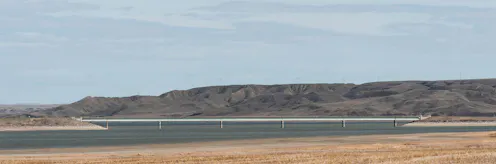
Declining precipitation, climate change and governance failures will drive water flow scarcity in 2024 with serious implications across Western Canada.

The 2023 federal budget provides funding for critical infrastructure and clean energy. But long-term planning is needed to fix chronic problems.
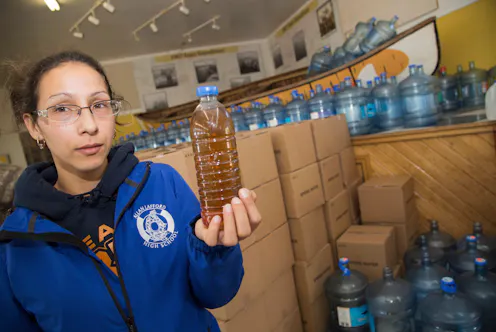
It seems all party leaders can agree, water advisories in First Nation communities need to end. If there is agreement, then isn’t it time to stop making it a campaign promise and make change?

Canada’s election season highlights the country’s disjointed approach to infrastructure, which focuses largely on fast cash infusions to stimulate an underproductive economy.
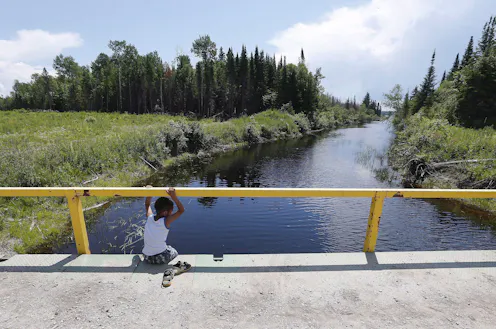
The federal government’s announcement that boil-water advisories on First Nations won’t end until 2023 at the earliest isn’t surprising. The true crisis is much greater than widely known.

Budget 2021 includes significant investment in Indigenous communities. Moving forward, post-pandemic recovery and future budgets need to address systemic inequalities.
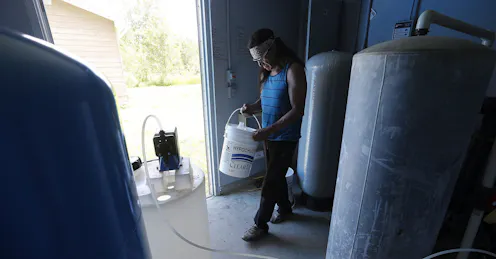
While investments are important, what’s more important is the process and mechanisms through which Indigenous people access funding.
Contact Kerry for
- General
- Media request
- Speaking request
- Consulting / Advising
- Research collaboration
- Research supervision
- Location: Calgary, AB
- X (formerly Twitter): @kerryeblack
- Article Feed
- ORCID
- Joined

