
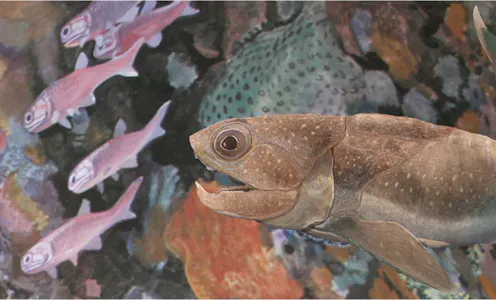
A new study of ancient, extinct fish known as placoderms provides another piece of the evolutionary puzzle about our deep time, aquatic ancestors.
- John Curtin Distinguished Professor, Molecular and Life Sciences, Curtin University
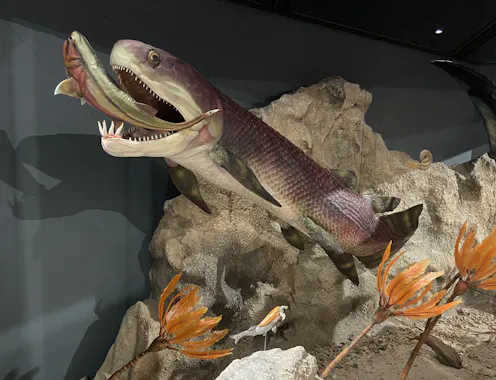
Des fossiles australiens de poissons à mâchoire permettre de mieux comprendre notre évolution.
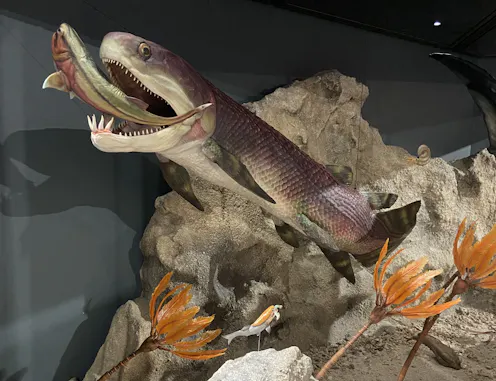
The findings come from placoderm fish fossils found in Western Australia’s Kimberley region. This extinct order of fish represents some of our earliest jawed ancestors.

Some things that develop as normal in elephant sharks and other marine life can mimic things we see in human disease. That makes these ‘mutants’ ideal for study to find out why things go wrong in humans.
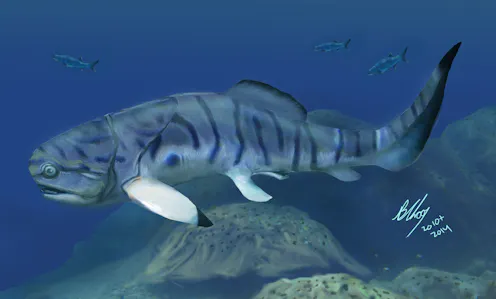
We humans use the euphemism for sex that “we like to get a leg over” but the first jawed vertebrates – the placoderms – they liked to get a leg in. They were the first back-boned creatures to evolve male…
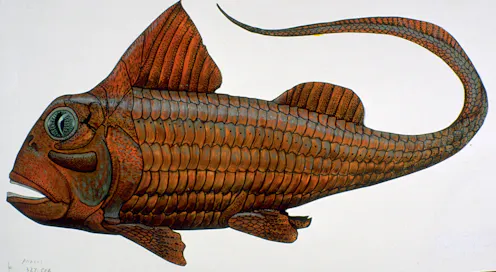
Fossilised soft tissues, such as skin and muscle, are exceptionally hard to come by. When you think the chances of an animal being fossilised is less than one in a million - and these usually have only…
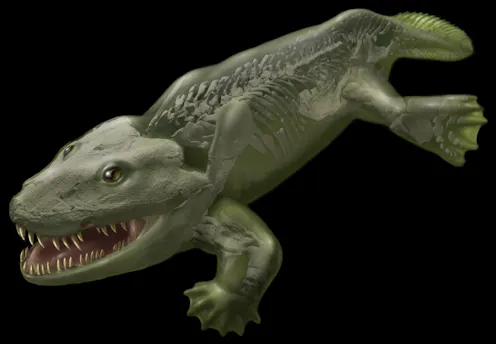
Palaeontology has gone high-tech: no more wax and plaster-cast models. Instead, 3D data from computed tomography (CT) scans is overturning long-held views of how the earliest land animals moved. Research…
Contact Kate for
- General
- Media request
- Speaking request
- Consulting / Advising
- Research collaboration
- Research supervision
- Location: Perth, Western Australia
- Article Feed
- Joined
