

The economic and social conditions in which anti-migrant sentiment has exploded in South Africa include high joblessness and a collapse of government services.
- Associate Professor at the Southern Centre for Inequality Studies, University of the Witwatersrand

South Africa shouldn’t settle for a future in which millions who are willing and able to work go hungry while the country waits for the formal sector to grow.
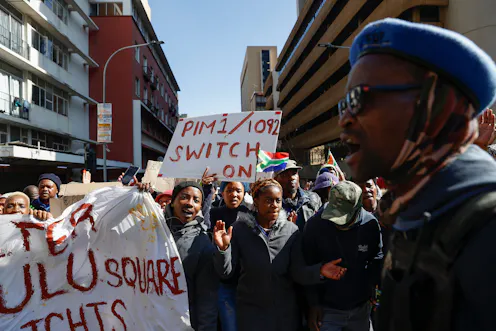
Consensus is the first step towards solving problems - but it’s been hard to reach.

A more devolved approach to national economic policy could build on the strengths of every region.

Much of the commentary on the July riots, which cost over 300 lives and billions of rands in damage to the economy, has neglected the long history of violent protests in the country.

CC BY-NC-ND8.54 MB (download)
More needs to be done to support South Africa's township communities.

Despite millions of free homes built since 1994, spatial inequality in South Africa remains high. A study evaluating a programme to boost rentals in well-located areas found mixed results, however.
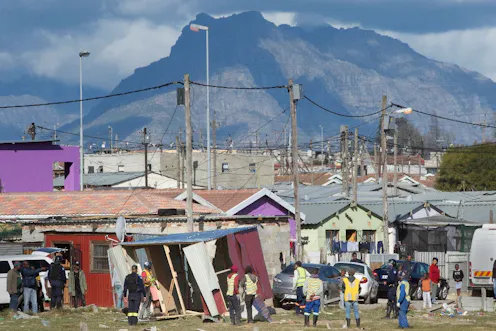
Analyse des effets d’un ambitieux programme de logement social mis en place en Afrique du Sud en 2006.

Services have not featured strongly in the economic strategies of developing countries. However, South Africa’s recently published economic reform proposals point to a greater role for services.

New South African research supports evidence that urbanisation has a positive impact on people’s lives and must be managed appropriately for development.
Contact Justin for
- General
- Media request
- Speaking request
- Consulting / Advising
- Research collaboration
- Research supervision
- Location: Pretoria, South Africa
- Website
- Article Feed
- ORCID
- Joined
