
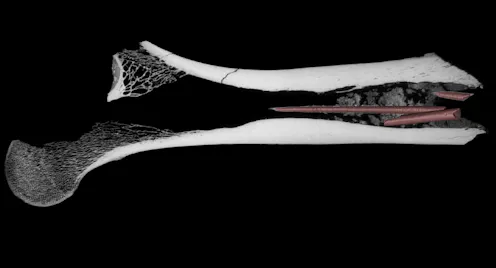
This is the oldest confirmed use of a mixture comprising two or more plant toxins specifically applied to arrowheads.
- Associate professor, University of Johannesburg
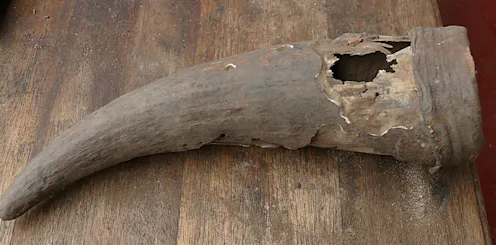
The medicine container was found in a painted rock shelter. A radio carbon date of the horn container places it at around AD 1461-1630.

In several other parts of the world, people used the bones of animals that were important within their respective cultures to make tools.
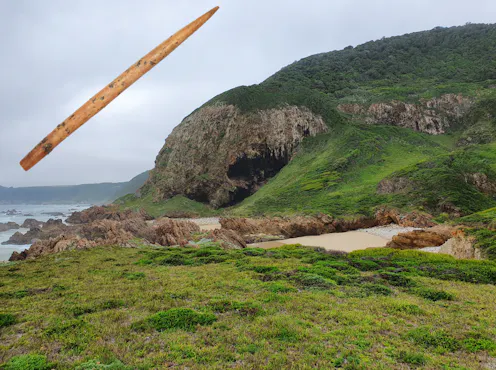
El hallazgo, que procede de depósitos de hace más de 60 000 años, se parece mucho a miles de puntas de flecha de hueso usadas por los cazadores-recolectores indígenas desde el siglo XVIII hasta el XX.
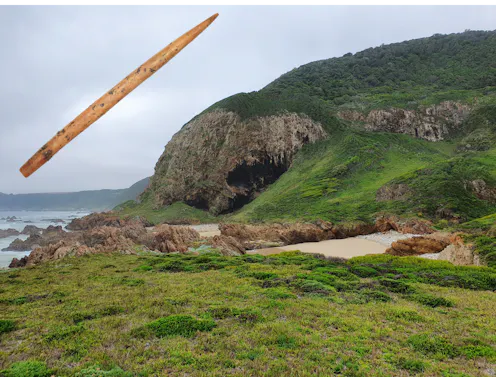
The artefact comes from deposits dated to more than 60,000 years ago. It closely resembles thousands of bone arrowheads used by the indigenous San hunter-gatherers from the 18th to the 20th centuries.
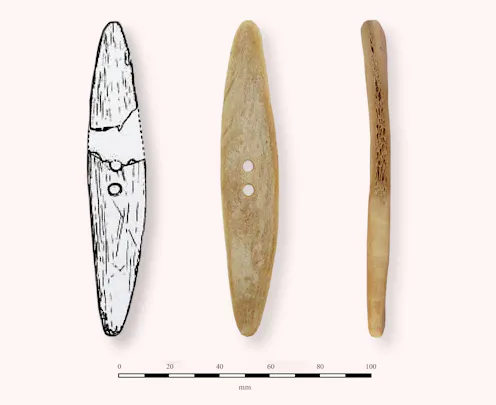
Working with bone artefacts from archaeological sites in South Africa’s southern Cape region, we’ve been able to show that some implements might have been used for sound production in the past.
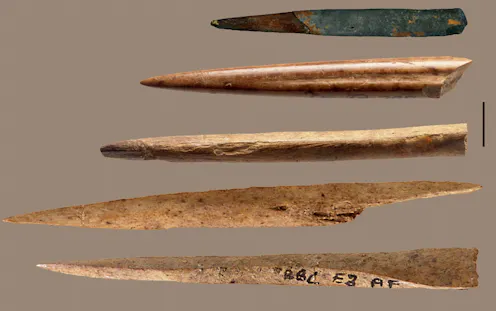
Species-level identification of bone tools has been undertaken for the first time in southern Africa.

The early use of poison is one more indicator of an advanced repertoire of behavioural and technological traits that have characterised our species from the earliest times.
Contact Justin for
- General
- Media request
- Speaking request
- Consulting / Advising
- Research collaboration
- Research supervision
- Website
- Article Feed
- ORCID
- Joined
