
An election law scholar explains the president’s effort to dramatically limit mail voting ahead of the midterm elections – and why the court decided to block it.
- Assistant Professor of Law, Quinnipiac University

Will an Aug. 24, 2026, Supreme Court decision lead to chaos in the midterm elections? An election law scholar dissects the decision, its background and possible effects.

A huge amount of money flows into campaigns in the United States. For 20 years, the Supreme Court has been loosening rules for who can contribute and how much. It just loosened the rules again.
The DOJ wants states to send it copies of voters’ names and addresses as well as sensitive information such as driver’s license and Social Security numbers. Here’s why many states have refused.
A gobsmacking amount of money is spent on federal elections in the US. The credit or blame for that reaches back to a landmark, 50-year-old Supreme Court decision.
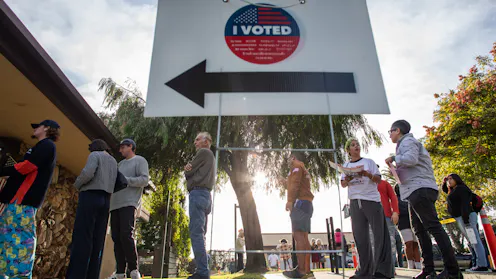
The House has passed a bill to require proof of citizenship for voting. Although it likely won’t become law, the bill raises constitutional questions.
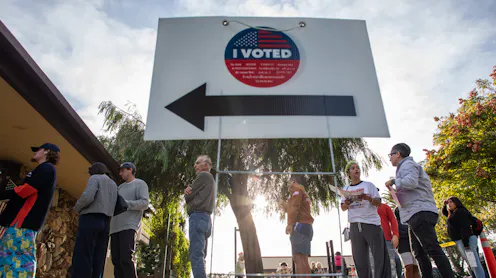
The Constitution does not grant Congress authority to set voter-eligibility requirements in federal elections.
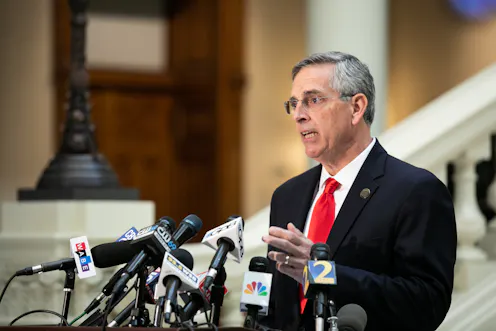
There are dozens of secretaries of state in the US. Only one deals with foreign affairs. The majority of the rest, state secretaries of state, have powerful positions running elections in each state.
Contact John for
- General
- Media request
- Speaking request
- Consulting / Advising
- Research collaboration
- Research supervision
- Location: Hamden, Connecticut, U.S.
- Article Feed
- Joined
