Jessica Evans

(she/her)
Without investment in community-based service providers to support youth being transitioned out of custodial settings, it is unlikely that youth will thrive. (Shutterstock)

Ontario’s closure of youth detention facilities has not resulted in more support for young people

The closure of youth detention centres is a positive development. However, without adequate investment in community organizations that serve youth, it is a move set up to fail.
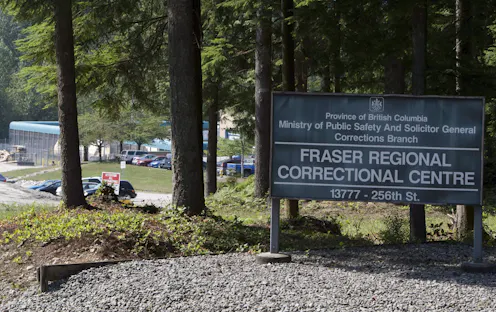
A sign outside the Fraser Regional Correctional Centre in Maple Ridge, B.C. The B.C. government has introduced legislation that would ban people convicted of serious crimes from changing their names. THE CANADIAN PRESS/Jonathan Hayward

Banning offenders from changing their names doesn’t make us safer

British Columbia’s proposed ban on name changes could impact people’s Charter rights and undermine the rehabilitation and reintegration of those convicted of crimes.
The Matsqui Institution, a medium-security federal men’s prison in Abbotsford, B.C. The Canadian government plans to amend legislation to allow detained migrants to be held in federal prisons. THE CANADIAN PRESS/Darryl Dyck

Detaining migrants in prisons violates human rights and risks abuses

Placing migrants who are not criminals in prisons risks serious violations of their human rights and perpetuates narratives about the criminality of immigrants.
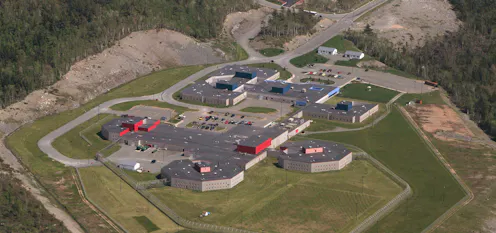
The Central Nova Scotia Correctional Facility, in Dartmouth, N.S. The Nova Scotia Supreme Court recently ruled that the use of lockdowns to address staff shortages at provincial jails is unlawful. THE CANADIAN PRESS/Mike Dembeck

Use of lockdowns in Canadian prisons could amount to torture

Lockdowns can have severe impacts on an inmate’s mental and physical health and well-being.

The peace arch monument on the Canadian side of the Canada-U.S. border crossing, in Surrey, B.C. Several provinces will no longer allow the CBSA to detain immigrants in provincial jails. THE CANADIAN PRESS/Darryl Dyck

Immigration detention continues in Canada despite the end of provincial agreements

Several Canadian provinces are terminating their immigration detention agreements with the CBSA. While that signals a move in the right direction, the federal government must also take action.
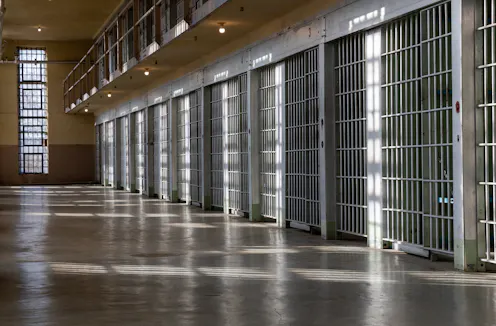
Thousands of imprisoned persons in Ontario faced barriers to voting in the June 2 provincial election. Many will also be explicitly barred from voting in the upcoming municipal elections in October. (Shutterstock)

Imprisoned citizens face barriers to voting in Ontario

Elections Ontario must ensure imprisoned people are provided information on their candidates, registration assistance and facilitation by Elections Ontario employees on voting day.
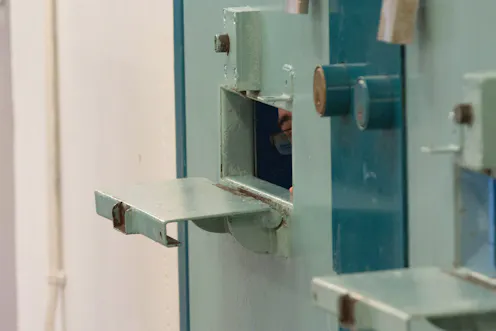
An inmate can be seen inside a segregation cell at the Collins Bay Institution in Kingston, Ont., in 2016. THE CANADIAN PRESS/Lars Hagberg

How prisons are using COVID‑19 containment measures as a guise for torture

Solitary confinement is still a common feature of prisons across Canada and in its most populous province, especially during the COVID-19 pandemic. It’s a practice that amounts to torture.

Contact Jessica for

  • General
  • Media request
  • Speaking request
  • Consulting / Advising
  • Research collaboration
  • Research supervision