

As COVID finds its equilibrium, infection rates will rise and fall, influenced by seasons, school holidays and new subvariants. Managing the risk is complex and needs to be cost effective.
- Professor in Mathematical Biology, The University of Melbourne
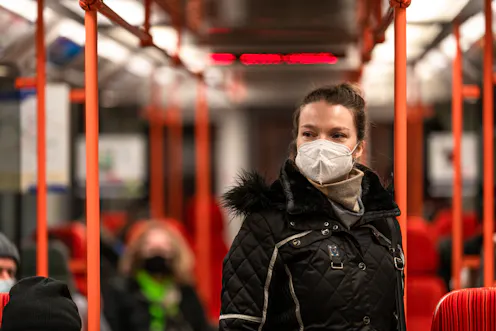
Australia is in the middle of its fifth Omicron wave, which has been brewing since February. But it’s been slow and drawn out and the health impacts are very different to earlier waves.
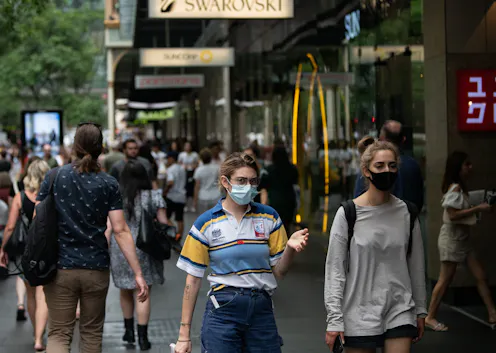
Just because a variant spreads faster, it doesn’t necessarily mean it has a higher R0.
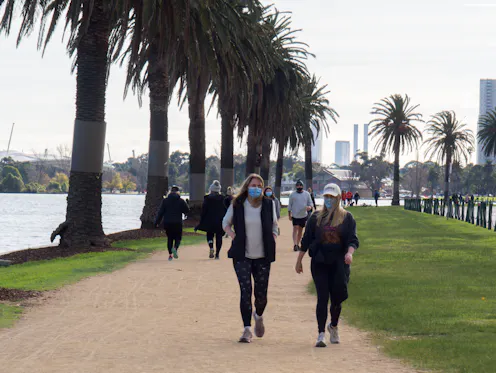
There have been some very public examples of ‘compliance fatigue’. But tracking behaviour shows Australians have been responding to rules and perceived risks – and all our efforts matter.
We’re likely to see clusters of cases pop up and outbreaks that are hard to stamp out. But we can’t stay in lockdown forever. We have other options.
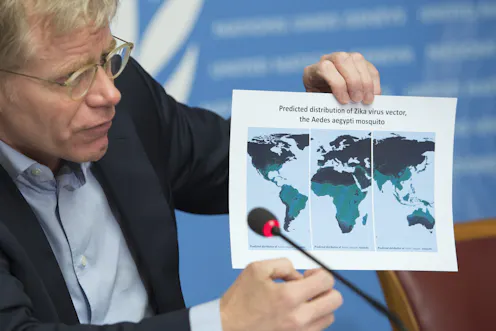
During a disease outbreak, lots of people can become infected in a short time and develop immunity, making it hard for the pathogen to spread.

It took a computer to discover the potential threat of a drug-resistant strain of swine flu that was about to spread from New South Wales. So how close did we come to a global pandemic?

Predicting infectious disease outbreaks is a tricky task to begin with. And it’s made harder still by the fact that any individual outcome is subject to unpredictable – or stochastic – effects.

Viruses cause all kinds of infections from relatively mild cases of the flu to deadly outbreaks of Ebola. Clearly, not all viruses are equal and one of these differences is when you can infect others.
Contact James for
- General
- Media request
- Speaking request
- Consulting / Advising
- Research collaboration
- Research supervision
- Location: Melbourne, Australia
- Website
- X (formerly Twitter): @j_mccaw
- Article Feed
- ORCID
- Joined
