
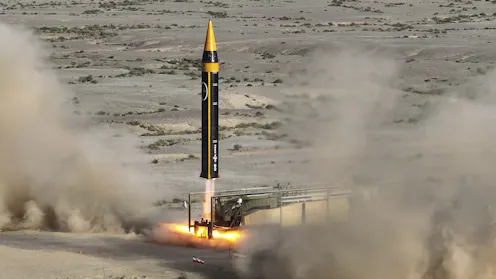
News that Iran had fired ballistic missiles at a US military base in the Indian Ocean was startling, but how much of a threat does the development represent?
- Director of the Center for National Security Initiatives and Professor of Aerospace Engineering Sciences, University of Colorado Boulder
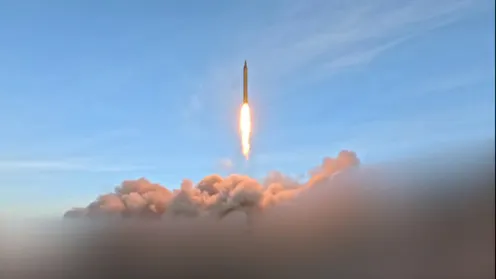
Face à des attaques aériennes mêlant missiles, drones bon marché et salves massives, les systèmes de défense traditionnels atteignent leurs limites.
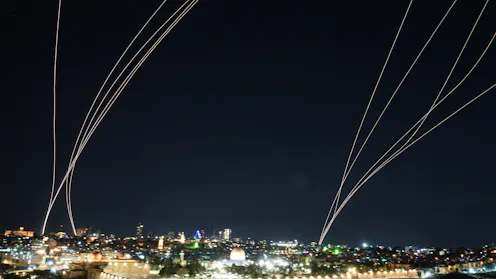
Concerns about shortages of interceptor missiles in the conflict between the US and Iran highlight the challenges of defending against missiles and drones.
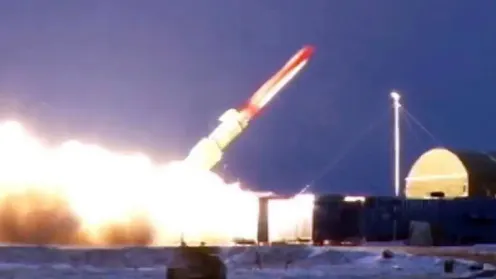
La Russie affirme avoir testé avec succès un missile de croisière à propulsion nucléaire, le Bourevestnik. Capable de voler des milliers de kilomètres à basse altitude, il pourrait remettre en cause l’équilibre stratégique mondial.
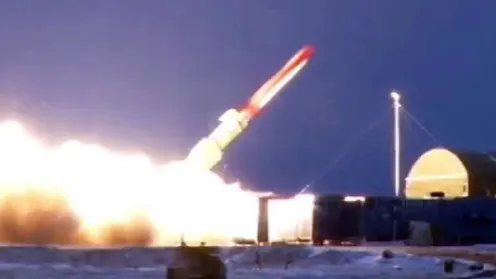
The Russian military claims to have flown its Burevestnik nuclear-powered cruise missile 8,700 miles over 15 hours.
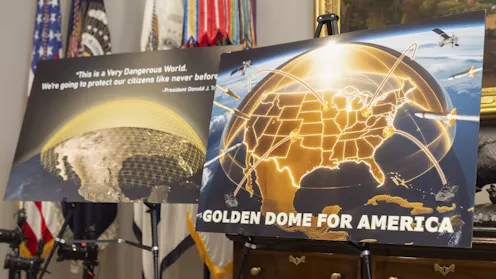
President Trump has set aggressive goals for Golden Dome, but many parts of the system already exist.
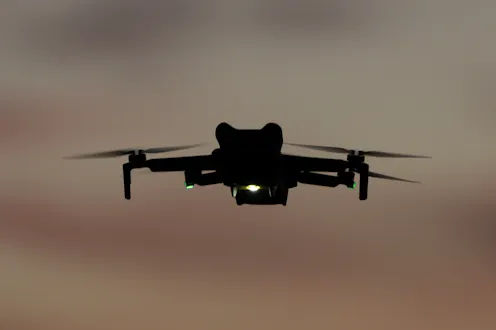
Tracking small, uncrewed aircraft – also known as drones – is difficult, especially at night. Detecting the radio signals used to control them is a promising approach, though it’s no silver bullet.
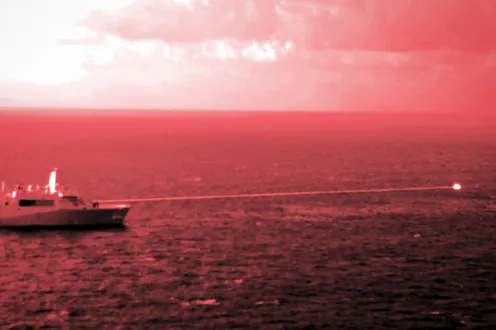
Militaries around the world are rapidly developing science fiction-like laser weapons, motivated in part by the growing threat from swarms of drones.
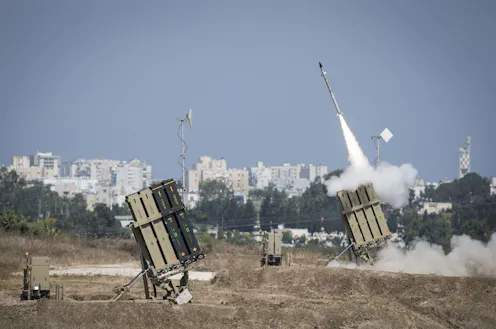
If Israel’s Iron Dome is the best air defense system in the world, how did so many Hamas missiles get through? An aerospace engineer explains it’s a game of numbers.
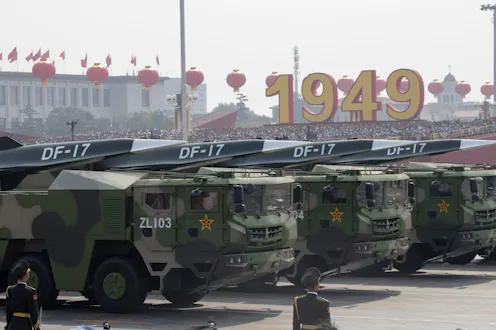
China’s newest hypersonic missile, the DF-27, could sideline US aircraft carrier groups in the Pacific, while missiles in the works in China, Russia and the US threaten global security.
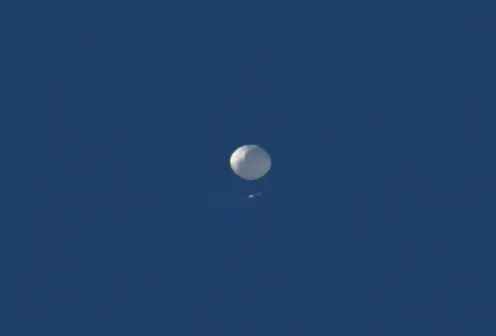
Un globo chino violó el espacio aéreo estadounidense, un incidente lo bastante grave como para impedir una reunión diplomática de alto nivel entre Estados Unidos y Pekín. Sin embargo, el globo en sí no representaba una gran amenaza.
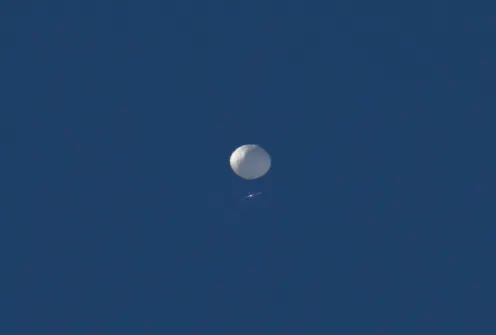
A Chinese high-altitude balloon violated U.S. airspace, a serious enough breach to nix a high-level diplomatic meeting in Beijing. The balloon itself, however, was not much of a threat.
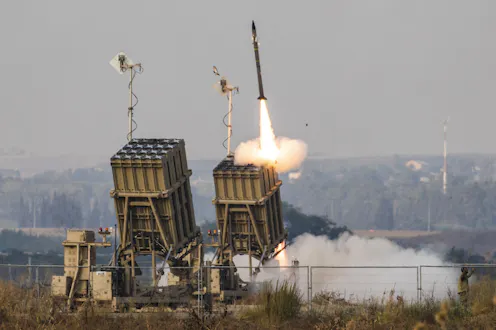
What will it take for Ukraine to defend against the ballistic missiles, cruise missiles and explosive drones raining down on the country? The question is not so much what as how many.

Build a powerful enough laser, and you can shine it into space. Aim it well, and you can blind satellites.
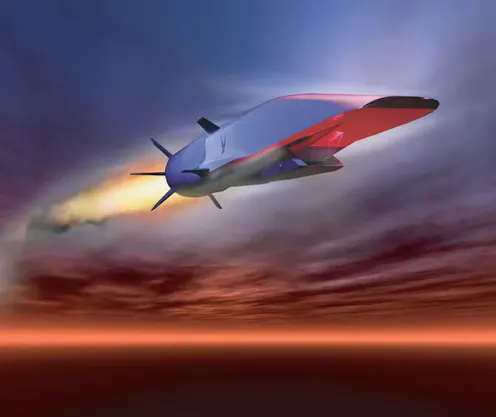
Penggunaan rudal hipersonik Rusia di Ukraina telah menempatkan senjata dalam berita. Versi generasi berikutnya yang sedang dikembangkan dapat secara dramatis mengubah keamanan nasional dan global.

Russia’s use of hypersonic missiles in Ukraine has put the weapons in the news. Next-generation versions under development could dramatically alter national and global security.

Electromagnetic beams of the right power and wavelength can cause pain and zap electronics. Could they also be used to disrupt a person’s nervous system?

An update of 50-year-old regulations has kickstarted research into the next generation of rockets. Powered by nuclear fission, these new systems could be the key to faster, safer exploration of space.

Recent advances in technology and new trends in commercial air travel could make supersonic flight economically viable. But regulations will have to change first.
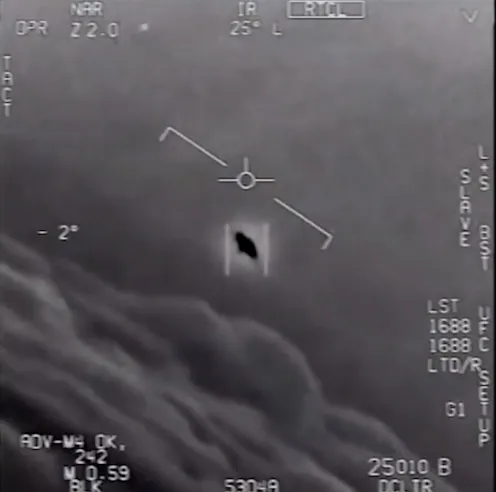
During a military mission, whether in peace or in war, the inability to identify an object within an area of operation represents a significant problem.
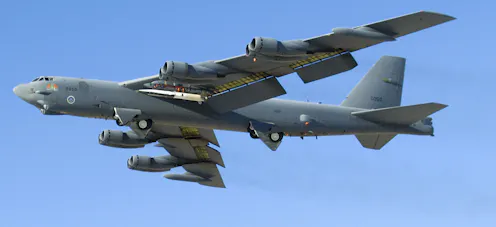
Missiles that fly 3,000 mph or faster – much faster than the speed of sound – are the next generation of high-technology weapons.
Contact Iain for
- General
- Media request
- Speaking request
- Consulting / Advising
- Research collaboration
- Research supervision
- Location: Boulder, Colorado, U.S.
- Article Feed
- ORCID
- Joined
