

Governments must stop treating climate action as merely an aspirational goal. It is an absolute imperative.
- Professor and Climate Scientist, Department of Geography, Planning and Environment, Concordia University
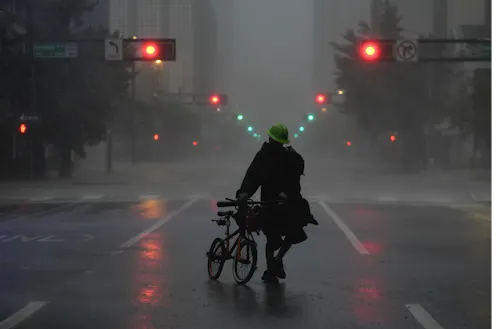
‘Climate scientists’ are often understood as being a block of experts with monolithic beliefs. A new survey sheds considerable nuance onto the beliefs and perceptions of climate scientists.

La gouvernance des technologies de modification du rayonnement solaire est entravée par l'absence de consensus sur l'opportunité et la manière d'explorer ces technologies.

The governance of solar radiation modification technologies is hampered by a lack of consensus on whether and how to explore such technologies. Only honest dialogue can hope to break this impasse.

Le réchauffement climatique affecte une pierre angulaire de la culture canadienne : le patinage en plein air.

Global warming is melting away an iconic cornerstone of Canadian culture — outdoor skating.
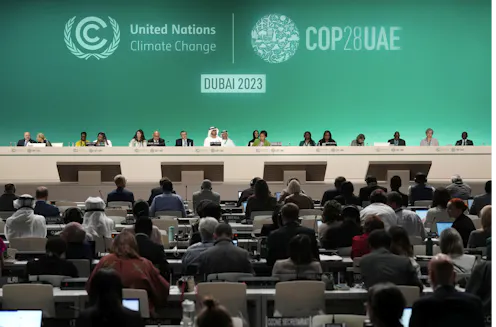
Mais malgré des décennies de recherche et des milliards de dollars de financement du secteur public, la technologie de captage et stockage de dioxyde de carbone demeure coûteuse et inefficace.
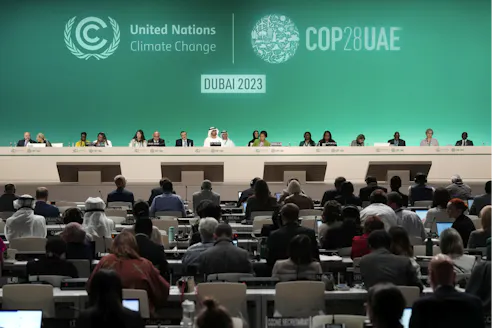
Does the science support the need for a fossil fuel phase out to reach 1.5 C? The answer depends on whether we believe that carbon capture and removal technologies can be deployed safely at scale.

Tracking both the amount of carbon and the time that it remains stored is key to unlocking the potential of nature-based carbon storage as a climate mitigation strategy.
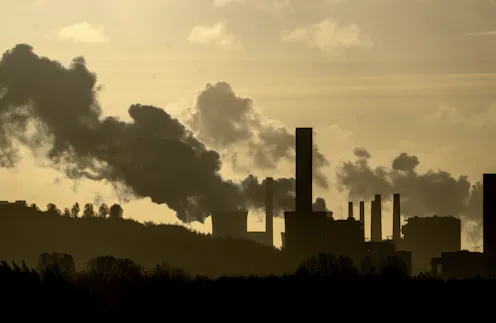
Saying that the climate problem is complex is false, and a distraction from what we know needs to be done.

Selama 2015-2019, 89% dari 115 perusahaan melaporkan pengurangan emisi dari pembelian sertifikat energi terbarukan. Ini bisa diartikan mayoritas korporasi tidak menambah konsumsi energi bersih.
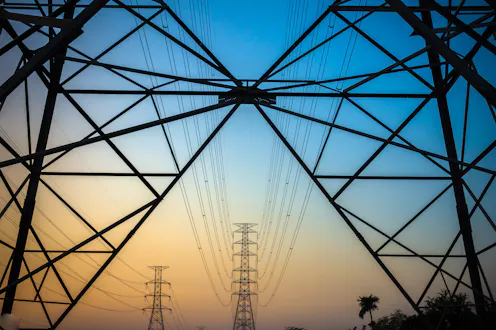
Companies are buying renewable energy certificates to meet their emissions targets, but new research suggests that the bulk of these purchases do not lead to actual emission reductions.
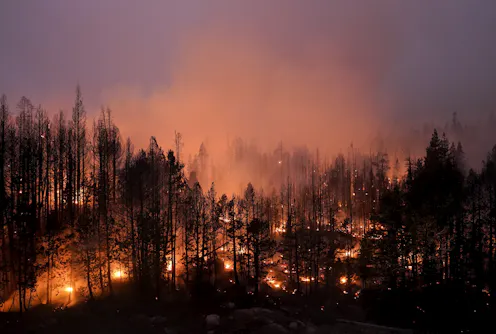
La plantation d’arbres et la prévention de la déforestation permettent de stocker le carbone dans la nature, mais l’effet peut n’être que temporaire. Il faut cesser d’utiliser des combustibles fossiles.
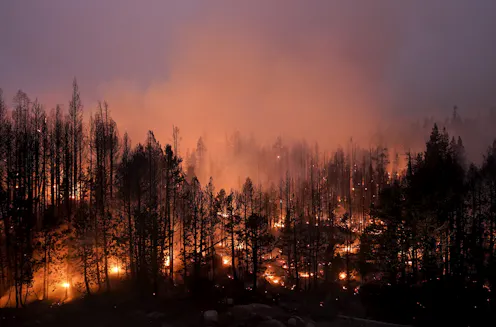
Planting trees and preventing deforestation can store carbon in nature, but the effect may only be temporary. If we also eliminate emissions from fossil fuels, even this temporary effect is important.

Experts explain the latest evidence on eco-anxiety in The Conversation Weekly.
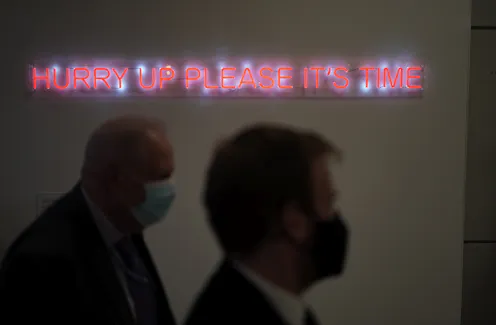
El reloj utiliza la tendencia de emisiones de los últimos cinco años para estimar cuánto tiempo queda hasta que el calentamiento global alcance el umbral de 1,5 °C.
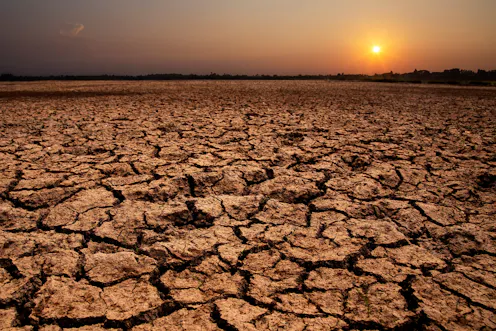
L’horloge suit les émissions mondiales et les données relatives aux températures, et utilise la tendance des émissions récentes pour estimer le temps qu’il reste avant que un réchauffement de 1,5 °C.

The clock tracks global emissions and temperature data, and uses the most recent five-year emissions trend to estimate how much time is left until global warming reaches the 1.5 C threshold.
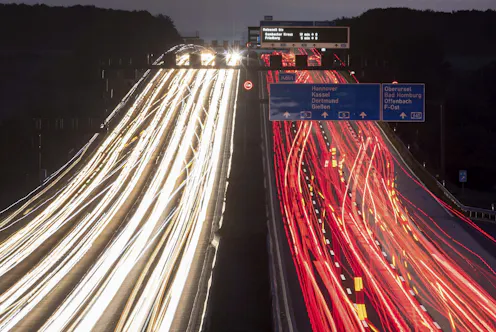
Plusieurs pays ont pris l’engagement de réduire leurs émissions de gaz à effet de serre à zéro d’ici le milieu du siècle. Mais de nouvelles recherches montrent que ce n’est pas suffisant.
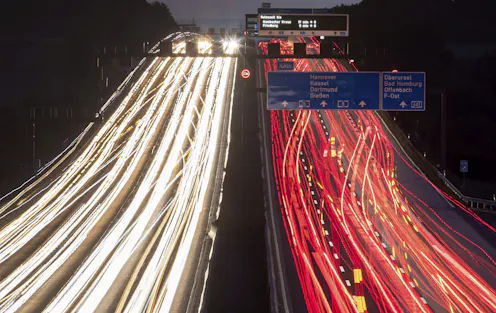
Several countries have made pledges to reduce their greenhouse gas emissions to zero by mid-century. But new research finds the remaining carbon budget will be depleted before we get there.
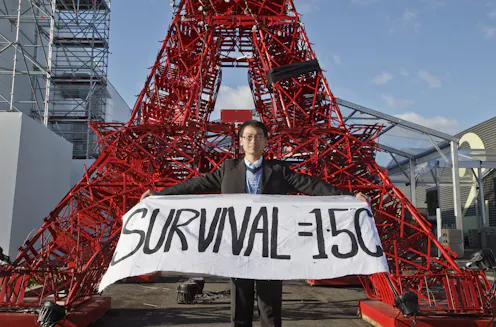
We are on track to reach 1.5°C of global warming within 16 years according to new data.

Canada has made strides, but we’re still far from being a climate leader. Budgeting our emissions would help bring us to the front of the pack.
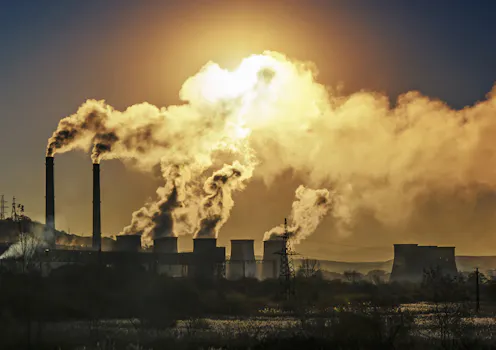
It’s still possible to hit the more ambitious of the two Paris global warming goals, according to a new estimate of the global carbon budget. But it sure won’t be easy, and we need to start now.
There is a commonly held belief among both scientists and the general public that there is a delay between the CO2 emissions we put into the atmosphere, and the resulting climate change. As a consequence…
Contact H. for
- General
- Media request
- Speaking request
- Consulting / Advising
- Research collaboration
- Research supervision
- Location: Montreal, Canada
- Website
- BlueSky: @damonmatthews.bsky.social
- LinkedIn: damon-matthews-b47a5210
- X (formerly Twitter): @damon_matthews
- Article Feed
- ORCID
- Joined
