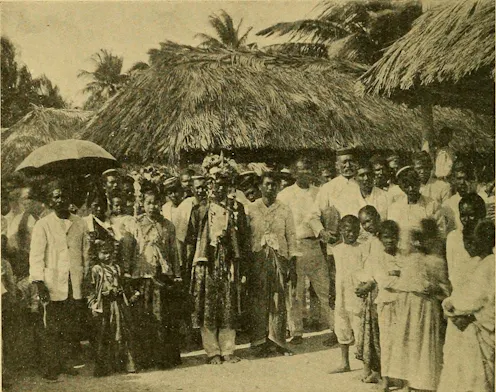
Cocos Malay photo from the 1910s showing a wedding procession that is still practised today with the groom pictured going to the bride’s house accompanied by members of the community.
Wikimedia Commons/From the book 'Coral reefs and islands' authored by Jones, F. Wood (Frederic Wood), 1879-1954, Published by Lovell Reeve & Co. , Ltd. London. Photo digitized by Smithsonian Libraries Digitizing Sponsor: Biodiversity Heritage Library
In the 1800s, a group of Southeast Asians were taken to the Cocos (Keeling) Islands, now part of Australia, by an English merchant. Their descendants are seeking Indigenous status from Australia.
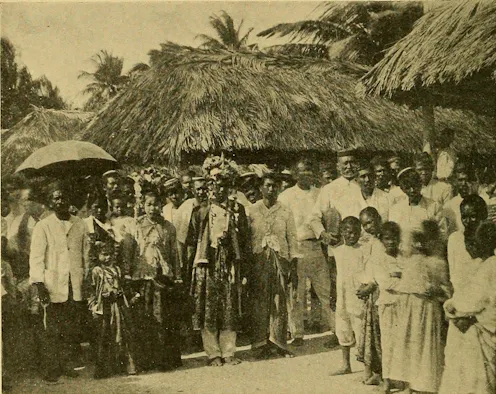
Foto Orang Kokos dari tahun 1910an di arak perkawinan yang masih dilakukan sampai sekarang, terlihat pengantin pria di foto dalam perjalanan ke rumah pengantin perempuan di dampingi sanak keluarga di Kepulauan Kokos.
Wikimedia Commons/Dari buku 'Coral reefs and islands' penulis Jones, F. Wood (Frederic Wood), 1879-1954, Penerbit Lovell Reeve & Co. , Ltd. London. Digitasi foto oleh Smithsonian Libraries Digitizing Sponsor: Biodiversity Heritage Library
Pada 1800an, sekelompok Melayu dibawa ke Kepulauan Cocos (Keeling), sekarang bagian Australia. Keturunan mereka sekarang memperjuangkan status orang asli dari Australia.
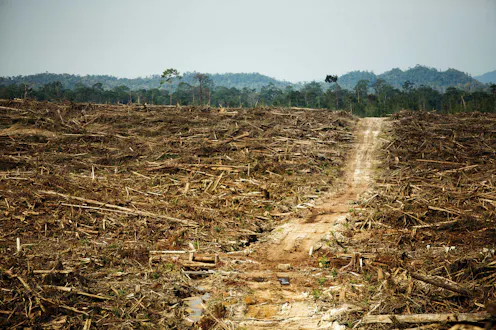
Hopes that UN agreements will save Borneo’s forests may be unrealistic.
Flickr/Rainforest Action Network
Tourists from all over the world head to Borneo for orangutans, unspoiled ancient rainforests and an insight into the traditional way of life of the Dayak people. This ecotourism is based on an idyllic…