
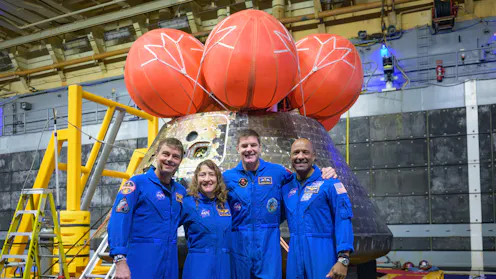
Jenni Gibbons will be lead capsule communicator for NASA’s Artemis III mission, Gordon Osinski is on the science team and Canada also contributes a robotic Lunar Utility Vehicle.
- Professor in Earth and Planetary Science, Western University
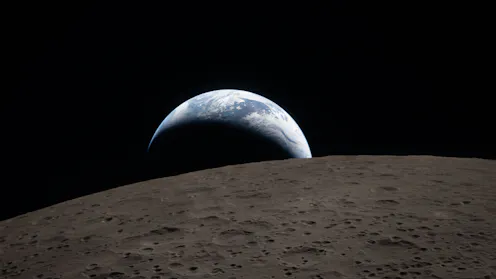
From geology training on Mushuau Innu First Nation territory in Labrador, to a new NASA Science Evaluation Room, Gordon Osinski takes us behind the scenes of Artemis II.
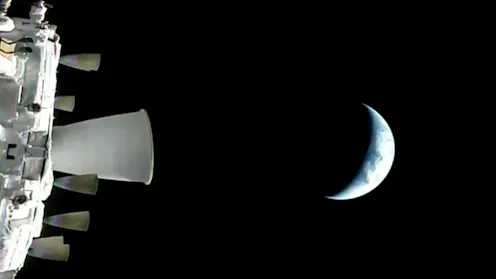
A planetary geologist and member of NASA’s First Artemis Lunar Surface Science Team witnesses the launch of the Artemis II moon rocket.
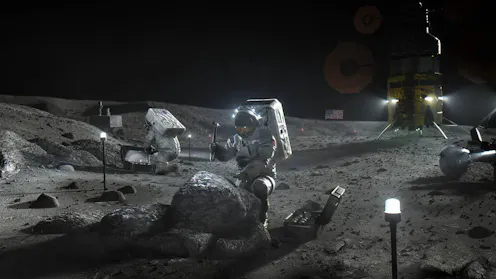
Los nuevos planes de la NASA para su programa de exploración lunar Artemis reducen los riesgos y aumentan las probabilidades de éxito de una misión tripulada a la superficie lunar en 2028.
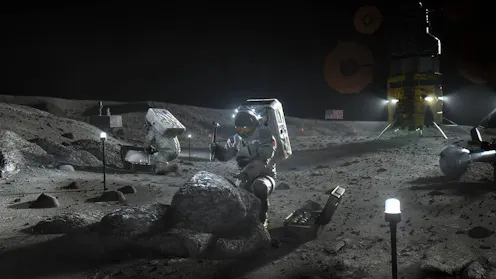
NASA’s new plans for its Artemis moon exploration program reduces risks and increases the likelihood of a successful human mission to the moon’s surface in 2028.
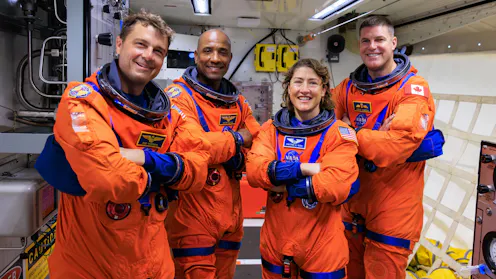
Jeremy Hansen sera le premier non-Américain à voler vers la Lune, faisant ainsi du Canada le deuxième pays au monde à envoyer un astronaute dans l’espace lointain.
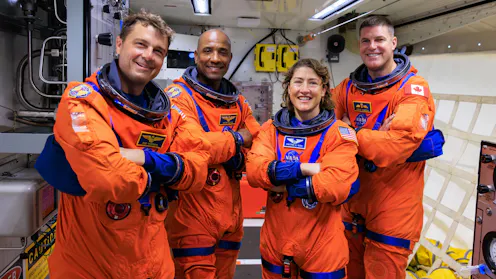
Jeremy Hansen will be the first non-American to fly to the moon — and will make Canada only the second country in the world to send an astronaut into deep space.
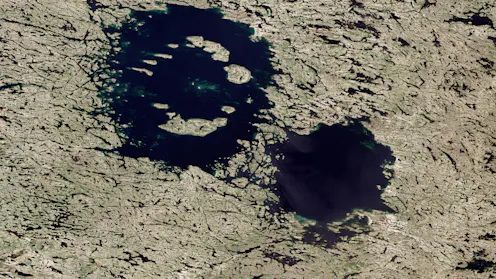
Cubic zirconia, a popular diamond substitute, only occurs naturally under extreme conditions. Finding cubic zirconia in craters reveals parts of the Earth’s history.
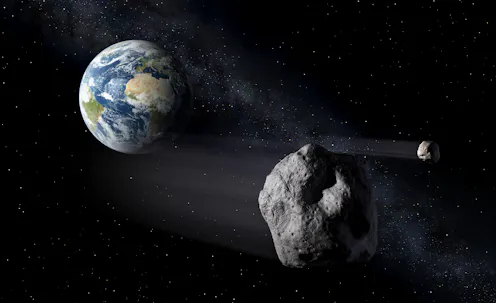
In mid-February, asteroid 2024 YR4 was spotted and originally believed to have a 3.1 per cent of hitting Earth in 2032. Further calculations revealed this was not the case.

Will it be Glacier or Athabasca? Maybe Courage or Pol-R? The Canadian moon rover will soon have a name, two years before it’s set to explore the moon’s South Pole.
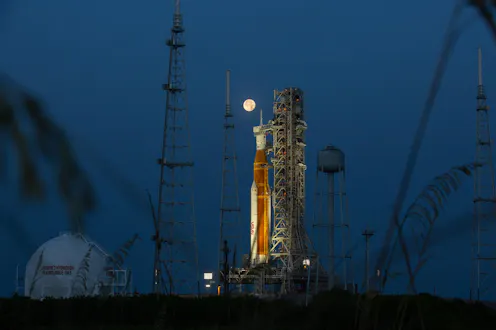
NASA announced that the next two Artemis missions — Artemis II and III — will be delayed for safety reasons. However, Artemis IV remains on schedule.
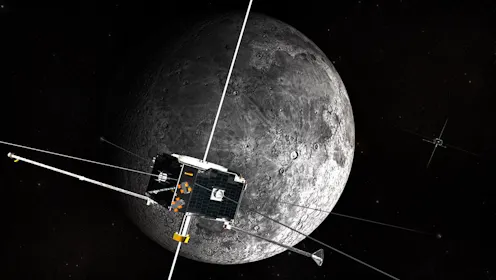
Canadian Jeremy Hansen will be one of the next astronauts on the Artemis II mission. This announcement signals a new era in Canada’s role in space exploration.
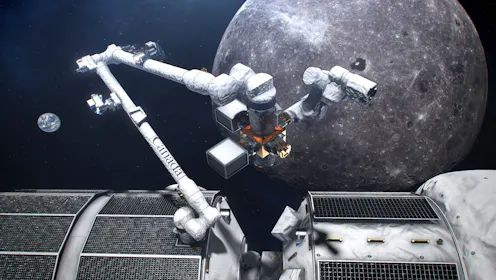
Les technologies et les innovations spatiales canadiennes occupent une place importante dans les missions Artemis, et cette participation reflète notre rôle toujours plus marqué dans cette nouvelle ère d’exploration lunaire.
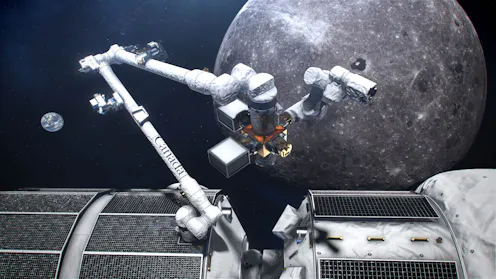
Canadian space technologies and innovations play a significant role in the Artemis missions, and our involvement reflects our growing role in this new era of lunar exploration.
Contact Gordon for
- General
- Media request
- Speaking request
- Consulting / Advising
- Research collaboration
- Research supervision
