

Enshrining the Model Code on Freedom of Speech and Academic Freedom in legislation won’t ensure disagreements on campus remain civil. Here are some practical guidelines on how to disagree well.
- Honorary Senior Fellow, Melbourne School of Psychological Sciences, The University of Melbourne

For years, we’ve heard Australia’s spending on tertiary education is some of the lowest in the OECD. This is only true if you ignore GDP growth. Real spending was actually going up, until 2016.

Australian tertiary education policy and funding debates are better served by domestic data.
Labor has promised to review the tertiary education sector if elected next year. There are some major issues, and some examples from abroad they should consider.

The government should add a ‘super payment option’ that allows graduates to offset the cost of their HELP repayments.

The way the higher education sector uses data from the OECD is often technically correct, but substantively misleading.

Combining a lower repayment scale with a super option would allow for earlier repayment of HELP loans and greater flexibility for graduates to manage living expenses early in their careers.

Academic experts respond to the latest report by the Parliamentary Budget Office on the impact of student loans on the budget.

Australians who live in another country for more than six months will now have to pay back their student loans.
Many point out that in 2011 Australia’s public funding of universities ranked thirty-third out of the thirty-four OECD member countries. However the story is not so simple.

ANU economists argue that Australian universities should have “skin in the game” on Higher Education Loan Program (HELP) debts.

Unpaid HELP debts are a problem, while super contributions may be lost. Should students use super to repay HELP?

In recent media reports, higher education policy experts Peter Noonan and Gavin Moodie dismiss the use of international student fees as an indirect “market cap” for domestic fees. Independent senator Nick…
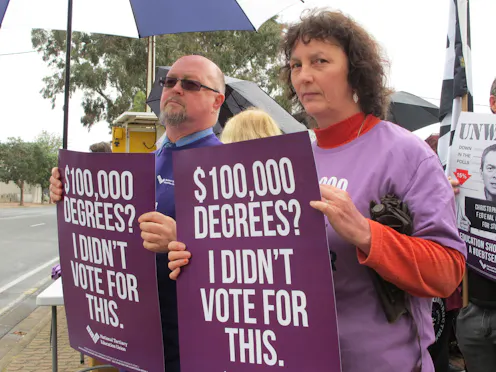
The government’s proposed changes to higher education are a platform on which Labor can fight the next election. The strategy is simple: don’t try to modify the package, or offer new solutions. Just shoot…

The main reason given for planned subsidy cuts to university courses has been that, with a degree, graduates will earn “a million dollars more”. Figure 1 shows how the May Budget compared graduate incomes…
Graduates from the prestigious Group of Eight and technology universities earn more than graduates from the lesser known and regional universities over their lifetime. A new analysis released by the Grattan…
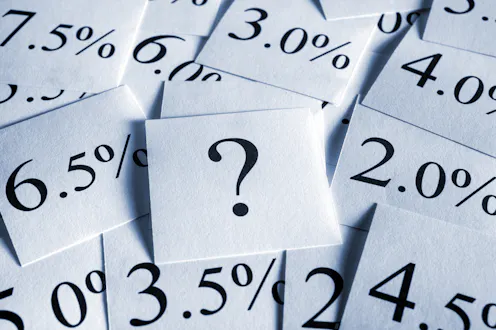
The government’s plan to charge up to 6% interest on HELP loans has been widely attacked as unfair. Many critics, including Shadow Education Minister Kim Carr, the Group of Eight universities, Universities…
With notable exceptions, higher education leaders seem ready to accept the latest funding cuts. But the Group of Eight’s Michael Gallagher has gone further, strongly endorsing the reforms as “logical…
It is clearer by the day that the budget reforms to higher education need work. Never mind that when in opposition, Prime Minister Tony Abbott signalled a “period of relative policy stability” for the…
Education minister Christopher Pyne has released new public subsidy rates for domestic students in degrees offered by universities, to take effect from 2016. As a budget saving the government aims to lower…

The National Commission of Audit has made 86 recommendations with a focus on the federal government’s 15 biggest and fastest-growing areas of spending. The result is proposals for sweeping spending cuts…

The Federal Government has released a review into the demand-driven system of higher education funding implemented by the Labor government. The review, undertaken by David Kemp and Andrew Norton, largely…

The government could save A$800 million a year by recovering unpaid student loan debts from deceased estates and students who have moved overseas, a new report from the Grattan Institute has found. “Doubtful…
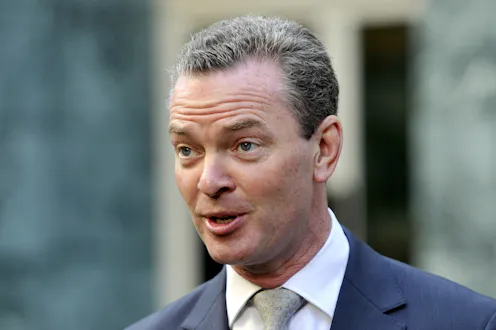
University of Melbourne and LH Martin Institute’s Geoff Sharrock is reporting for The Conversation from the Universities Australia Higher Education Conference in Canberra. Federal education minister Christopher…

Why is Australian higher education the way it is today? To answer this we must go back to Labor minister John Dawkins, who initiated a radical suite of reforms a quarter of a century ago. His impact on…
Contact Geoff for
- General
- Media request
- Speaking request
- Consulting / Advising
- Research collaboration
- Research supervision
- Location: Melbourne, Australia
- Website
- Article Feed
- Joined
