

The fund would be established with money from both the federal government and universities, until it was worth A$10 billion.
- Adjunct Professor, Department of Leadership, Higher and Adult Education, OISE, University of Toronto

One of the headline ideas floated by the Universities Accord is a second national university for regional students. This would be on top of the existing Australian National University.
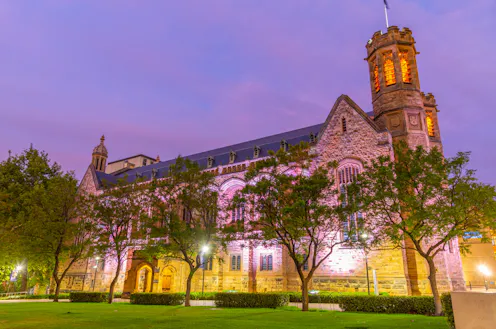
The proposed new university would be called Adelaide University and open in 2026, with the aim of becoming Australia’s biggest university for domestic students.
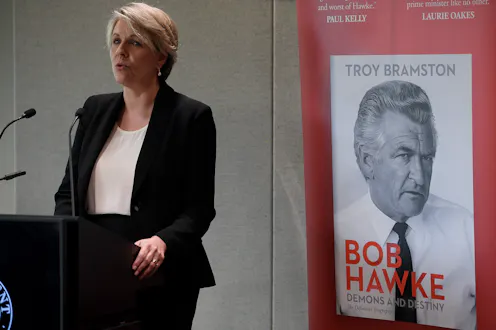
Higher education didn’t feature heavily in the election campaign, yet the sector has high expectations of the new government. The key is the idea of an accord and the change in approach it implies.
Universities have seen a decade of cuts and unfavourable policies under the Coalition government. Here’s what the major parties should be promising now.
The Australian government has not been good to international students since the start of the COVID-19 pandemic. But compared to the US, UK and Canada, we haven’t lost our competitive edge.

Are the Australian government’s successive changes to JobKeeper specifically designed to exclude universities? And if so, why?

A database of retractions shows hundreds of academic articles with Australian authors have been withdrawn. Research misconduct threatens to corrode trust in academic qualifications and publications.
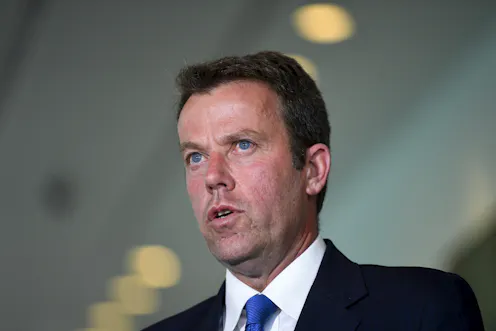
A few days have now passed since we learnt that in 2017 the former Minister for Education and Training, Simon Birmingham, secretly rejected 11 grants recommended by the Australian Research Council. Naturally…

Despite serious financial and enrolment pressure for some, our universities are unlikely to close their doors – but some may have to resort to being ‘merged’ or taken over by a stronger partner.

Practical ways forward for higher education policy reform include fixing the dysfunctional relationship between higher and vocational education or government-sponsored analysis of the future of work.

We should accept a modest level of attrition so we can keep providing opportunities for part-time and online students, who might not otherwise be able to study.

England’s apprenticeship levy will require employers with a payroll of over £3 million (A$5.2 million) to spend 0.5% of that on approved apprenticeships.

While the government finally ruled out full fee deregulation in its 2016 budget, it is still contemplating uncapping fees for some degree courses. Here’s what else is being discussed.

There are some factors which make students more likely to drop out of university than others. Here are four ways universities can help boost retention.
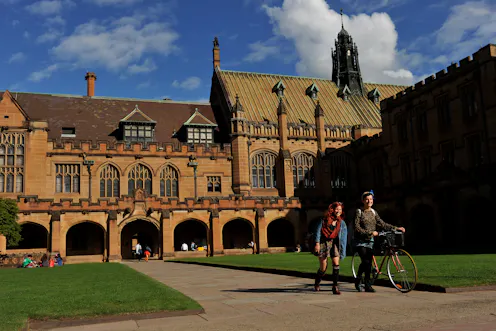
Is Universities Australia right to say that new data shows that the growth in new university enrolments has flat-lined?
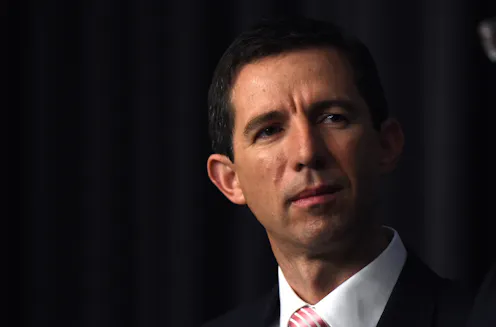
Simon Birmingham, Minister for Education and Training, said this week that Australia runs one of the most generous student loan schemes in the world. Is that right?

Construire un campus international est souvent une question de prestige. Premier de quatre articles d’une série sur l’internationalisation de l’enseignement supérieur publiée par The Conversation.

Why are universities establishing more international branch campuses and what are their prospects for success?
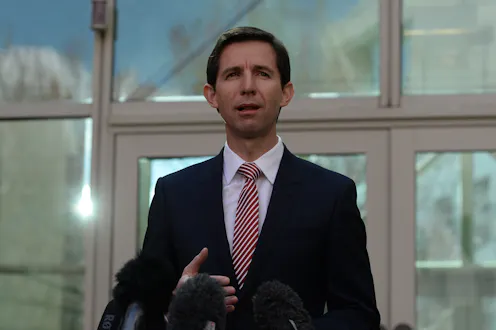
New Education Minister Simon Birmingham says the Turnbull government will abandon plans to deregulate university fees in time for 2016.

Currently universities have a vast array of measures they use to gauge how successful they are. Most of the measures have a lot to do with prestige and not much to do with the outcomes of their graduates or the quality of the education their students receive.
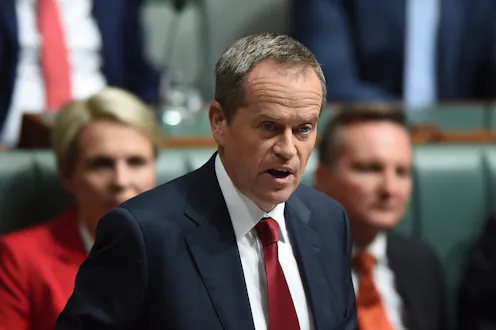
A heavy focus of Bill Shorten’s budget reply speech was preparing for the future with science, technology, engineering and mathematics education. While this focus is a step in the right direction, the policies probably aren’t the right way to go about it.
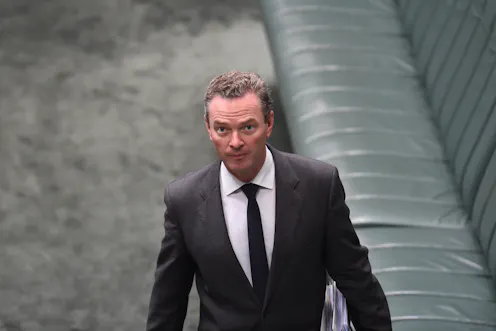
The voting down of the higher education bill stems from the government’s failure to sell the reforms. Here is a six step guide to successfully making big changes to higher education.
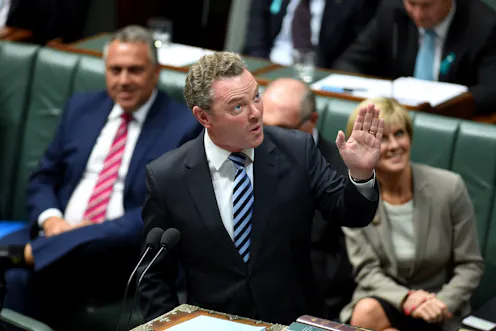
It seems the desired effect of Pyne’s uni reforms is to stratify the system, making the top unis better and the middle-tier unis worse. A progressive tax would allow him to achieve this goal.

More than a third (40%) of government loans to vocational education and training students will never be repaid, according to a new analysis by the Grattan Institute.
Contact Gavin for
- General
- Media request
- Speaking request
- Consulting / Advising
- Research collaboration
- Research supervision
- Location: Toronto, Canada
- Website
- X (formerly Twitter): @GavinMoodie
- Article Feed
- ORCID
- Joined
