

New analysis reveals just how little is spent on cycling and walking projects around Australia. No state’s spending on cycling is more than 1.5% of its road funding.
- Associate Professor in Urban Planning, The University of Queensland

Given the challenges Australian cities face, the need for urban planning based on solid research is greater than ever. Sadly, when it comes to research funding, planning is at the back of the queue.
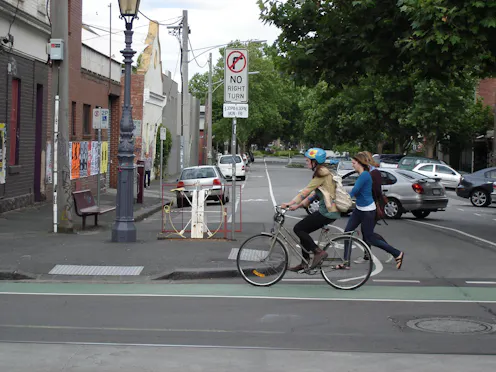
A comparison of Australian cities reveals cyclists and walkers are still very much a minority of commuters, despite the economic, health and environmental costs. Action on three fronts is needed.
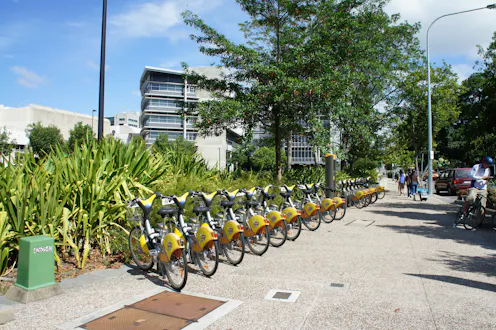
Many short-term bike-hiring programs have been launched amid much fanfare, only for their popularity to decline soon after. Several key factors need to be in place for a program to work.

Movies often portray the city as a dystopia, particularly in the ‘neo-noir’ genre, which explores postmodern themes. TV shows and ads present an altogether sunnier picture of life in the city.

Cities around the world are starting to rethink the vast areas of land set aside for parking. The convergence of several trends likely will mean this space becomes available for other uses.
Contact Dorina for
- General
- Media request
- Speaking request
- Consulting / Advising
- Research collaboration
- Research supervision
- Location: Brisbane, Australia
- Website
- Article Feed
- ORCID
-
- Joined
