
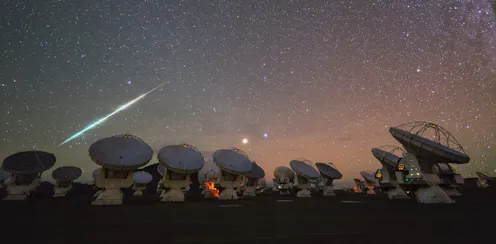
Meteor telah dapat dilihat sejak dahulu kala. Meteor terdiri dari potongan puing-puing, biasanya tidak lebih besar dari butiran debu atau pasir, yang terus-menerus menabrak atmosfer bumi. Ketika puing-puing…
- PhD Candidate in Astronomy, University of Southern Queensland
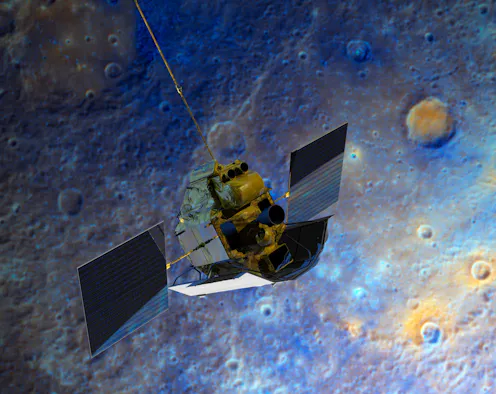
It was the first probe to find water on Mercury, the planet closest to the sun. Its mission nearly over, MESSENGER is about to crash into the planet it’s been observing.
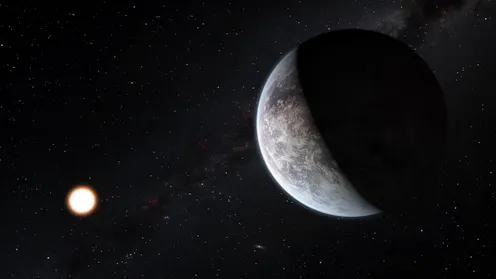
We live on a rocky little planet perfectly situated around a middle-aged G2 spectral type yellow star. In many ways, a very boring and ordinary star, but with an extraordinary difference: it has at least…
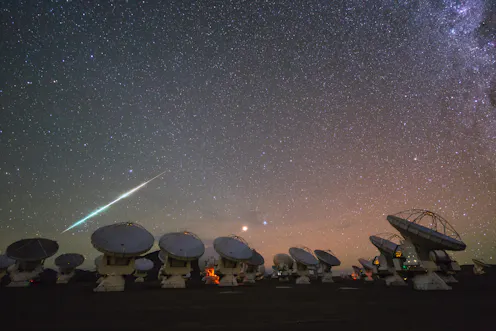
Meteors have been seen since people first looked at the night sky. They are comprised of small pieces of debris, typically no larger than a grain of dust or sand, which continually crash into the Earth’s…
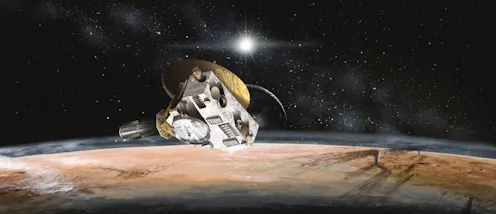
2015 is already shaping up to be a big year in astronomy and planetary exploration, with the best yet to come. Here are some highlights to keep your eye on throughout the year. Opportunity January 25 marked…
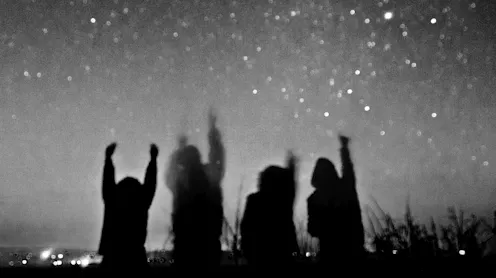
Watching meteors in the night sky can be fun, although typically you only see a few flashes an hour. But there are certain times of the year when you can see many more – events known as meteor showers…
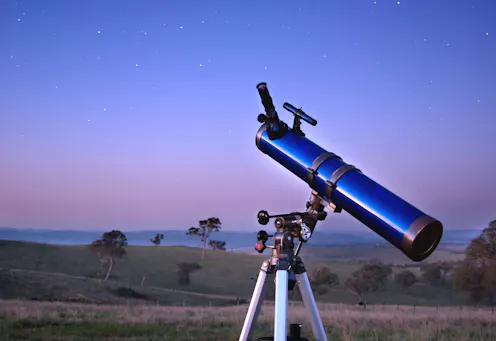
Clear skies this Australia Day could give observers a rare look at a giant asteroid flying past Earth at 56,000kmh. The asteroid, known as 2004 BL86, will not return to Earth for around another 200 years…
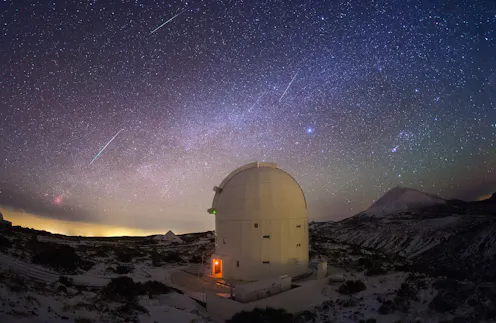
The best meteor shower of the year should put on an impressive display this weekend – weather permitting – with the annual Geminids poised to light up the sky with bright, long meteors visible as frequently…
Contact Donna for
- General
- Media request
- Speaking request
- Consulting / Advising
- Research collaboration
- Research supervision
- Location: Coonabarabran NSW
- Website
- X (formerly Twitter): @aussiestargazer
- Article Feed
- ORCID
- Joined
