

What Trump knew about alleged Russian meddling in the 2016 presidential election remains an open question despite the nearly two-year investigation by Special Counsel Robert Mueller.
- Professor of Law and Director, Health Law Program, University of Nevada, Las Vegas

Despite a historically diverse high court, its voting rules often fail to include minority viewpoints. That could be avoided if justices decided their cases by unanimous vote.
The Supreme Court doesn’t have to be so polarized. Many European countries make judicial appointments in a term-limited, intentionally depoliticized way to promote consensus and compromise.
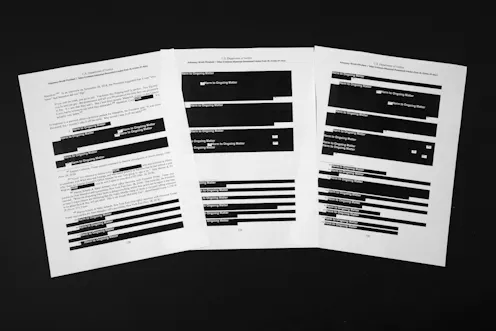
Mueller’s report describes more than a dozen times Trump may have broken the law. Here’s how Congress will decide whether the president obstructed justice during federal probes into his presidency.
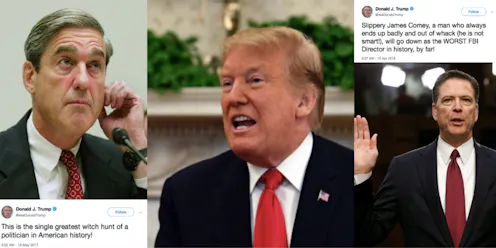
Legally, a person can obstruct justice even if he committed no other crime – though it is harder to prove. It all depends on the intent behind pressuring investigators, say, or firing an FBI director.

In tandem with affirmative action, policies that guarantee college admission to students in the top 10 percent of their class could be a viable way to achieve diversity, a law professor argues.

Controversial judicial appointments and divisive court rulings are not the norm everywhere. Here’s what the US could learn from Europe about ensuring ideological balance on the Supreme Court.

Why have Americans become more receptive to aid in dying, a practice that was rejected throughout the United States until Oregon changed course in 1997?
Contact David for
- General
- Media request
- Speaking request
- Consulting / Advising
- Research collaboration
- Research supervision
- Location: Las Vegas, NV, USA
- Website
- X (formerly Twitter): @orentlicher
- Article Feed
- Joined
