

Beer’s entanglement with law dates back to ancient times, and continues today. Hops into it.
- Professor specialising in Internet law, Bond University

Using Australian laws to force a foreign-owned platform to take down content globally sets a risky precedent – should we allow all countries to impose their laws on the internet?

It’s illegal for Australians to answer Ukraine’s call to join its global cyber militia and defend against online Russian aggression. But the government could (carefully) legalise it if it wants to.

The growth of online and space activity make traditional ideas of national security increasingly outdated.

The order requires Facebook, Twitter and Google to remove certain content globally, based on it being defamatory under India’s local law.

Being seen to lead is clearly an important political aspect of managing online content. But internet regulation must focus on creating policy that is clear, accountable, balanced and open to appeals.

With new laws proposed, Australian leaders now seem prepared to move beyond just blaming technology for its role in online violence and extremism.

Should every country have the right to impose its own laws governing the internet on the rest of the world? If so, the internet could become almost unrecognisable.

Do you know where your beer was brewed?
Many “imported beers” are actually made locally. Should we have clearer labelling for the origins of beer?

Support from overseas law enforcement and tech companies is typically a slow and cumbersome process.

How do you know your search results or social media feeds aren’t being manipulated for political purposes? It’s not a crime to do so. But we believe it should be.

Facebook Moments adds a new level of complexity to the issue of user consent.

The Dallas Buyers Club court ruling has serious implications for online privacy.

Social media companies and the law are both beginning to seriously combat revenge porn.
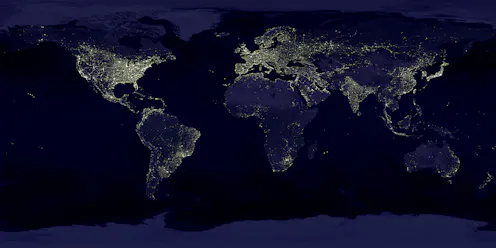
Cloud computing, by its very nature, transcends location, geography and territorial boundaries. Data accessed in one country might be stored half way across the world, or even in servers in multiple countries…

Just how much information Google should remove from its search results when requested is being tested by the European Union which wants to extend its influence beyond its borders. The European Court of…

The Australian government’s all about the cloud, with the Attorney-General and Ministers for Finance and Communications announcing their “cloud first” policy earlier this month: agencies now must adopt…
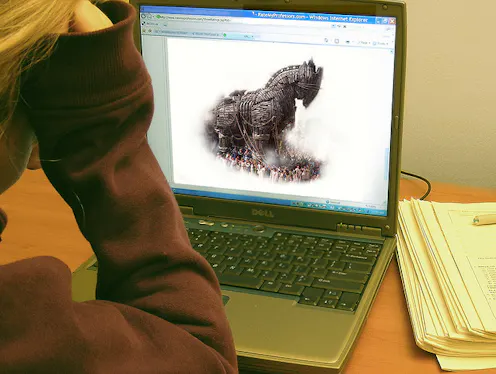
One often sees news stories about how changes in information technology are killing off different industries. Newspapers are read online rather than in print, and who bought a book in a physical shop lately…

From the perspective of fairness, the 2014 World Cup has been off to a remarkably bad start. The opening game included at least two highly questionable decisions by the referee. First, the very generous…

The revelations of NSA whistleblower Edward Snowden have altered the way we think about accountability, transparency and the rule of law with regard to both the activities of security agencies and the…

Have you ever ‘googled’ your name? Many people do, and some find search results about themselves they rather not find publicly available on the internet. The question is; what do you do when that happens…

The legal drama that has followed the online publication of the “Innocence of Muslims” film may be worthy of being used as the plot for a movie in its own right. And, given a recent judgement by Chief…

With the amendments to Australia’s privacy law coming into force, it is only natural that our attention is firmly focused on the domestic privacy scene at the moment. However, perhaps the bigger challenge…
Contact Dan for
- General
- Media request
- Speaking request
- Consulting / Advising
- Research collaboration
- Research supervision
- Location: Gold Coast, Australia
- Website
- X (formerly Twitter): @DanSvantesson
- Article Feed
- ORCID
- Joined
