
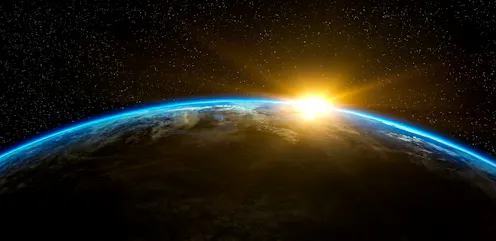
Bien que la Terre ait atteint son jour le plus court le 29 juin 2022, la trajectoire à long terme semble être passée du raccourcissement à l’allongement depuis 2020. Un mystère pour la recherche.
- Senior Lecturer, School of Geography, Planning, and Spatial Sciences, University of Tasmania

Aunque los relojes de nuestros teléfonos indican que hay exactamente 24 horas en un día, el tiempo real que tarda la Tierra en completar una sola rotación varía ligeramente.

The length of a day has critical impacts on our technologies, navigation, and more.

A huge iceberg is set to break free from Antarctica. While the iceberg isn’t hugely concerning, it could herald the breakup of the entire Larsen C ice shelf, which could trigger more sea-level rise.

Greenland’s ice is largely responsible for the accelerating pace of sea-level rise. A new analysis shows that, while Greenland accounted for just 5% of the rise in 1993, that figure rose to 25% by 2014.
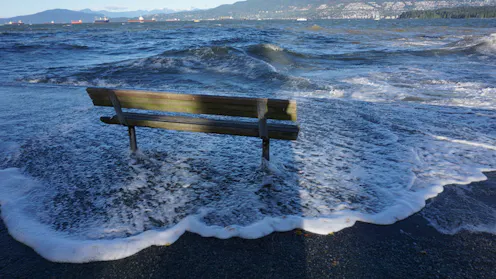
Since 1993, satellites have been used as well as tidal gauges to monitor sea level. A new calibration of this satellite record now shows that the rise in sea level is gathering pace.
Contact Christopher for
- General
- Media request
- Speaking request
- Consulting / Advising
- Research collaboration
- Research supervision
- Location: Hobart, Australia
- Website
- X (formerly Twitter): @risingsealevel
- Article Feed
- ORCID
- Joined
