
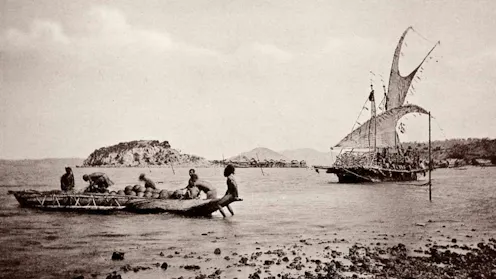
Archaeologists once assumed that men were responsible for seafaring trade in Papua New Guinea. New research shows how women played a fundamental role.
- Australian Research Council DECRA Research Fellow, Monash University

Two starkly different research projects at East Gippsland’s Cloggs Cave, 50 years apart, show the importance of Indigenous perspectives in archaeology.
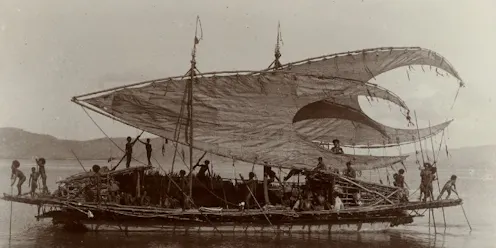
It has often been assumed that Australia was essentially isolated until 1788. But research into the seagoing trade on the south coast of Papua New Guinea suggests otherwise.
Contact Chris for
- General
- Media request
- Speaking request
- Consulting / Advising
- Research collaboration
- Research supervision
- Location: Melbourne
- Website
- BlueSky: @cdurwin.bsky.social
- Article Feed
- ORCID
- Joined
