

In 2020, with adult ICUs at risk of being overwhelmed, we wore masks and accepted restrictions. Now pediatric intensive care is at risk. Will leaders follow the evidence and tell us to mask up?
- Professor of Medicine, Epidemiologist, Physician, McMaster University

Peer review of research sounds like it should be a conversation between equals. Instead, it can be patronizing, demanding and simply unkind. A group of journal editors thinks this should change.
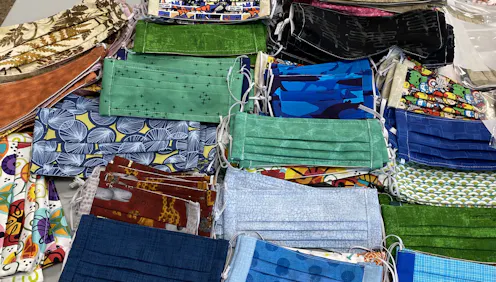
We tested well-fitting cloth masks made from 16 kinds of cotton, on human participants, to see how many provided filtration comparable with a certified medical mask. Most of them did.
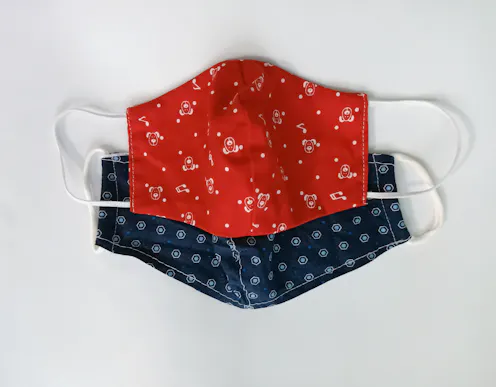
Are two face masks better than one? Adding layers of filtration by double masking is a way of using the masks that we already have, possibly to better effect.
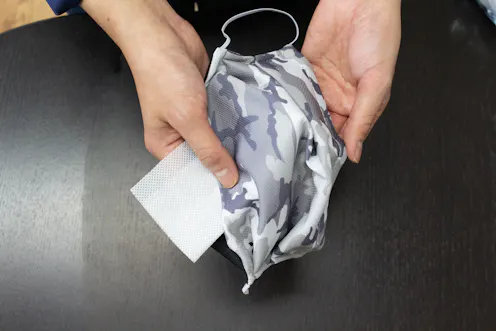
Tout ce qu’il faut savoir sur le polypropylène non tissé, le tissu désormais recommandé pour servir de filtre dans les masques faciaux en tissu : ce que c’est, ce qu’il faut chercher et où le trouver.
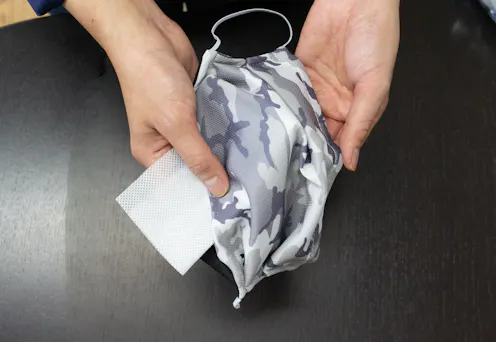
Everything you need to know about non-woven polypropylene, the fabric now recommended for use as a filter in cloth face masks: What it is, what to look for and where to find it.
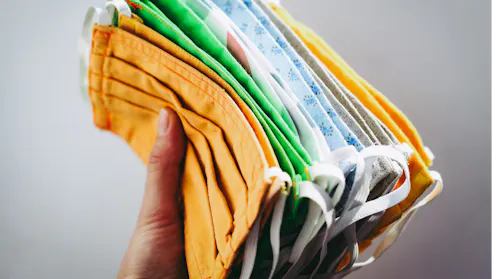
Les épidémiologistes ont passé en revue 25 études sur les masques en tissu. Voici ce qu’ils ont découvert sur leur efficacité, leurs raisons d’être et comment ils protègent – ou pas.
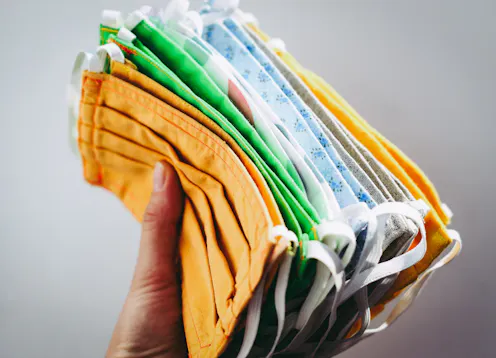
Epidemiologists reviewed 25 studies of cloth face masks. Here’s what they found out about how well they work, why they work, who they protect and why the mosquito and chain-link fence analogy is wrong.
Contact Catherine for
- General
- Media request
- Speaking request
- Consulting / Advising
- Research collaboration
- Research supervision
- Location: Hamilton, Canada
- Website
- BlueSky: @catherineclase.bsky.social
- LinkedIn: catherine-clase
- X (formerly Twitter): @CMClase
- Article Feed
- ORCID
- Joined
