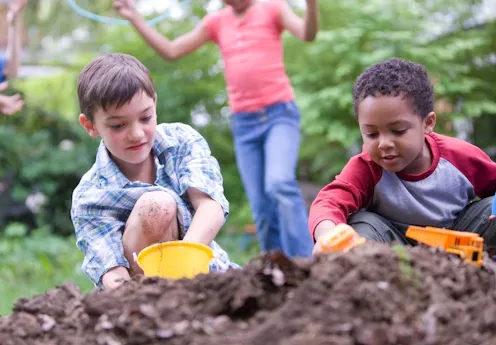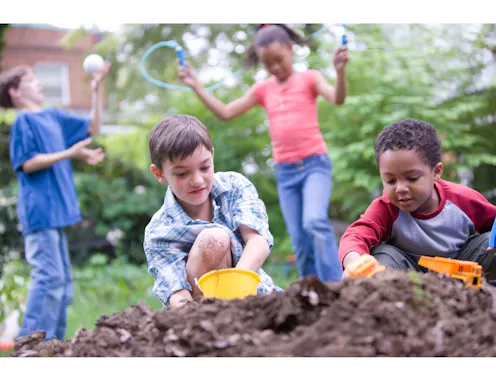
Les interactions précoces des enfants avec leur environnement sont essentielles pour que le système immunitaire apprenne à faire la différence entre les bons et les mauvais microbes qui provoquent des maladies. CDC/Cade Martin

Un an de restrictions sanitaires augmente les risques d'allergies, d’asthme et de maladies auto‑immunes chez les enfants

Les mesures de prévention de la Covid empêchent le système immunitaire des enfants de se développer correctement. Ils pourraient souffrir davantage d’allergies, d’asthme et de maladies auto-immunes.
Children’s early interactions with their environment are essential for the immune systems to learn to differentiate between safe versus dangerous disease-causing microbes. (CDC/Cade Martin)

A year of COVID‑19 lockdown is putting kids at risk of allergies, asthma and autoimmune diseases

COVID-19 prevention measures are at odds with guidelines for healthy development of children’s immune systems. The result may be a cluster of youth with more allergies, asthma and autoimmune disease.
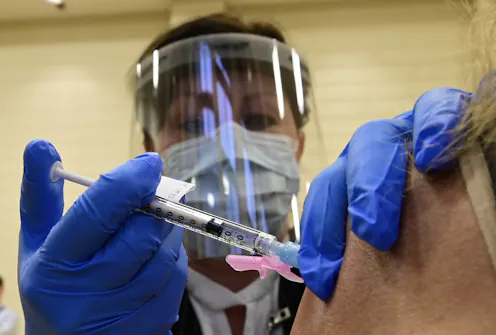
Tamara Dus, director of University Health Network Safety Services, administers a Pfizer-BioNTech COVID-19 vaccine in Toronto. THE CANADIAN PRESS/Frank Gunn

5 factors that could dictate the success or failure of the COVID‑19 vaccine rollout

The arrival of COVID-19 vaccines has raised hope for an end to the pandemic. Hopefully that’s true, but there are variables. Here are some factors that could affect the success of the vaccine rollout.
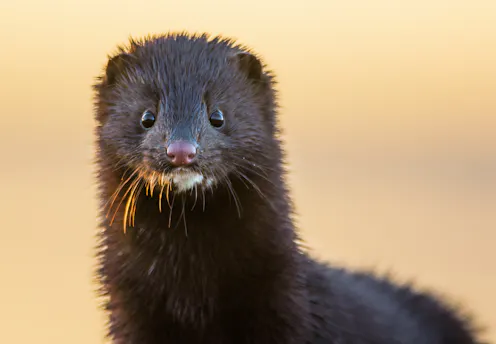
Mink can be readily infected with SARS-CoV-2 and then pass the virus to humans. (Shutterstock)

The mink link: How COVID‑19 mutations in animals affect human health and vaccine effectiveness

In the disturbing scenario of human-to-mink-to-human COVID-19 transmission, the virus may mutate in mink prior to re-infecting people. That possibility makes vaccine design even more crucial.
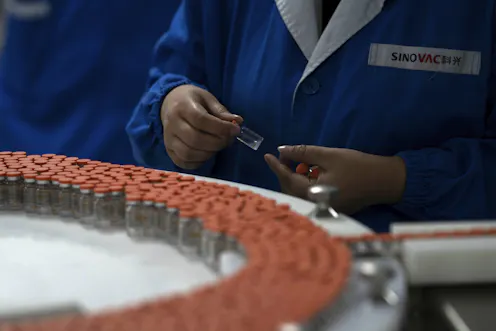
Un employé inspecte des fioles d’un vaccin contre la Covid-19 produit par SinoVac dans son usine de Pékin le 24 septembre 2020. (AP Photo/Ng Han Guan)

Le futur vaccin contre la Covid‑19 doit déclencher une mémoire immunitaire… en vue d’une prochaine pandémie

Notre exposition à un agent pathogène, que ce soit naturellement ou par la vaccination, peut affecter la manière dont notre système immunitaire réagira à l’avenir à des agents pathogènes similaires.
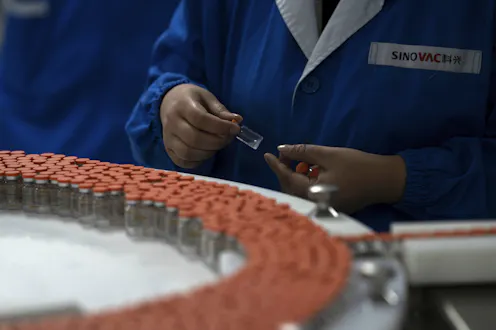
A worker inspects vials of a SARS CoV-2 vaccine for COVID-19 produced by SinoVac at its factory in Beijing on Sept. 24, 2020. (AP Photo/Ng Han Guan)

Training our immune systems: Why we should insist on a high‑quality COVID‑19 vaccine

Our first exposure to a pathogen, either naturally or via vaccination, can affect how our immune system responds in the future to the same or similar pathogens.
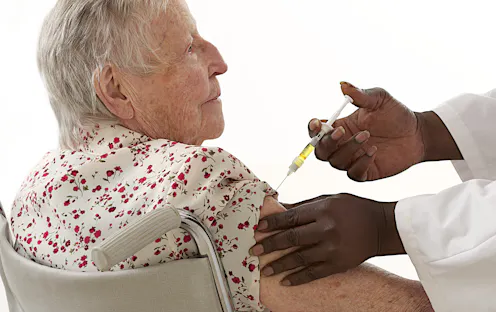
Vaccinologists have not focused their research on tailoring vaccines to induce robust immune responses in the elderly. (Shutterstock)

Why vaccines are less effective in the elderly, and what it means for COVID‑19

Immunosenescence — the decline of immune system function with age — means that vaccines are not as effective in older adults, the demographic most susceptible to many diseases, including COVID-19.
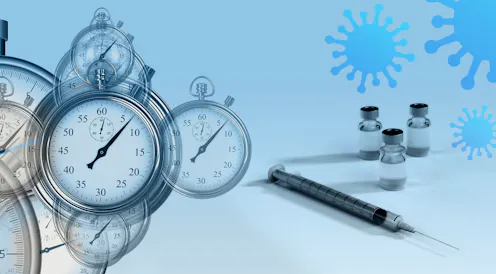
The scope and length of vaccine testing experiments usually mean decade-long timelines for development. (Pixabay)

Fast COVID‑19 vaccine timelines are unrealistic and put the integrity of scientists at risk

It usually takes 10 years for a new vaccine to complete clinical trials, but we’ve been promised a COVID-19 vaccine in 12 to 18 months. Even if such fast-tracked development is possible, is it wise?
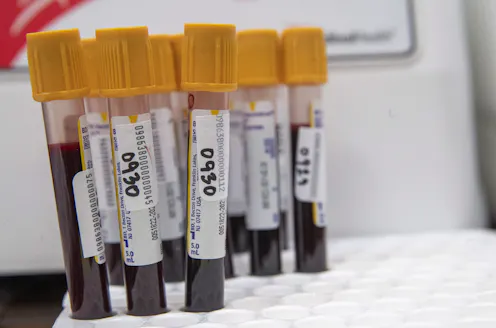
It’s not yet clear whether antibodies in the blood of patients who have been infected with SARS-CoV-2 indicate immunity. Above: blood specimens for COVID-19 antibody tests. (AP Photo/Mary Altaffer)

Can antibody tests tell us who is immune to COVID‑19?

Immunity to COVID-19 may be complicated. Here are the promises and pitfalls of antibody tests.

Contact Byram for

  • General
  • Media request
  • Speaking request
  • Consulting / Advising
  • Research collaboration
  • Research supervision