
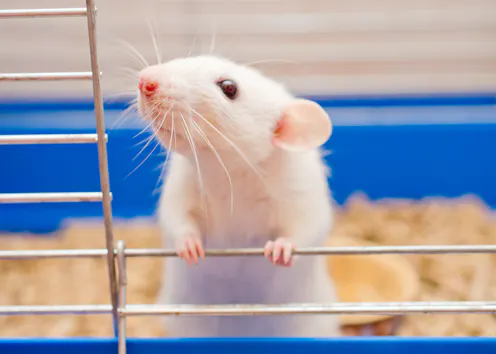
Telling people an animal is destined for the laboratory makes them take a dimmer view of its mental abilities.
- Professor, Melbourne School of Psychological Sciences, The University of Melbourne
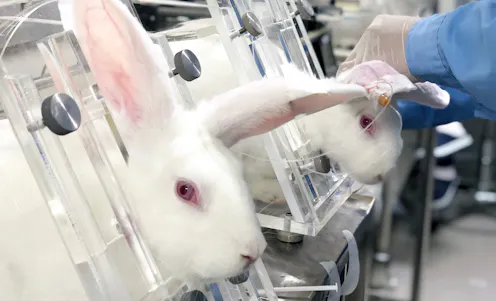
Les animaux de laboratoire, souvent des mammifères, provoquent en nous des sentiments contradictoires. Une étude révèle comment nous les déconsidérons pour mieux accepter leur utilisation.

New research finds societies are much more likely to have supernatural beliefs that concern ‘natural’ phenomena, such as extreme weather events.

Plus, the social pressure some people feel to be happy in the world’s happiest countries. Listen to The Conversation Weekly.

They say to improve your mood you should fake a smile and roll with the crowd. But research suggests the more pressure you feel to be happy, the worse you’ll end up feeling.

Être heureux et positif tout le temps, ce n’est pas possible… C’est même le meilleur moyen d’être au final malheureux. La psychologie explore comment passer d’une positivité toxique à utile.

There is more than one way to pursue happiness and to cope with the inevitable low times in life.

La façon dont les humains se connectent aux animaux est liée à celle dont nous interagissons avec les autres humains. La compréhension de ces relations peut contribuer à des sociétés plus inclusives.

The ways in which humans connect with animals relate to how we interact with other humans. Understanding these relationships can help inform more inclusive societies.
Under the right circumstances, most people will act in ways that are opposed to their own morals.

In a series of experiments, we showed the high value we place on happiness is not only associated with increased levels of depression, it may actually be the underlying factor.
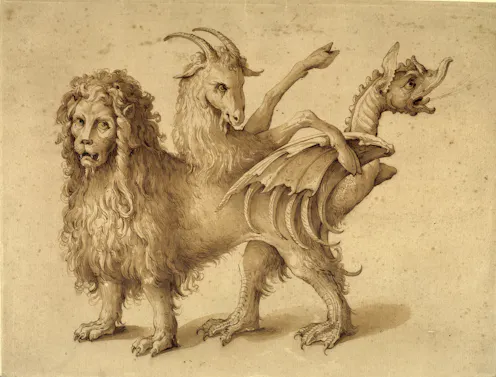
The concept of creating human-animal hybrids can be eerie, but that’s only because of the way our minds tend to categorise things.
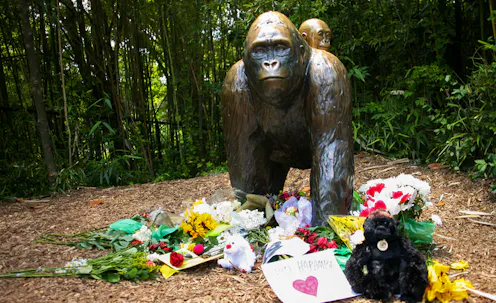
We tend instinctively to value human lives over non-human ones. But is there a point where the scales might tip the other way?

To pose the question of whether we can love happiness feels a bit like asking whether the Pope is a Catholic. Most of us believe we not only can love happiness, but that we should!

The idea that we can achieve happiness by maximising pleasure and minimising pain is both intuitive and popular. The truth is, however, very different.

What makes people happy? Finding a definitive answer to this question could certainly make someone very rich (butwhether that would in turn make them happy is another matter). The problem is that happiness…

The fact that that money can’t buy you happiness is generally well accepted. Happiness, it appears, is more about meaning and satisfaction than the acquisition of more stuff. But money isn’t all bad. It…
Imagine the following scenario. You go into your local sandwich shop for lunch and order a roast beef on rye with a dash of mustard. As you bite into the sandwich you notice something is not right. The…

Western culture places an extraordinary emphasis on happiness – and continuous happiness – as the goal each of us should strive for in our lives. But we’re increasingly realising this goal may actually…

New footage recently aired on ABC has again brought to our attention the plight of cattle in Indonesian abattoirs. Scenes of cattle being poked, stabbed, and slaughtered without appropriate equipment has…

What makes Australians morally outraged? What gets really gets our blood boiling? It would seem that Four Corners has inadvertently put this question to the test this week. On Monday the 4th of July 2011…

Why do we feel sick at the thought of eating dog, but hungry at the thought of eating pig (bacon) with our eggs? Or how we can feel so outraged about whaling while continuing to enjoy fish and chips? Why…
Contact Brock for
- General
- Media request
- Speaking request
- Consulting / Advising
- Research collaboration
- Research supervision
- Location: Melbourne, Australia
- Website
- X (formerly Twitter): @drbrockbastian
- Article Feed
- ORCID
- Joined
