
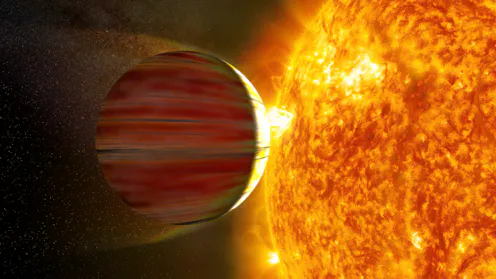
The unusual planetary system has a host star orbited by two giants. One has an incredible odd route around its star. And the other (unlike our own gas giants) is hellishly hot.
- Professor (Physics), University of Southern Queensland
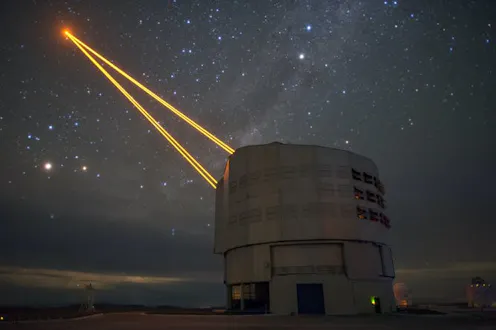
Bagaimana bintang-bintang bisa berkelap-kelip di langit malam? Ternyata, jawabannya penuh dengan udara panas… dan udara dingin.
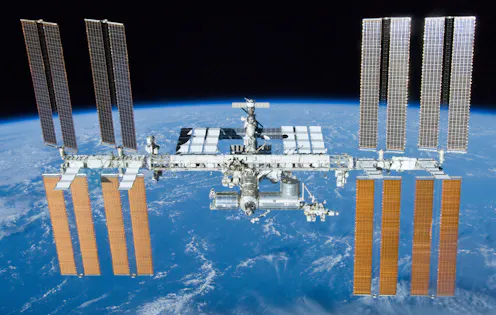
A close call for the International Space Station highlights the growing problem of space junk putting satellites at risk.
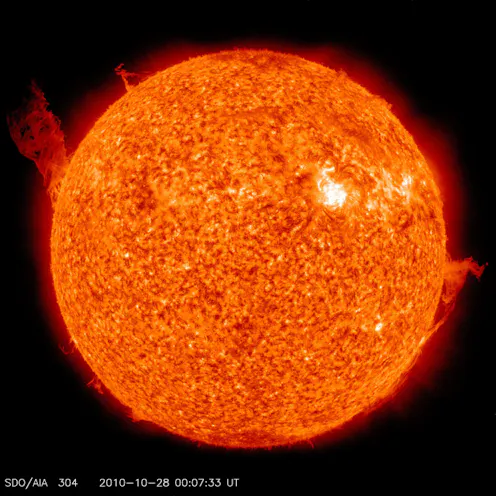
There are lots of places where it’s much, much hotter than the Sun. And the amazing thing is that this heat also makes new atoms - tiny particles that have made their way long ago from stars to us.
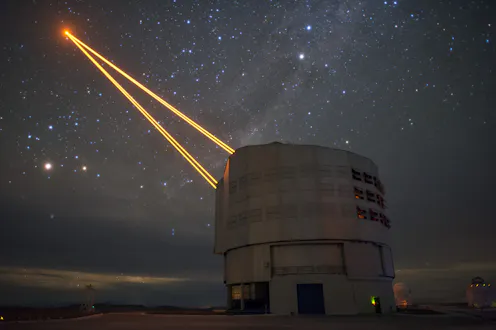
How exactly do the stars twinkle in the night sky? As it turns out, the answer is full of hot air… and cold air.
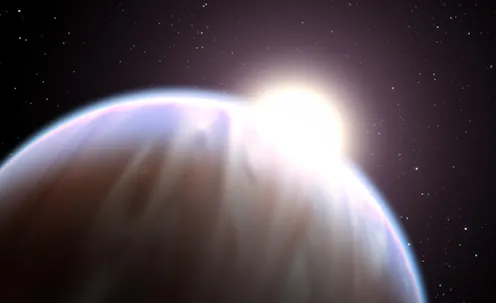
A hint of oxygen and a whiff of methane in a distant exoplanet’s atmosphere may be the first evidence we discover of alien life.
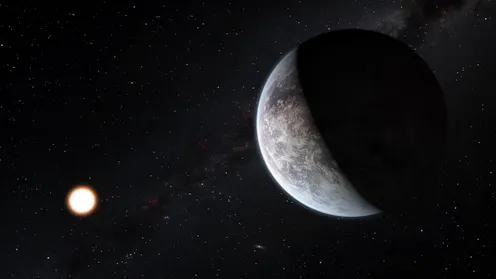
We live on a rocky little planet perfectly situated around a middle-aged G2 spectral type yellow star. In many ways, a very boring and ordinary star, but with an extraordinary difference: it has at least…
Clear skies this Australia Day could give observers a rare look at a giant asteroid flying past Earth at 56,000kmh. The asteroid, known as 2004 BL86, will not return to Earth for around another 200 years…
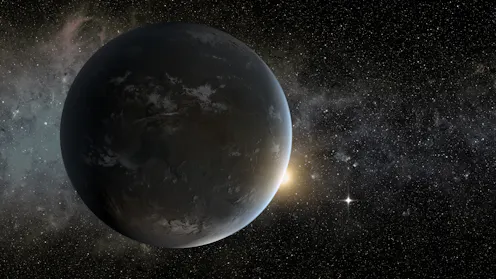
More than 1,000 exoplanets have now been discovered by the Kepler Space Telescope, announced NASA this month, and the figure continues to climb. Three of the newly confirmed Kepler planets are thought…
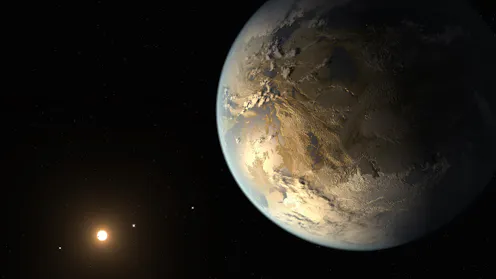
When it comes to finding the right kind of planet to target in the search for life elsewhere in the universe, the size of the planet matters. All planets are believed to form by a process of competitive…
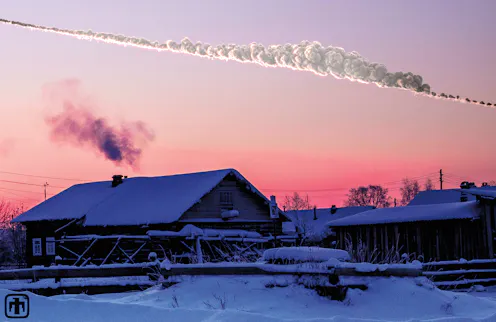
Every so often our Earth encounters a large chunk of space debris which reminds us that our solar system still contains plenty of debris that could potentially have an impact on life on Earth. While the…
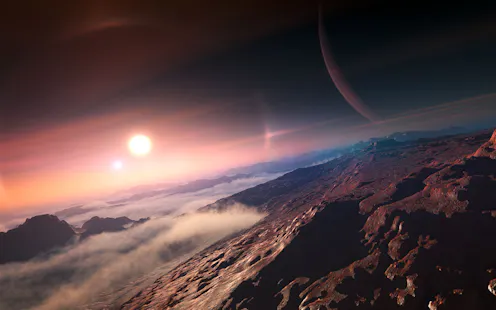
In the search for life beyond our solar system, we need to consider the system in which a planet moves, including the other planets and assorted debris that accompany it on its journey through the cosmos…
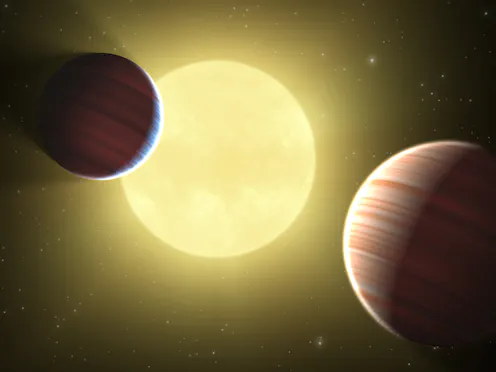
In the search for life-sustaining planets we must first choose the right host star. There are many factors that would make a star system too hostile for life to even get started, let alone survive for…
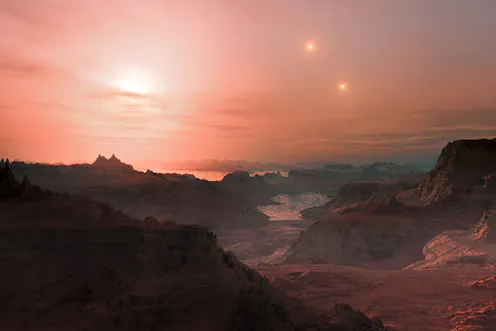
The criteria for life on other planets is the focus of the 4th Australian Exoplanet Workshop, hosted by the University of Southern Queensland this week. The first in this series on exoplanets looks at…

What makes our sun shine has been a mystery for most of human history. Given our sun is a star and stars are suns, explaining the source of the sun’s energy would help us understand why stars shine. An…
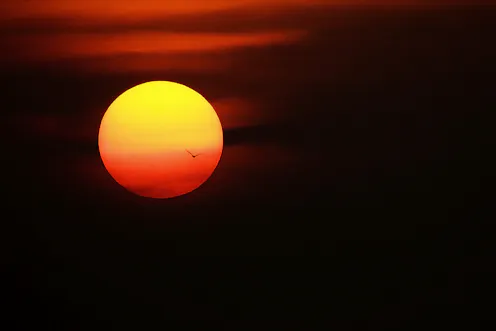
The sun is our nearest star and the source of all our light and heat on Earth but recent reports have highlighted an ongoing steep decline in solar activity. This story is a reminder that our sun is a…
Contact Brad for
- General
- Media request
- Speaking request
- Consulting / Advising
- Research collaboration
- Research supervision
- Location: Brisbane, Australia
- Website
- Article Feed
- ORCID
- Joined
