

Road counts over 16 years revealed declines in populations of birds of prey in South Africa.
- Associate Professor, FitzPatrick Institute of African Ornithology, University of Cape Town
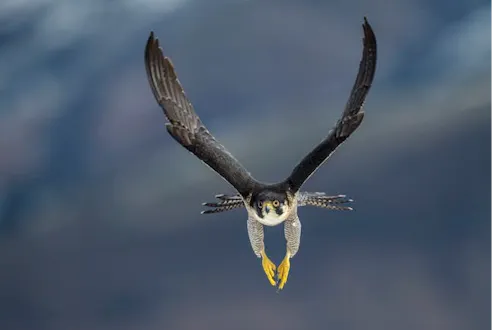
Les rayures noires sous les yeux des faucons pèlerins réduisent l'éblouissement, tandis que chez d'autres espèces, elles n'ont pas ce rôle.
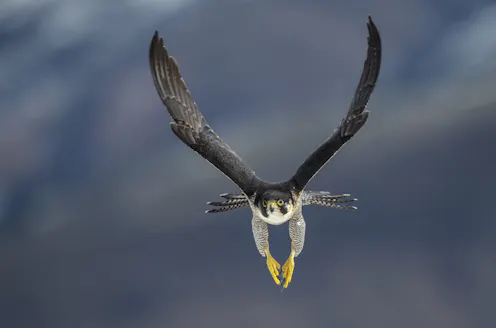
Peregrine falcons have dark stripes under their eyes, thought to reduce sun glare. But in other falcon species these markings are unrelated to sunlight.
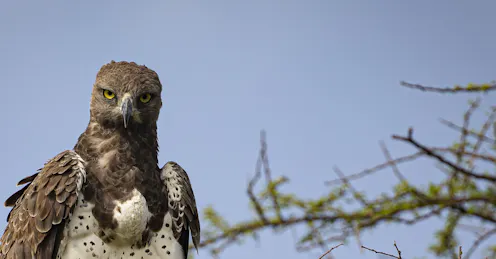
DDT accumulates in wildlife and magnifies up the food chain. Birds of prey occupy the top of these food chains in various ecosystems.

The best way to reduce the threat to eagles is to locate turbines away from areas that are most often used by the birds.
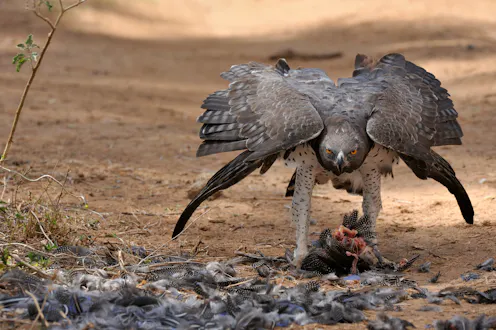
Scientists now have a better understanding of what martial eagles eat. This is valuable for the conservation of this endangered species.
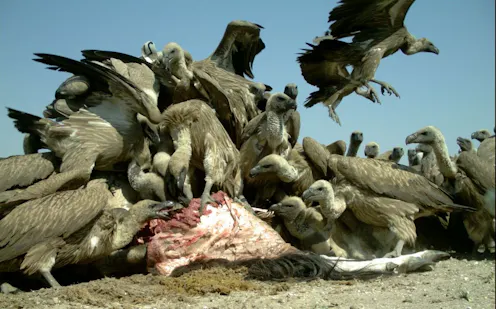
A new threat to vultures is emerging: lead poisoning from ammunition used by game hunters.
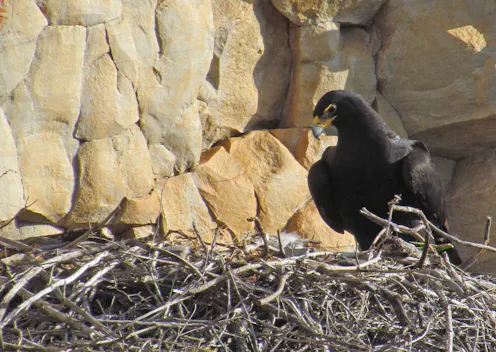
Biodiversity is known to suffer in human-altered agricultural areas. But the Verreaux Eagle is an exception and has seen its numbers increase in agricultural land..
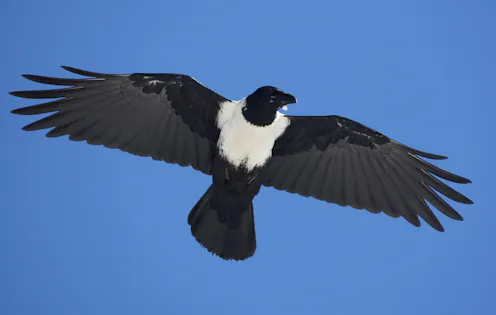
South Africa’s pied crows are moving to areas where the climate suits them more.
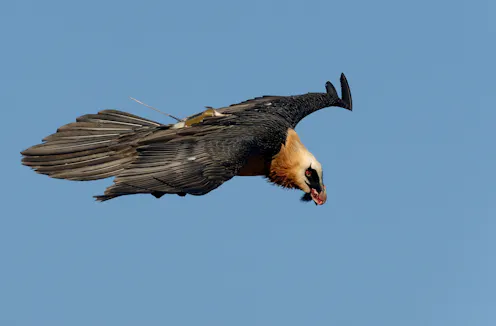
Wind farms are responsible for a large number of bird deaths. Finding a way to ensure that they can co-exist is vital.
Contact Arjun for
- General
- Media request
- Speaking request
- Consulting / Advising
- Research collaboration
- Research supervision
- Location: Cape Town, South Africa
- Website
- X (formerly Twitter): @arjundevamar
- Article Feed
- ORCID
- Joined
