
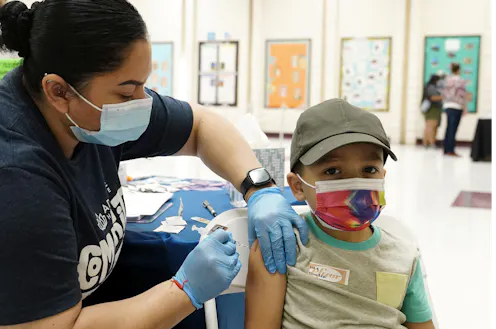
Lorsqu’il s’agit de décider s’il faut vacciner les enfants âgés de cinq à onze ans contre la Covid-19, les organismes de réglementation au pays doivent s’appuyer tant sur l’éthique que la science.
- Professor of Philosophy and Faculty Scholar, Western University

When making the decision whether to vaccinate children aged five to 11 against COVID-19, regulators in Canada must rely on sound ethics as well as sound science.

Full population-level protection against COVID-19 will require most adolescents and children to be vaccinated. There are ethical arguments for encouraging vaccination uptake through vaccine mandates.
Contact Anthony for
- General
- Media request
- Speaking request
- Consulting / Advising
- Research collaboration
- Research supervision
- Location: London, Canada
- Website
- X (formerly Twitter): @HenrySidgwick
- Article Feed
- ORCID
- Joined
