Premier David Eby, joined by Minister of Public Safety and Solicitor General Mike Farnworth, announce that the B.C. government is banning the use of hard drugs in public places, part of the province’s ongoing decriminalization pilot project, at a press conference in Victoria on Oct. 5, 2023. THE CANADIAN PRESS/Chad Hipolito

Decriminalization failures show half measures are not enough to address drug use problems and the opioid crisis

Decriminalizing drugs is not intended as a solution to drug problems. Rather, it is a critical first step that’s necessary, but not sufficient, for replacing prohibition with a public health approach.
B.C. Minister of Mental Health and Addictions Sheila Malcolmson holds a copy of exemption documents that enable British Columbia to decriminalize possession of small amounts of ‘hard’ drugs for personal use. B.C.’s bold experiment will be closely watched as a comparator with other progressive jurisdictions. THE CANADIAN PRESS/Darryl Dyck

Decriminalizing hard drugs in B.C. follows decades of public health advocacy

British Columbia’s bold experiment provides an opportunity to implement more balance in Canadian drug policy, and a more principled withdrawal from the war on drugs.
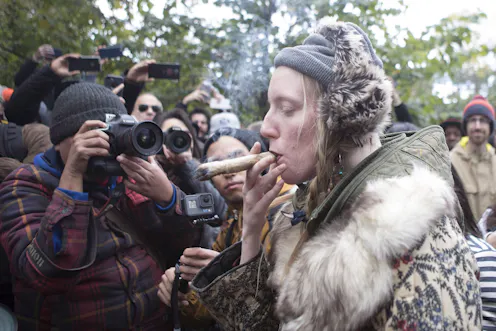
A woman smokes a large joint in a Toronto park on Wednesday, October 17, 2018, as they mark the first day of legalization of cannabis across Canada. Lead Caption: Research shows that cannabis legalization is unlikely to either reduce criminal involvement or reduce availability to youth. THE CANADIAN PRESS/Chris Young

What’s the real reason the Canadian government legalized weed?

Research shows that cannabis legalization is unlikely to either reduce criminal involvement or availability to youth. Could legalization be a result of neoliberalism, or a way to woo young voters?

Contact Andrew for

  • General
  • Media request
  • Speaking request
  • Consulting / Advising
  • Research collaboration
  • Research supervision